
- $2 billion: Cost of the Alameda Corridor project, opened in 2002.
- 70% of cargo: Still moves by truck despite the corridor's capacity.
- 100 trains/day: The corridor's designed capacity, though current traffic is lower.
Experts would likely conclude that McOsker’s re-election as ACTA Chair signals a strategic focus on supply chain resilience, regional cooperation, and optimizing the Alameda Corridor’s role in U.S. trade logistics.
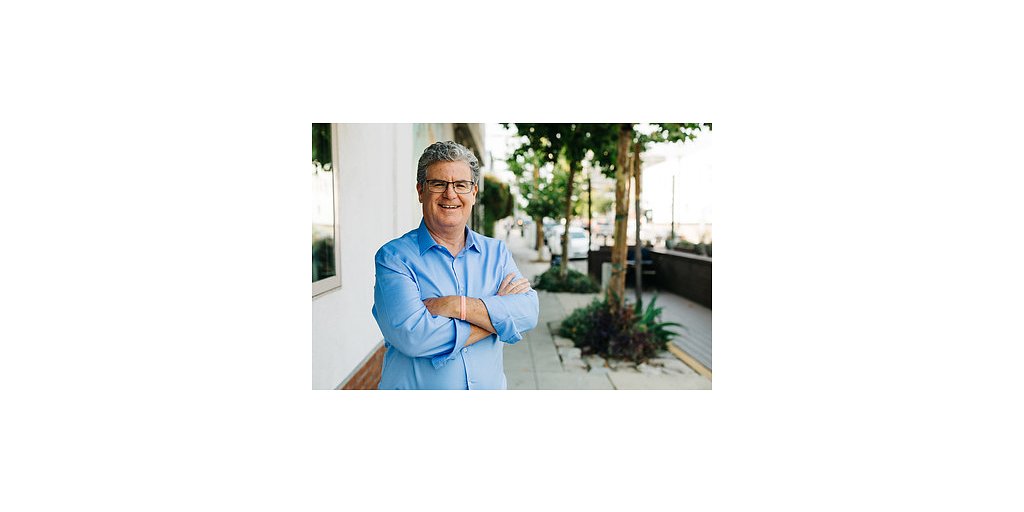
The Anchor of the Supply Chain: McOsker’s Return to ACTA Signals a Push for Resilience
LONG BEACH, CA – June 18, 2026
The recent re-election of Los Angeles Councilmember Tim McOsker as Chair of the Alameda Corridor Transportation Authority (ACTA) Governing Board might appear, on its surface, as standard procedural fare. A third term for a seasoned local leader at the helm of a critical infrastructure agency. But to read it as such is to miss the underlying signal. In a world still grappling with the ghosts of snarled supply chains, this move is less about ceremony and more about strategy. It is a deliberate vote for stability, a doubling-down on a specific vision for the future of American commerce, and an acknowledgment of the complex challenges facing the nation's most vital economic artery.
McOsker’s return to the chair, with Long Beach Councilmember Suely Saro as Vice Chair, reaffirms the delicate but durable partnership between the rival cities of Los Angeles and Long Beach. More importantly, it places a leader with deep, granular knowledge of the port ecosystem in charge at a pivotal moment. The Alameda Corridor, the 20-mile, grade-separated rail expressway connecting the San Pedro Bay Ports to the national grid, is more than a marvel of engineering; it is a barometer of economic intent. And the intent being signaled now is one of consolidation, optimization, and a determined push for resilience against future shocks.
A Steady Hand in Turbulent Waters
Understanding the significance of McOsker’s leadership requires looking beyond his title to his political and professional DNA. He represents Los Angeles City Council District 15, a territory that isn't just adjacent to the Port of Los Angeles—it encompasses it. His constituents in communities like San Pedro, Wilmington, and Watts live daily with the consequences of global trade, from job opportunities to traffic congestion and air quality concerns. Before his election to the council, his tenure as CEO of AltaSea, the marine research campus at the port, cemented his expertise in the intricate dance of maritime commerce and environmental stewardship.
His re-appointment is, therefore, a message of continuity from stakeholders who value this specific blend of experience. "I am honored to once again serve as Chair of the Alameda Corridor Transportation Authority," McOsker stated, emphasizing the corridor's role in supporting "hundreds of thousands of jobs" and keeping "goods moving to communities across America." The language is standard for a press release, but the context is anything but. The memory of container ships idling offshore during the pandemic is fresh, and the pressure to fortify the supply chain against future geopolitical, economic, and even climatic disruptions is immense.
Placing McOsker at the helm is a strategic decision to entrust the corridor to someone who understands its operations not as an abstract line on a map, but as a living system with profound local and national implications. His leadership is seen by many in the logistics industry as an anchor, a steadying force whose primary goal is to ensure the corridor functions not just efficiently, but reliably. In this light, his re-election is less a political reward and more a strategic imperative for the region's economic gatekeepers.
The Corridor's Unfinished Promise
Opened in 2002 at a cost of over $2 billion, the Alameda Corridor was a visionary project designed to solve a burgeoning crisis. By consolidating freight traffic from multiple street-level tracks into a single, high-capacity subterranean trench, it promised to unsnarl freeways, slash emissions, and improve safety in the communities along its path. By these metrics, it has been a resounding success. It has eliminated thousands of vehicle hours of delay daily and measurably improved air quality and public safety.
However, the underlying analysis reveals a more complex picture. The corridor was built with the capacity to handle over 100 trains per day, yet current traffic is significantly lower. Critically, an estimated 70% of cargo leaving the San Pedro Bay Ports still moves by truck. This reality points to the corridor's unfinished promise: to be the overwhelmingly dominant mode of landside transport.
The reasons are multifaceted. The trucking industry has become far more efficient and cost-competitive than planners anticipated in the 1990s. For certain time-sensitive shipments or for cargo destined for regional distribution centers, the "last-mile" economics often favor trucks. "The corridor adds a layer of handling—drayage from the terminal to the railhead—that direct trucking avoids," noted one logistics analyst. "For a container going to the Inland Empire, the time and cost calculation can be a toss-up." The fees ACTA charges to service its construction debt, while necessary, also factor into this competitive equation.
Recognizing this, ACTA and its railroad partners—BNSF and Union Pacific—are not standing still. A significant recent development is the handover of dispatching control to the Alameda Belt Line (ABL), a neutral joint venture between the two rail giants. This move, which took effect in mid-2024, is aimed squarely at optimizing train scheduling and maximizing throughput, ensuring impartial and efficient use of the shared track. It's a clear signal that the focus is shifting from simply having the infrastructure to fine-tuning its performance in a competitive market.
A Blueprint for Regional Cooperation
Perhaps one of the most underappreciated aspects of the Alameda Corridor is the political architecture that underpins it. ACTA itself, as a joint-powers authority, represents a landmark truce between the cities and ports of Los Angeles and Long Beach—historically fierce economic competitors. The ability to plan, finance, build, and operate a multi-billion-dollar asset for mutual benefit serves as a powerful model for regional governance across the country.
The continued leadership structure, with a chair from Los Angeles and a vice chair from Long Beach, is the living embodiment of this pact. It ensures that the interests of both ports, which together form the nation's busiest container complex, are balanced in every decision. McOsker’s repeated selection is a testament to his ability to navigate this delicate inter-city diplomacy, finding common ground to advance a shared regional—and national—interest.
This cooperative framework is crucial as ACTA looks to the future. The challenges facing the supply chain do not end at the terminus of the Alameda Corridor near downtown Los Angeles. Bottlenecks can occur further down the line, an issue being addressed by the separate but related Alameda Corridor-East (ACE) project, which is adding dozens of grade separations across the San Gabriel Valley. The success of the core corridor depends on the health of the entire network, requiring an even broader sphere of cooperation that McOsker's leadership at ACTA helps to anchor.
McOsker's charge, as he stated, is to ensure the corridor remains "reliable, resilient, and prepared for the future." This is not a passive mission. It involves actively competing with trucking, optimizing operations through initiatives like the ABL, managing the authority's long-term finances, and championing the continued investment needed across the entire freight network. His return to the chair is the clearest signal yet that the guardians of America's primary gateway for trade are focused on fortifying it for the challenges of tomorrow.