
- 1998: The origin year of vineyard vines, rooted in selling ties from a Jeep Wrangler.
- 2024: The first successful limited-edition collection launch between Jeep and vineyard vines.
- 2026: Launch year of the second collection, timed with America's 250th anniversary.
Experts would likely conclude that this partnership strategically leverages nostalgia, authenticity, and patriotic timing to create a compelling, repeatable model for heritage branding in a modern market.
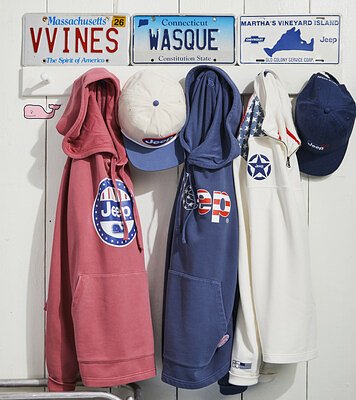
The Americana Playbook: How Jeep and vineyard vines Drive Nostalgia Home
STAMFORD, Conn. – June 04, 2026 – This week, vineyard vines and the Jeep® brand rolled out their second limited-edition capsule collection, flooding digital and physical shelves with coastal-themed apparel. On the surface, it’s a straightforward partnership between two brands synonymous with the American summer. But a forensic look reveals a far more calculated strategy. This isn't just about selling t-shirts from the back of a 4x4; it's a case study in how heritage brands are weaponizing authenticity and patriotic timing to navigate the chaotic 21st-century market, particularly with the impending America 250 celebration on the horizon.
More Than a Tie, More Than a Truck
The foundation of this partnership’s success is a narrative so compelling it almost sounds scripted. In 1998, brothers Shep and Ian Murray famously quit their corporate jobs and began selling neckties from the back of their Jeep Wrangler on Martha's Vineyard. This origin story is not a recently unearthed marketing angle; it is the very bedrock of the vineyard vines brand. The new collaboration leans heavily on this history, transforming a simple co-branding exercise into a multi-generational family saga.
"Jeep vehicles have always been a part of our family's journey for generations," said Shep Murray, Co-Founder and CEO of vineyard vines, in a statement that underscores this deep-rooted connection. "From our grandpa's dog named Jeepy, to our dad hunting in a Willys on Martha's Vineyard, to Ian and me selling ties out of the back of our Wranglers... Jeep 4x4's have always been there for us." This isn't just a quote; it's the articulation of an unimpeachable brand synergy. While other fashion and automotive collaborations can feel forced, this one sells an authentic narrative that has been nearly three decades in the making. As Ian Murray puts it, "Whether it's driving my old CJ-7 on the open road or putting on my favorite vineyard vines shirt, both feel incredible, and both have gotten better with age."
The Anatomy of a Calculated Drop
The decision to renew the partnership was anything but sentimental. It was a direct response to tangible market data. The first collection in 2024 was met with what both companies describe as an "overwhelming response." Robin Freed James, Head of Merchandising & Licensing at Stellantis, called the new line a "natural next chapter" following the "incredibly strong" reception of the initial launch. This confirms a key principle of modern retail: a successful limited-edition drop is a license to print money, creating a repeatable model for generating hype and revenue.
Limited-edition capsules are a powerful tool for creating perceived scarcity and urgency. By framing the collection around a specific season—the American summer—and linking it to significant milestones like Jeep’s 85th anniversary, the brands create a powerful purchasing incentive. This strategy has proven effective across the industry, but the vineyard vines x Jeep partnership adds a layer of authenticity that elevates it. Consumers aren't just buying a product; they are buying a piece of a story, a tangible connection to the shared values of "freedom, adventure, optimism" that both brands champion. The strategy taps into a powerful consumer desire for brands that stand for something beyond their balance sheets.
Weaving a Patriotic Tapestry for America 250
The timing of this collaboration is its most strategically brilliant component. Launching in the summer of 2026, it perfectly positions both brands to capitalize on the immense marketing energy surrounding America's 250th anniversary. This is not an accident. Jeep, which was recently ranked as the most patriotic brand in America, is owned by Stellantis, an official sponsor of the America 250 celebrations. This partnership is a clear move to align with a national moment of reflection and celebration.
By uniting, vineyard vines and Jeep are weaving their individual brand narratives into the larger tapestry of the American story. The collection's blend of "classic Americana with coastal style" is custom-built for a summer of national pride. It provides consumers with a way to participate in the celebration that feels both personal and stylish. This is actionable intelligence for any brand strategist: in a world of digital noise, aligning with a significant, shared cultural moment can provide unparalleled market cut-through. The collaboration isn't just selling clothes; it's selling an identity perfectly tailored for the summer of 2026.
The Long-Term View: Navigating Nostalgia's Edge
However, leveraging Americana comes with hidden costs and inherent risks in today's polarized landscape. Overly nationalistic branding can alienate as many consumers as it attracts. The genius of the vineyard vines x Jeep approach is its focus on the ideals of the American experience—freedom, adventure, optimism—rather than overt political symbolism. The imagery is one of open roads, beach weekends, and family, themes that possess a broad, unifying appeal. It’s a masterclass in “nowstalgia,” using retro aesthetics and concepts to evoke positive emotion without straying into contentious territory.
The long-term view suggests this partnership offers significant upside for both entities. For vineyard vines, it reinforces its premium lifestyle positioning while extending its reach beyond its East Coast roots. For Jeep, it softens its rugged image with a touch of preppy, coastal charm, helping it appeal to a wealthier, style-conscious demographic. By focusing on a shared story and carefully curated values, the two brands have created a powerful, repeatable template for how to successfully market nostalgia and heritage to a modern audience.