
- $290 billion: The smart wellness market in 2025, projected to nearly triple by 2033.
- 3x8-hour AI-powered wellness ecosystem: UREVO's integrated system for work, fitness, and recovery.
- Google's Gemini AI: Powering UREVO's wellness assistant, URi, for personalized guidance.
Experts would likely conclude that UREVO's integrated AI wellness ecosystem offers compelling benefits for health and productivity but raises significant concerns about data privacy and personal agency in a fully quantified life.
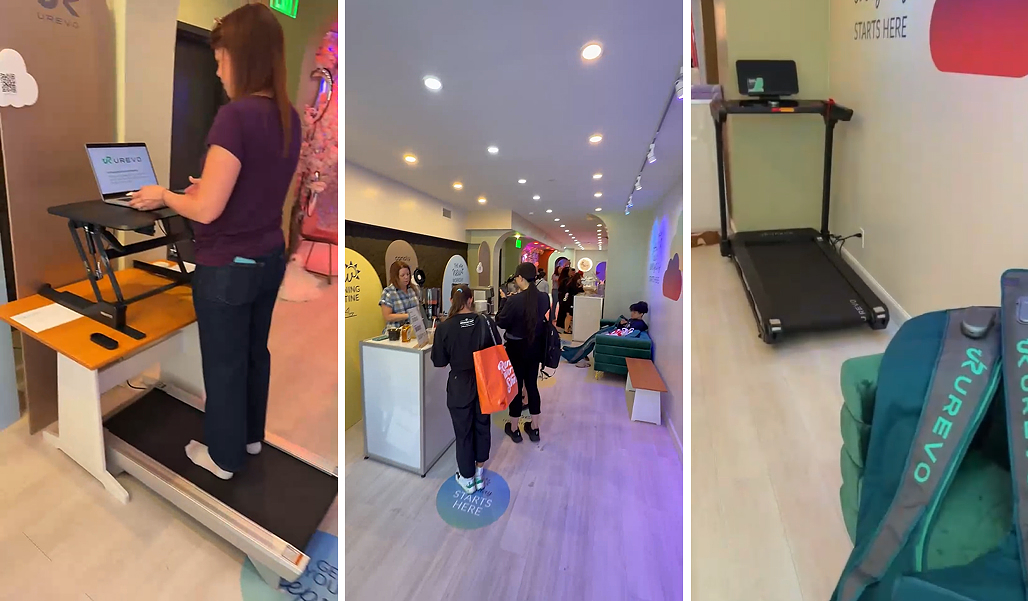
The Algorithmic Office: UREVO's Bid to Weave AI into Every Step
NEW YORK, NY – June 05, 2026 – Amid the frantic energy of New York Tech Week, where the city’s discourse is saturated with artificial intelligence, a quiet revolution is taking place on Bleecker Street. Inside a temporary SoHo storefront, smart wellness brand UREVO is showcasing a future where the boundary between work, exercise, and recovery dissolves into a single, algorithmically managed continuum. Their Smart Wellness Pop-Up is more than a product demo; it’s a compelling, if unsettling, vision of a life optimized by technology, one step at a time.
The End of the Sedentary Workday?
At the heart of the experience is the UREVO CyberPad, an under-desk treadmill designed to combat the notorious health risks of our chair-bound professional lives. The concept isn't new; treadmill desks have been around for over a decade. However, UREVO’s proposition isn’t about radical change but seamless integration. The CyberPad is quiet, slim, and designed to function almost invisibly within an existing office setup.
The scientific consensus supports the benefits. Studies consistently show that integrating low-intensity walking into the workday reduces sedentary time, improves key health markers like cholesterol, and can even boost energy and focus. The hidden cost, however, has always been the trade-off with productivity. While cognitive functions like memory and attention remain stable, tasks requiring fine motor skills—like typing—can see a modest decline. UREVO’s quiet operation and smooth mechanics aim to minimize this friction, making a slow walk during a video call feel natural rather than distracting.
By positioning this active workstation as the entry point, the company is making a calculated bet: solve the most immediate pain point of the modern professional—the eight hours spent sitting—and you earn the trust to manage the other sixteen.
From Movement to Management: The 3x8-Hour Ecosystem
UREVO’s ambition extends far beyond the workday. The pop-up’s second zone reveals the company’s true endgame: a fully integrated “3x8-hour AI-powered wellness ecosystem.” This is where the marketing buzzwords meet sophisticated hardware. The CyberMega Smart Treadmill and AI-Powered Wireless Recovery Boots are not just standalone gadgets; they are nodes in a connected network designed to monitor, guide, and optimize a user’s entire day.
“People don't separate their lives into work, fitness, and recovery—and wellness solutions shouldn't either,” said Vincent, UREVO's CMO. This philosophy is embodied in the technology. The CyberMega treadmill uses AI coaching to simulate real-world marathon courses, adjusting incline and pace while providing live feedback. The AI-Powered Wireless Recovery Boots go a step further, using built-in sensors to analyze muscle condition in real-time and automatically adjust pneumatic pressure for a truly personalized session. This isn’t just a pre-programmed sequence; it’s adaptive technology at work.
Powering this ecosystem is a central app and an AI wellness assistant named URi, reportedly leveraging Google's Gemini. URi analyzes data from all connected devices to offer what the company calls “guidance.” This integrated approach is a significant leap from the current fragmented wellness market, where data from a smart watch, a connected bike, and a sleep tracker rarely communicate effectively.
Navigating a Crowded and Competitive Field
While the vision is compelling, UREVO is entering a fiercely competitive arena. The smart wellness market, valued at over $290 billion in 2025, is projected to nearly triple by 2033. In the active workstation space, UREVO competes with established names like FlexiSpot and WalkingPad. In the high-stakes recovery market, its AI boots are challenging titans like Therabody and Hyperice, whose Normatec systems are the gold standard for professional athletes.
UREVO’s strategic advantage may not be in having the best single product, but in creating the most cohesive ecosystem. While competitors focus on best-in-class individual devices, this company is betting that consumers will ultimately value a unified platform over a collection of superior but siloed gadgets. Their success on Amazon’s US marketplace suggests this value- and ecosystem-driven approach has found a receptive audience. The SoHo pop-up is a clear attempt to translate that online success into a tangible, premium brand experience, justifying its technological claims to a discerning, tech-savvy audience.
The Hidden Cost of Total Optimization
The final, and most critical, question raised by UREVO’s vision is about the data itself. In a world where our every step, heartbeat, and recovery cycle is tracked, analyzed, and guided by an AI, where does personal agency end and algorithmic direction begin? The promise of a life free from muscle fatigue and sedentary decline is alluring, but it requires handing over an unprecedented amount of personal biometric data to a single corporate entity.
While the company frames its AI assistant as providing “guidance,” the long-term view demands we consider the implications. When an AI knows your body better than you do, its suggestions carry immense weight. The convenience of an integrated system comes with the inherent risk of a single point of failure for data security and privacy. As we walk on our under-desk treadmills, we are not just generating steps; we are generating data points that feed a powerful predictive engine.
The UREVO pop-up, therefore, is more than a showcase of smart machines. It is a preview of a future where wellness is a service, perpetually monitored and optimized by AI. The challenge for professionals is to weigh the undeniable benefits of a more active and managed lifestyle against the hidden costs of living a fully quantified life.