
- Confidence Gap: Executives are up to 4x more confident than IT practitioners that AI risks are under control.
- US vs. UK Discrepancy: 29% of US executives vs. 7% of IT practitioners believe AI risk is contained; UK shows 18% vs. 11%.
- Shadow AI Proliferation: 69% of US and 72% of UK IT environments use unsanctioned AI tools like ChatGPT.
Experts warn of a dangerous structural blind spot where executive overconfidence in AI risk management leaves organizations vulnerable to security threats, requiring urgent governance reforms and technical safeguards.
The AI Confidence Gap: Why Leaders Don't See the Risks Their Teams Do
LONDON, UK – June 17, 2026 – A fundamental and dangerous disconnect is splitting modern organizations. As companies rush to integrate artificial intelligence into every facet of their operations, a chasm is opening between the leaders championing the technology and the technical teams tasked with managing it. New research reveals that executives are up to four times more confident than their own IT practitioners that the immense risks of AI are under control. This isn't just a difference of opinion; it's a structural blind spot that threatens to undermine the very productivity and competitive advantage that AI promises.
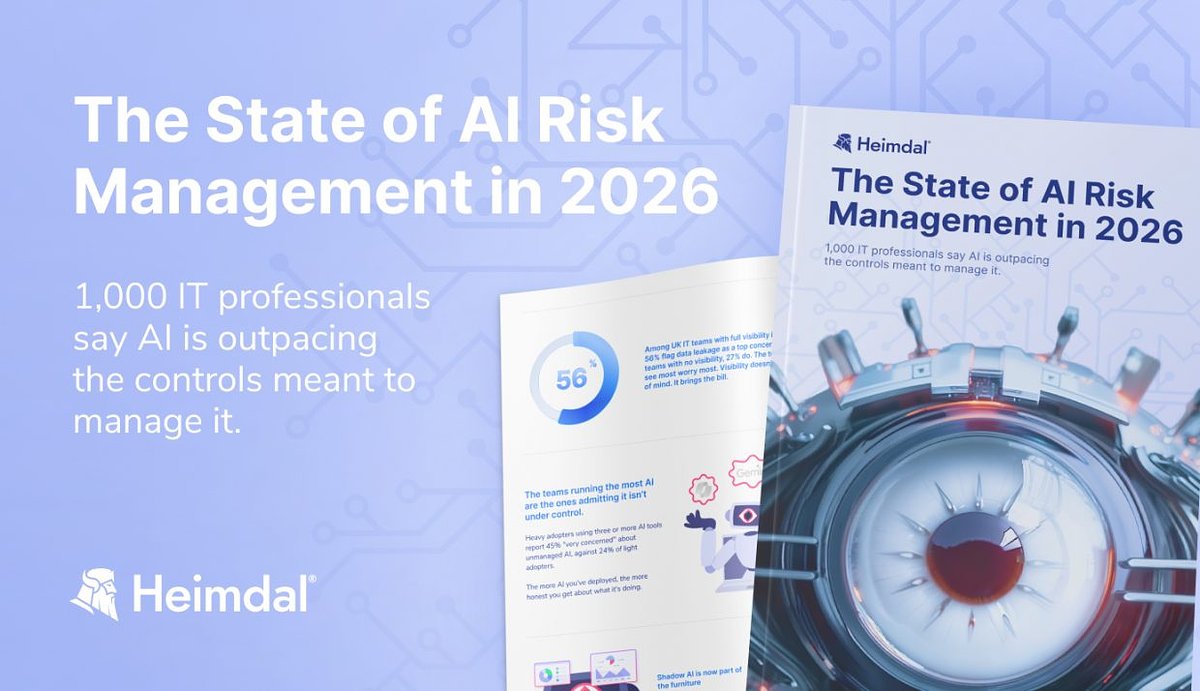
A landmark report published today by cybersecurity firm Heimdal, titled "The State of AI Risk Management in 2026," surveyed 1,000 IT professionals across the United States and the United Kingdom. The findings paint a stark picture of misplaced confidence. In the US, 29% of C-suite and VP-level executives believe their organization has AI risk contained. Just 7% of the mid-level practitioners managing the systems day-to-day agree. The gap persists in the UK, with 18% of leaders expressing confidence versus 11% on the frontlines. This chasm highlights a critical failure in how the engines of modern industry perceive and manage transformative technology.
The Executive Blind Spot: A Dangerous Disconnect
The source of this executive overconfidence is multifaceted, stemming from a strategic vantage point that is often miles away from the operational trenches. Leaders are rightly focused on harnessing AI for growth, innovation, and efficiency. Yet, this high-level view can abstract away the granular, daily threats that their security teams confront. The rapid, often chaotic, adoption of powerful AI tools has outpaced the implementation of necessary security controls by a factor of two to one, according to the Heimdal report.
"Misplaced confidence is one of the most dangerous things in security," warned Adam Pilton, a Cybersecurity Advisor at Heimdal, in a statement accompanying the release. "This data shows executives are far more confident that AI risk is under control than the evidence supports. Most of the conversation right now is about productivity, when the bigger question is how AI can be turned against the business."
This disconnect is more than a simple communication failure; it represents a systemic vulnerability. When leadership believes risks are managed, budgets for crucial security tools, personnel, and training are less likely to be approved. This leaves organizations exposed, transforming AI from a strategic asset into a potential liability. The incident publicly disclosed in January 2026, where a senior US cybersecurity official uploaded sensitive documents to a public AI tool, serves as a sobering reminder that policy and status are no defense against misuse. The activity was flagged, but only after the fact—the damage was already done.
On the Frontlines of a Shadow AI War
For the IT and security teams on the ground, the reality of AI adoption is one of overwhelming scale and complexity. The report finds that generative AI tools are already ubiquitous. ChatGPT is running in 69% of US and 72% of UK IT environments, with Microsoft Copilot close behind. Many of these instances constitute "Shadow AI"—tools adopted by employees without official sanction or oversight from IT departments, creating massive blind spots for data security.
This proliferation is happening while IT teams are already stretched to their limits. The survey reveals that nearly three-quarters of these teams lose at least 25% of their work week to repetitive, low-value tasks. One in three lose more than half their time. This crushing operational load creates a paradox: the most overloaded teams are the most optimistic about AI's potential to ease their burden. In the US, 59% of the most strained teams expect AI to help, creating a powerful incentive to adopt tools quickly, sometimes without the necessary security due diligence.
The result is a landscape where adoption sprints ahead while readiness crawls. Only four in ten IT teams believe their existing security stack is prepared to handle AI-related risks. They are being asked to secure a new, poorly understood technological frontier with outdated maps and insufficient equipment, all while executives watch from a distance, confident that the territory has already been secured.
The Visibility Paradox: Seeing More, Fearing More
Perhaps the most telling finding from the Heimdal research is what it calls the "visibility paradox." Counterintuitively, the teams with the clearest view of AI usage within their organizations are the most concerned, not the least. Among UK teams reporting full visibility into their AI landscape, 56% flag data leakage as a top concern. For teams with no visibility, that figure is just 27%. The pattern holds in the US, where 59% of teams with full visibility express high concern.
This suggests that for many executives, ignorance is bliss. A lack of granular visibility into what data is being fed into which AI models by whom creates a false sense of security. As independent security researcher Rafay Baloch noted in response to the findings, "The risk that concerns me most is not AI itself but the blind spots it can create. When teams use AI tools without clear oversight, sensitive information, intellectual property, and business data can end up in places leaders never intended."
Visibility, therefore, is not the cure; it is merely the diagnosis. It reveals the scale of the problem. Baloch added, "A policy alone does not create visibility." Organizations that believe a simple acceptable-use document is sufficient protection are dangerously mistaken. The challenge is not to restrict AI but to build guardrails that enable responsible, secure use.
Rewriting the Rules of Risk Management
Bridging this confidence gap requires a structural shift in how organizations govern technology. The era of treating AI as a novel experiment is over. It must be integrated into the core of IT governance, subject to the same rigorous scrutiny as any other critical infrastructure. This means moving beyond policy and toward technical and procedural enforcement.
Best practices are emerging, centered on frameworks like the NIST AI Risk Management Framework, which encourages organizations to govern, map, measure, and manage AI risks throughout its lifecycle. This involves creating a current inventory of all AI tools, both sanctioned and unsanctioned, and applying robust controls over data access, user privileges, and actions. It means treating AI service providers as critical suppliers, subject to stringent procurement reviews and contractual obligations for data handling.
Furthermore, organizations must invest in both technology and people. New tools like AI-specific firewalls and data loss prevention (DLP) systems are needed to monitor the unique data flows associated with these models. Simultaneously, IT and security teams require significant upskilling to understand and mitigate new threats like prompt injection, data poisoning, and model inversion. This isn't just about preventing breaches; it's about building the institutional competence to operate safely and competitively in an economy being fundamentally rewritten by artificial intelligence. The companies that succeed will be those that close the gap between ambition and awareness, ensuring their confidence in AI is built on a foundation of genuine security, not a dangerous blind spot.