
- 3-6x higher conversion rate: Traffic from AI chat assistants converts to sales at a rate 3-6 times higher than traditional Google searches. - 15% of brands capture 80% of AI recommendations: A small fraction of brands dominate AI-generated visibility. - 9x visibility gap: Brands optimizing for AI discovery have 9 times higher visibility than those that do not.
Experts agree that AI-driven search is creating a new competitive landscape where brands must prioritize factual accuracy, verifiable authority, and structured data to remain visible and competitive.
The AI Blind Spot: Why Your Brand is Disappearing From Search
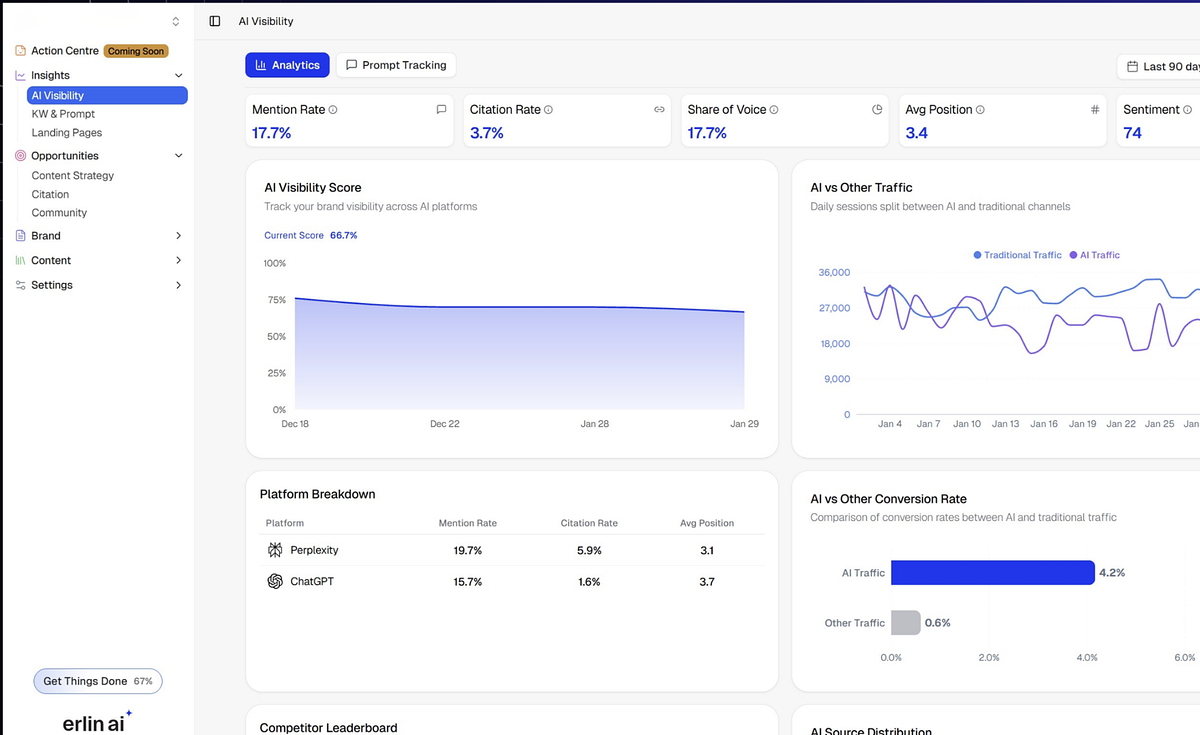
SAN FRANCISCO, CA – February 18, 2026 – A seismic shift is quietly reordering the digital landscape, creating a new class of 'invisible' brands and concentrating market power in the hands of a select few. According to a landmark study released today by AI visibility platform Erlin.ai, traffic from consumers who find brands through AI chat assistants like ChatGPT and Perplexity converts to a sale at a rate three to six times higher than traffic from traditional Google searches. Yet, the same report reveals a stark reality: a mere 15% of brands are capturing over 80% of these high-value AI recommendations.
This creates a perilous new 'AI blind spot' where even brands with top rankings on Google can be completely nonexistent in the AI-generated answers that are increasingly shaping consumer decisions. The study, titled 'The 2026 State of AI Search,' monitored 500 brands over six months across major AI platforms, including ChatGPT, Claude, Gemini, and Perplexity. It found a staggering 9x visibility gap between brands that actively optimize for AI discovery and those that do not, signaling the dawn of a new competitive front that most businesses are unprepared for.
The New Digital Divide
The findings from Erlin.ai paint a picture of a rapidly concentrating market, where the spoils of the AI era are not being distributed evenly. The report indicates that when AI models formulate a recommendation, they tend to repeatedly cite the same handful of brands, creating a powerful feedback loop that reinforces the visibility of market leaders while pushing smaller or less-prepared competitors further into the shadows.
This winner-take-all dynamic is particularly concerning given the high quality of AI-referred customers. A customer who asks an AI for 'the best running shoes for marathon training' and receives a specific brand recommendation is already deep into the consideration phase of their purchase journey. Their high intent to buy is what drives the 3-6x conversion rate, making AI-driven visibility a critical, high-stakes battleground for revenue.
However, the vast majority of companies are not even aware the battle has begun. Erlin's survey of 200 marketing leaders found that 67% do not know how to measure their brand's visibility in AI answers, and 58% admit that no one in their organization is responsible for it. This widespread lack of awareness and ownership is creating a significant competitive disadvantage for those slow to adapt.
Beyond Google: Deconstructing AI's Black Box
For two decades, digital marketing has been dominated by Search Engine Optimization (SEO), a practice centered on pleasing Google's algorithms. The Erlin.ai report argues that this paradigm is now insufficient. A top ranking in Google's '10 blue links' offers no guarantee of being mentioned in a ChatGPT response. AI models, the report states, use a fundamentally different set of signals to determine trust and authority.
Instead of just analyzing keywords and backlinks, AI systems act as 'fact-checkers,' piecing together fragments of information from across the web and assigning a confidence score to what they can verify. The study identified five key 'structural signals' that consistently influence whether an AI will recommend a brand:
- Clear, specific facts: AI prioritizes verifiable data (e.g., 'contains 1000mg of Vitamin C') over vague marketing claims (e.g., 'the best immune support').
- Independent third-party mentions: Citations from reputable news outlets, industry reports, and academic papers serve as powerful endorsements that build an AI's confidence in a brand.
- Extractable website structure: AI models favor websites with clean, well-organized code and structured data (like Schema markup) from which they can easily pull information like product specs, pricing, and FAQs.
- Recently updated information: Content that is fresh and regularly maintained signals to AI that the information is current and reliable.
- Consistent brand details: The brand's name, address, product details, and other key information must be consistent across its website, social media profiles, and third-party directories.
"We're moving from a game of keywords to a game of verified facts," noted one digital marketing strategist, speaking on the condition of anonymity. "It's a whole new playbook. Your entire digital footprint is now your resume, and the AI is the hiring manager."
A Shifting Economic Landscape
The urgency to adapt is underscored by staggering economic forecasts. The press release cites McKinsey research projecting that AI will handle 75% of all Google searches by 2028, rerouting an estimated $750 billion in U.S. revenue through AI recommendations instead of traditional search results. While the precise 75% figure could not be independently confirmed in publicly available McKinsey reports, the consulting firm's extensive research on generative AI strongly supports the trend. McKinsey has projected that generative AI could add trillions to the global economy annually, with marketing and sales being one of the primary areas of impact.
This shift represents a fundamental rewiring of digital commerce. As consumers turn to AI for conversational, summarized answers, the phenomenon of 'zero-click searches'—where users get their information without ever visiting a brand's website—is expected to accelerate. In this environment, being cited by the AI becomes as important, if not more so, than getting a click to your website.
The Industry Scramble and Unanswered Questions
The emergence of 'AI visibility' as a distinct discipline is spawning a new category of technology and services, with firms like Erlin.ai positioning themselves as essential guides for this new terrain. The market is a nascent mix of traditional SEO platforms adding AI features, structured data specialists like Yext, and new, specialized players.
However, this new frontier is not without its challenges and ethical quandaries. Experts worry that the concentration of recommendations in a few dominant brands could stifle competition and reduce consumer choice. Furthermore, the inherent nature of AI models raises concerns. The risk of 'hallucinations,' where an AI confidently states incorrect information, could lead to significant brand reputation damage. There is also the persistent issue of algorithmic bias, where AI models trained on existing web data may inadvertently perpetuate and amplify societal biases in their recommendations.
For now, brands are left in a scramble to understand the new rules of a game that is still being defined. The imperative is clear: companies must begin the work of auditing what AI says about them and start building a digital presence founded on factual accuracy, transparency, and verifiable authority. In the age of AI, what you claim to be matters far less than what the world's collective data says you are.