
- 75% of accounting firms are turning away clients due to capacity issues (Jessica McKellar, Pilot CEO).
- 17% decline in accounting workforce between 2019-2021 (300,000+ professionals left the field).
- Meridian has closed 187,000+ months of books for 8,000+ businesses (Pilot's internal data).
Experts agree that AI automation like Meridian could revolutionize accounting by addressing critical labor shortages, but widespread adoption will depend on proving reliability in complex, real-world scenarios.
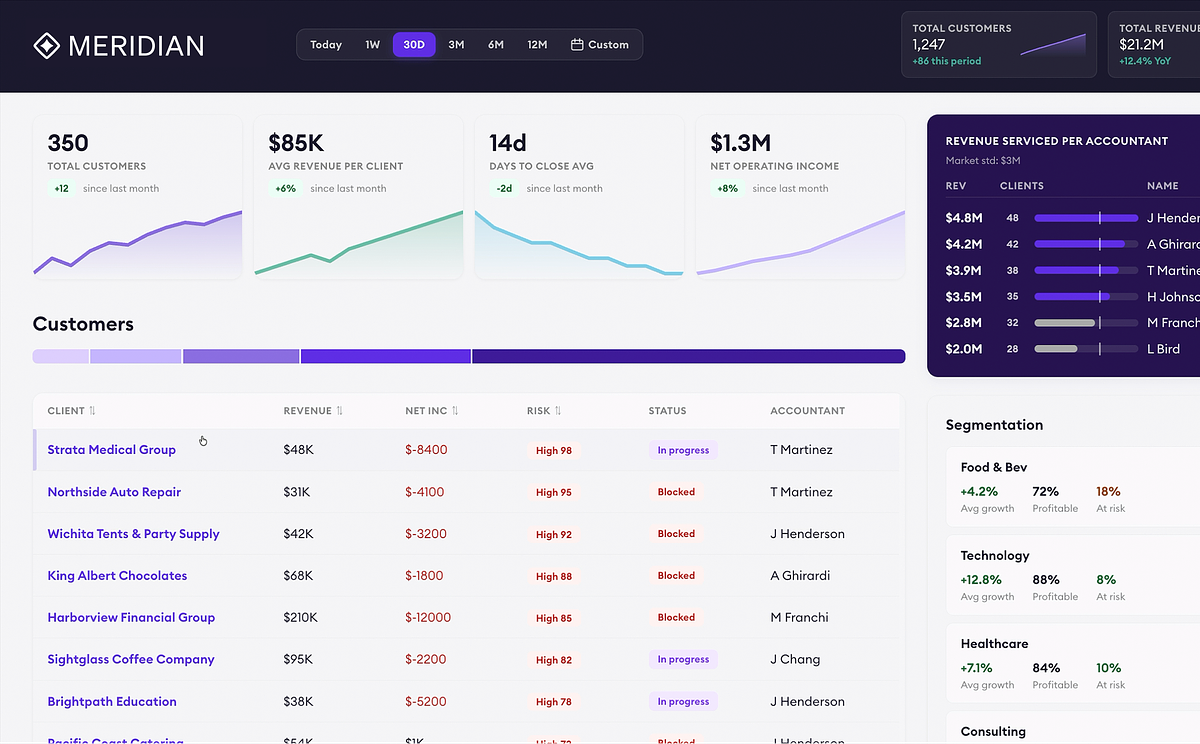
The AI Accountant Is Here. Is the Industry Ready?
SAN FRANCISCO, CA – June 16, 2026
The accounting world, long perceived as a bastion of methodical stability, is in the throes of a profound crisis. It's a quiet emergency, playing out not in headlines but in overstretched balance sheets and the exhausted sighs of partners at accounting firms. Today, San Francisco-based Pilot threw a potential lifeline—or a disruptive thunderbolt—into these troubled waters with the launch of Meridian, an AI platform it claims can fully automate the month-end close.
The announcement comes at a critical juncture. "Three out of four accounting firms are turning away clients they don’t have the capacity to serve," said Jessica McKellar, Founder and CEO of Pilot, in a statement accompanying the launch. This isn't hyperbole; it's the daily reality for a profession caught between surging client demand and a startlingly shallow talent pool.
Meridian’s proposition is simple and audacious: to change the fundamental unit economics of accounting work by having AI perform the labor-intensive tasks that currently consume countless human hours. But in solving one crisis, Pilot may be heralding a sea change that will redefine the very nature of the accounting profession for generations to come.
A Profession at a Breaking Point
To understand the significance of Meridian, one must first grasp the severity of the accounting industry's predicament. The talent pipeline is not just leaking; it's hemorrhaging. Between 2019 and 2021, the profession saw a staggering 17% decline in its workforce, with over 300,000 accountants and auditors leaving the field. This exodus is compounded by a graying workforce, where nearly a third of all accountants are over 55 and nearing retirement.
Meanwhile, the supply of new blood is dwindling. University accounting programs have seen enrollment numbers plummet, and participation in the CPA exam, the profession's gold-standard credential, has been in a sustained decline for a decade. The result is a fierce war for talent, with firms struggling to fill positions and burning out the staff they have.
This supply-side shock is colliding with unrelenting demand. The U.S. Bureau of Labor Statistics projects a need for over 136,000 new accountants and auditors every year for the next decade. Businesses, navigating an increasingly complex regulatory and economic landscape, need more sophisticated financial guidance than ever. The result, as McKellar noted, is that a vast majority of firms are forced to turn away work, throttling their own growth and leaving a significant portion of the market underserved.
The "End-to-End" AI Promise
Enter Meridian. Pilot asserts this is not just another automation tool that shaves a few hours off reconciliation tasks. Unlike existing solutions from competitors like BlackLine or FloQast, which streamline workflows for human accountants, Meridian is designed to be the accountant. The platform promises to handle the entire month-end close from start to finish, from client onboarding and processing historical books to navigating edge cases and producing a complete set of review-ready financial statements.
What lends significant weight to this claim is Pilot's own history. Meridian isn't a speculative startup venture; it's a battle-hardened system that Pilot, itself one of the largest accounting firms for startups, has used internally since 2017. The company reports that the AI has successfully closed over 187,000 months of books for more than 8,000 businesses. This "production-proven" pedigree is its core differentiator.
"Accounting firms don’t need another tool that helps around the edges," McKellar stated. "They need a system that actually closes the books end-to-end." By writing its completed work directly into a firm's general ledger—with advanced support for QuickBooks Online and compatibility with Xero and NetSuite—Meridian aims to relegate the tedious, repetitive work of the close process to silicon-based employees, freeing up their human counterparts for higher-level functions.
From Grunt Work to Grand Strategy
This is where the true disruption lies. For decades, the career path of an accountant began in the digital trenches of the general ledger. The painstaking work of transaction categorization, reconciliation, and journal entry was a rite of passage. Platforms like Meridian propose to eliminate that entry-level experience almost entirely.
The vision is a wholesale shift in the accountant's role, from processor to reviewer, from bookkeeper to strategic advisor. Instead of spending the first three weeks of the month buried in close work, accountants will theoretically begin their month by reviewing the AI's completed financials. Their time will be reallocated to exercising judgment, analyzing trends, and providing the forward-looking Client Advisory Services (CAS) that businesses are clamoring for.
This aligns with a broader industry trend. CAS is the fastest-growing segment for firms, with some projecting revenue in the category to nearly double over the next three years. Automation is the key that unlocks this potential, allowing professionals to ascend the value chain. In this new paradigm, an accountant's worth is measured not by their speed in a spreadsheet, but by the quality of their insights and the strategic value they deliver to a client. The profession is evolving from a historical scorekeeper to an anticipatory guide, and technology is the catalyst.
Scrutiny, Skepticism, and the Road Ahead
While the vision is compelling, it is not without its challenges and healthy skepticism. The claim to "fully" close the books will be heavily scrutinized. Accounting is a profession of nuance, materiality, and judgment—qualities that are notoriously difficult to codify. While Meridian is designed to handle edge cases, industry experts caution that true human oversight, particularly for complex valuations or revenue recognition scenarios, will remain indispensable.
Meridian enters a market where the giants of the industry are also making massive AI investments. PwC, for example, has publicly stated its goal of achieving full end-to-end audit automation by 2026, backed by a $1.5 billion investment. The race to build the definitive AI accountant is well underway.
For Pilot, the challenge now is to prove that its internally-honed system can translate its success to the diverse and complex environments of other accounting firms, each with its own policies and client-specific processes. The launch of Meridian to the public is the first step. The true test will be in its adoption and performance in the wild, transforming a profession one automated close at a time. The era of the AI accountant has officially begun, and the industry may never be the same.