
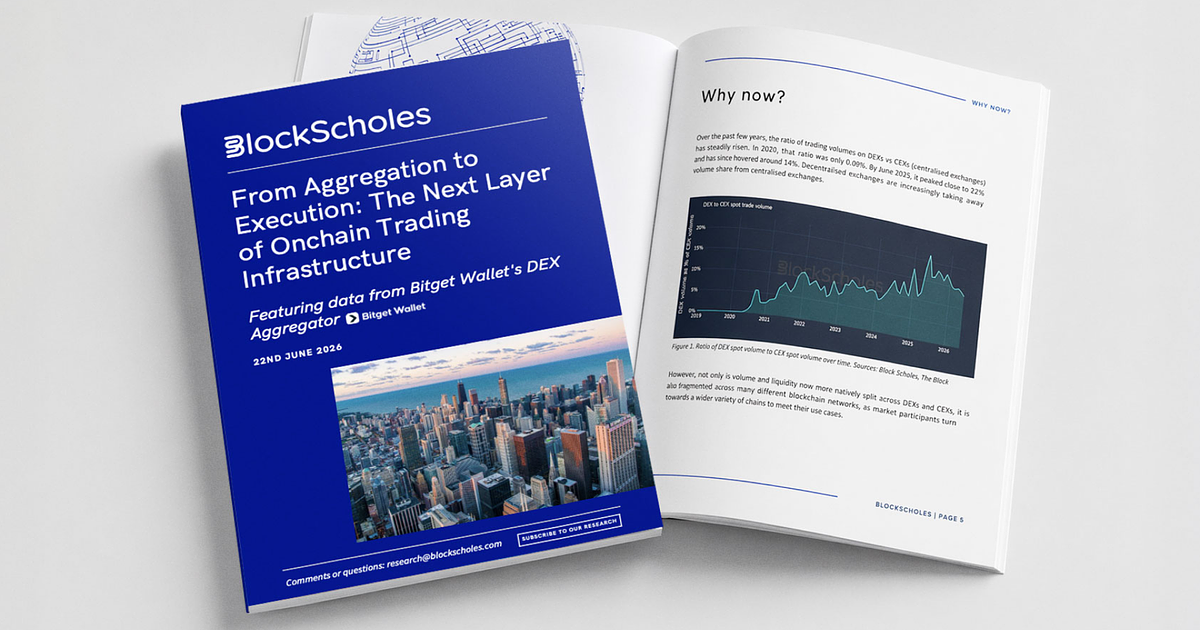
- 14% of global crypto spot volume now occurs on decentralized exchanges (DEXs), up from nearly 0% five years ago.
- A sophisticated routing engine can save $8,000 on a $10 million stablecoin swap by optimizing liquidity across fragmented venues.
- The stablecoin market has grown from under $1 billion in 2018 to over $300 billion today, with projections exceeding $2 trillion by 2028.
Experts agree that the fragmentation of crypto liquidity across multiple blockchains and venues has made advanced routing engines a critical factor in institutional adoption, with measurable cost savings proving their necessity.
The $8,000 Swap: Crypto’s New Arms Race Is in Its Financial Plumbing
NEW YORK, NY – June 22, 2026
A quiet but crucial evolution is underway in the crypto economy. For years, the primary challenge for onchain trading was simple: finding enough liquidity. Now, as decentralized exchanges (DEXs) capture a stunning 14% of global crypto spot volume—up from virtually nothing five years ago—a new, more complex problem has emerged. Liquidity is everywhere, but it’s fractured, scattered across hundreds of venues and dozens of blockchains. The new battleground isn’t about accessing liquidity; it's about the intelligence of the engines that navigate it.
A recent quantitative report from crypto analytics firm Block Scholes, titled "From Aggregation to Execution," throws this shift into sharp relief. By benchmarking several leading platforms, the research reveals that the quality of a trading platform’s routing engine—the sophisticated algorithm that finds the best path for a trade—has become a material cost consideration. The difference between a good and a great execution can amount to thousands of dollars on a single trade, exposing an infrastructure gap that could define the next phase of institutional crypto adoption.
The High Cost of Fragmentation
The core issue is fragmentation. As innovation accelerates, the digital asset landscape has become a sprawling, multi-chain universe. An investor looking to swap Ethereum for a stablecoin might find the best price split across three different liquidity pools on two separate networks. Manually finding this optimal path is impossible; relying on an inferior automated system can be costly.
The Block Scholes report makes this tangible with a striking case study: a hypothetical $10 million stablecoin swap. An unsophisticated routing engine might direct the entire order to a single, deep liquidity pool. In contrast, an intelligent engine that dynamically splits the order across multiple venues based on real-time market depth could preserve approximately $8,000 in value on that one transaction. At institutional volumes, where trades of this size are common, such savings compound into millions.
“Over the past few years, decentralised exchanges have steadily taken volume share away from centralised venues while liquidity and volume has fragmented across various blockchain networks,” said Thahbib Rahman, a Research Analyst at Block Scholes who worked on the report. “We expect this fragmentation to continue as more applications get built onchain, increasing the need for competitive aggregators that can execute at institutional-grade quality.”
The New Financial Plumbing
This need has ignited an arms race among DEX aggregators to build smarter, faster, and more efficient routing engines. The report benchmarked four major players—Bitget Wallet, KyberSwap, 0x, and Jupiter—by pulling thousands of simultaneous API quotes for trades ranging from under $1,000 to $100,000.
While all these platforms are designed to solve the fragmentation problem, the research found significant performance differences, particularly at larger trade sizes. Bitget Wallet, a self-custodial wallet with a rapidly growing user base, demonstrated a notable performance advantage. According to the report, its engine beat peers in up to 78% of large-trade comparisons on major pairs like Bitcoin and Ethereum. The key differentiators identified were design choices that directly address the hidden costs of onchain trading: factoring in network gas fees upfront and dynamically splitting large orders based on real-time liquidity depth.
“As trade sizes grow and liquidity becomes more fragmented across blockchains and venues, the quality of the routing engine becomes a material cost consideration,” explained Alvin Kan, COO of Bitget Wallet. “Most platforms have solved the liquidity access problem. The next question is whether their engine is making the right decisions with that liquidity, and this research shows the difference is measurable.”
This sentiment is echoed across the industry. On the Solana network, Jupiter’s sophisticated routing scans over two dozen venues to find the most efficient path. Similarly, KyberSwap’s multi-chain engine aggregates liquidity from over 400 sources, using its own algorithms to split trades and minimize price impact. The common thread is a relentless focus on execution quality, a feature that is quickly becoming a primary competitive differentiator.
The Trillion-Dollar Catalyst
The urgency to perfect this infrastructure is being driven by an even larger economic force: the institutionalization of crypto, spearheaded by the explosive growth of stablecoins. The market for USD-pegged stablecoins has swelled from under $1 billion in 2018 to over $300 billion today. This figure is poised for exponential growth, with U.S. Treasury Secretary Scott Bessent projecting the market could exceed $2 trillion by 2028, a forecast bolstered by the passage of landmark regulatory frameworks like the GENIUS Act in 2025.
This influx of capital is changing the very nature of onchain activity. Data from Bitget Wallet, for instance, shows that average swap sizes on its platform grew fivefold in the first five months of 2026, indicating a clear trend towards larger, more sophisticated market participants. These are not retail hobbyists; they are hedge funds, asset managers, and corporate treasuries beginning to leverage the efficiency of blockchain-based finance. For them, execution slippage is not a minor annoyance—it's a direct hit to the bottom line.
As trillions of dollars in tokenized real-world assets and stablecoins come onchain, the demand for institutional-grade financial plumbing will only intensify. The ability to move hundreds of millions of dollars seamlessly and cost-effectively across chains will be a prerequisite for the next wave of adoption. The platforms that can demonstrably prove their routing superiority will be the ones that capture this massive flow of capital.
From DeFi to OnFi: Building for the Future
The focus on execution quality is part of a broader maturation of the ecosystem, a shift from the experimental days of Decentralized Finance (DeFi) to a more robust, institutional-ready paradigm some are calling “On-Chain Finance” (OnFi). This transition involves not only technological refinement but also building trust and security.
Companies are now competing on the strength of their security audits, the size of their user protection funds—Bitget’s ecosystem, for example, maintains a fund valued at over $300 million—and their ability to simplify the user experience without compromising self-custody. Innovations like multi-chain gas abstraction, which allows users to pay transaction fees in a single common token across different networks, are removing friction points that have long hindered mainstream adoption.
As the digital asset economy moves beyond the headlines of price volatility, the underlying infrastructure is being forged in the crucible of institutional demand. The quiet, technical work of optimizing trade routes and minimizing slippage may not capture the public’s imagination like a soaring token price, but it is fundamentally more important for the long-term viability of the market. For the architects of this new financial system, the race is not just to build bigger, but to build smarter, as every basis point saved is a victory won on the new digital frontier.