
- 30 days of free storage: U-Haul offers 30-day free self-storage and U-Box container use to wildfire evacuees.
- 99 million square feet of space: U-Haul controls vast logistical infrastructure across North America.
- 205,000 trucks in fleet: Demonstrates the company's operational scale for disaster response.
Experts would likely conclude that U-Haul’s strategic deployment of its logistics network represents a model for private-sector disaster response, blending corporate social responsibility with long-term brand value.
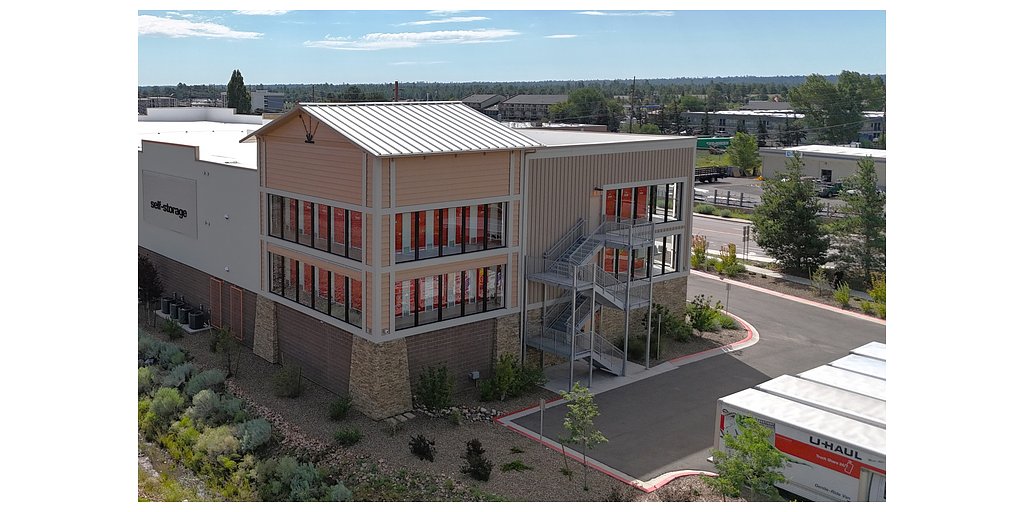
U-Haul's Wildfire Play: Compassion as Corporate Infrastructure
FLAGSTAFF, AZ – June 22, 2026 – As smoke chokes the iconic red rock canyons near Sedona, the Pocket Fire serves as a stark reminder of the fragility of our systems. With hundreds of acres burning, 0% containment, and a "GO" evacuation order clearing out Oak Creek Canyon, the immediate story is one of crisis. But beneath the headlines of firefighting efforts and displaced families, a different kind of story is unfolding—one about corporate infrastructure pivoting, in real-time, to become a critical piece of the disaster response puzzle.
U-Haul, a name synonymous with DIY moving, has stepped into the breach, offering 30 days of free self-storage and U-Box container use to residents forced from their homes. This isn't a token gesture. It’s a deployment of core business assets to address a pressing human need, revealing a deeper strategy at the intersection of logistics and community resilience.
A Lifeline in the Logistics Chain
For those fleeing the fire's path along State Road 89A, the decision of what to save is agonizing. Facing the closure of a 23-mile stretch of the highway and the uncertainty of when they might return, residents are in a race against time. The American Red Cross has set up a shelter, but the question of one's tangible life—heirlooms, documents, essential belongings—remains. One resident who remained behind described the feeling as being constantly "on edge," wrestling with what to grab if the flames shifted.
This is where U-Haul's offer moves from a press release to a practical lifeline. By opening its facilities in Flagstaff and Verde Valley, the company provides an immediate, secure destination for evacuees' possessions. It transforms an abstract corporate asset—a 10x10 storage unit—into a sanctuary for a family's history. The availability of U-Box portable containers adds another layer of logistical support, allowing people to pack their belongings on-site before having them moved to a secure company facility.
In the chaos of an evacuation, having a pre-defined, no-cost solution for property protection removes a significant layer of stress. It allows first responders to focus on containment and public safety, while empowering residents to protect what they can. This is the ground-level impact of a corporation weaving its services directly into the fabric of an emergency response network.
The Infrastructure of Aid
What’s truly at play here is the concept of latent logistical power. U-Haul isn’t a charity; it’s the third-largest self-storage operator in North America, controlling 99 million square feet of space and a fleet of nearly 205,000 trucks. When a disaster strikes, this vast, distributed network becomes a strategic asset that few non-profits or government agencies can replicate at speed or scale.
While organizations like the Red Cross excel at providing shelter and immediate human services, they must often build logistical support chains from scratch. U-Haul, by contrast, simply has to unlock existing capacity. Its facilities in Flagstaff and Cottonwood are already staffed, secured, and operationally ready. The decision to offer free storage is less a matter of creating a new service and more a matter of flipping a switch on a sunk cost, turning empty units into a public good.
This represents a powerful model for private-sector engagement in an era of increasingly frequent climate-related disasters. In Arizona, where hot, dry, and windy conditions make wildfire season a predictable and recurring threat, the ability to rapidly deploy such resources is not just helpful; it's essential. U-Haul's action demonstrates how a company’s core competency—in this case, managing space and mobility—can become its most potent form of corporate social responsibility.
A Calculated Act of Corporate Citizenship
It would be naive to view this purely through an altruistic lens. This is a calculated, and frankly brilliant, strategic move. U-Haul has a long-standing identity as an official American Red Cross Disaster Responder, and its 30-day-free program is a well-oiled machine activated during hurricanes, floods, and fires across the country. This isn't an ad-hoc response; it's an integrated part of its brand identity.
In a competitive market against giants like Public Storage and Penske, such actions create powerful brand differentiation and immense goodwill. The evacuee who uses a free U-Haul unit today is highly likely to remember the company tomorrow when they need to rent a truck or require long-term storage. The press release subtly reinforces this by mentioning the company's "1-Year Price Lock" for customers who may need storage beyond the initial free month, seamlessly bridging the gap between disaster relief and a standard business transaction.
This move generates positive media coverage, strengthens community ties, and builds a reservoir of public trust that is invaluable in the modern economy. It’s the story behind the numbers: leveraging operational capacity for social good creates a feedback loop that ultimately enhances brand value and customer loyalty. It is a masterclass in aligning corporate strategy with community need, proving that doing good can also be good for business.
The New Economics of Crisis Response
The Pocket Fire is a localized event, but it is a microcosm of a larger trend. As government resources are stretched thin by the escalating scale of natural disasters, the role of the private sector is fundamentally shifting from peripheral donor to core operational partner. Companies with significant physical footprints and logistical expertise are uniquely positioned to fill critical gaps in the official response.
U-Haul’s initiative provides a blueprint for this new paradigm. It's not about writing a check; it's about integrating the company's very business model into the solution. By offering what it does best—providing secure space—the company delivers a targeted, effective, and efficient form of aid. This approach demonstrates a sophisticated understanding of how corporate assets can be deployed for maximum social impact while simultaneously reinforcing the company's market position and brand narrative. As we look toward the 2026 economic landscape, this fusion of logistics, corporate strategy, and community resilience will become an increasingly defining feature of successful and sustainable enterprises.