
- 480 kW power output: New benchmark in DC fast-charging technology.
- 20,000+ charging sessions: Proven reliability in real-world testing with EnBW.
- 20,000 fast-charging points by 2030: EnBW's expansion target leveraging XCharge's technology.
Experts would likely conclude that the XCharge C7 represents a significant technological leap in EV charging infrastructure, combining unprecedented power with proven reliability and strategic industry partnerships, positioning it as a critical enabler for Europe's electric mobility transition.
The 480 kW Question: Is This the Charger That Unlocks Europe’s EV Future?
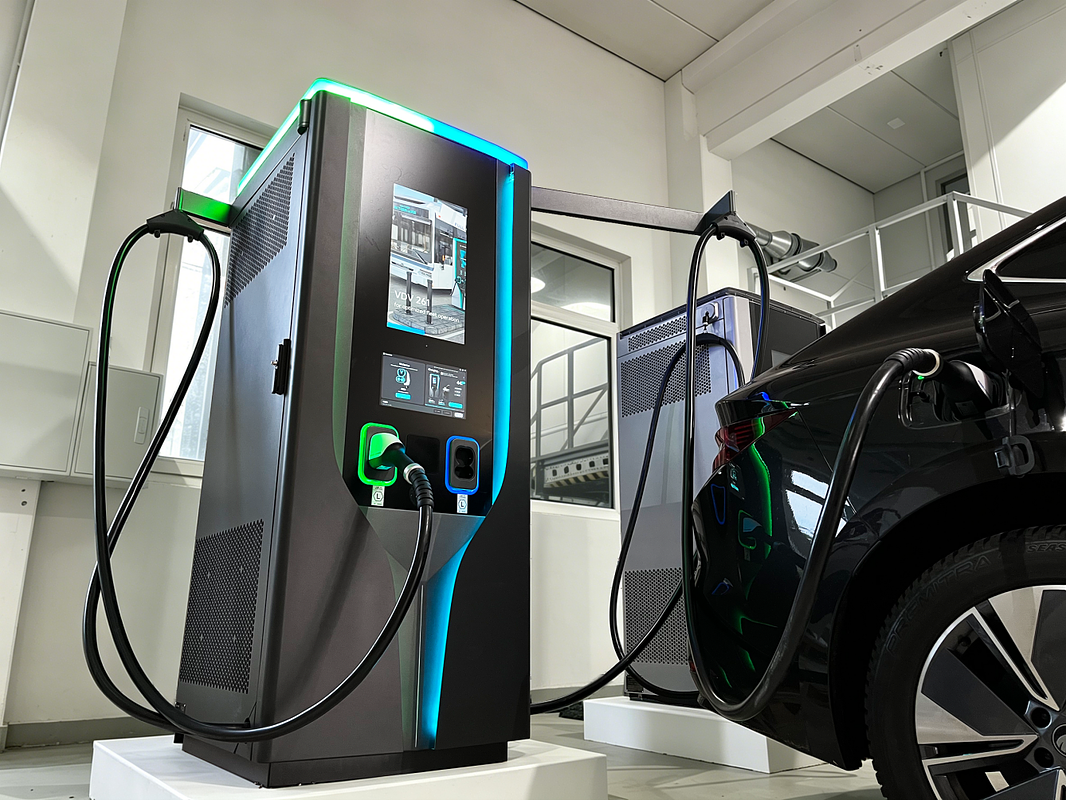
MUNICH, Germany – June 17, 2026 – The air at Power2Drive Europe, a key industry event, was thick with the hum of innovation, but one number dominated the conversation: 480. That figure, in kilowatts, represents the formidable power of the new C7 DC fast-charging station unveiled by XCharge. In an era defined by the urgent need to decarbonize, the announcement is more than just a product launch; it’s a powerful statement of intent in the high-stakes race to build the backbone for Europe’s electric vehicle revolution.
For years, the promise of an all-electric future has been shadowed by the very practical anxieties of range and time. XCharge’s new charger, a sleek totem of technological ambition, aims to address both head-on. But as we move from early adoption to mass-market reality, the challenge is no longer just about raw speed. It’s about reliability, accessibility, and the digital trust required to convince millions of drivers to make the switch. The new C7 isn’t just a more powerful plug; it’s a complex system designed to answer the most pressing questions of our electrified age.
A New Benchmark in the Power Race
The leap to 480 kW is not an incremental step; it’s a significant technical feat that places XCharge at the bleeding edge of the industry. While competitors like Alpitronic and ABB have pushed the envelope with impressive 400 kW and 360 kW chargers, respectively, the C7’s power output sets a new benchmark. According to the company, achieving this level of performance required a ground-up rethinking of the entire system.
At this power level, simply scaling up components is a recipe for failure. Reliability hinges on a delicate dance between power delivery, thermal management, and electromagnetic robustness. The C7’s design incorporates an adaptive thermal management system that dynamically adjusts cooling based on real-time conditions, preventing overheating and ensuring consistent performance even during peak use. Its multi-layer shielding concept is engineered to isolate key components, improving stability and reducing the electronic “noise” that can plague high-power systems.
“With the new generation of the C7, we are consistently advancing an established fast-charging solution,” explains Albina Iljasov, Co-CEO at XCharge. “In Europe, we see strong demand for high-performance DC charging infrastructure that can be operated efficiently, easily integrated, and used in a user-friendly manner.”
This focus on system-level engineering is critical. As one industry analyst noted, the market is littered with chargers that promise high speeds but fail to deliver consistently in the field. XCharge’s approach, building on field experience from previous deployments, is a direct attempt to build a charger that is not just fast, but fundamentally dependable for the high-traffic hubs where it will be most needed.
From Prototype to Powerhouse: The EnBW Seal of Approval
Perhaps the most compelling evidence of the C7’s market readiness is not its spec sheet, but its adoption by EnBW, the operator of Germany’s largest public fast-charging network. The partnership, formalized through a multi-year framework agreement, is the culmination of a rigorous two-year field test. During this period, XCharge’s chargers completed over 20,000 charging sessions across several EnBW locations, proving their mettle under real-world conditions.
This isn't a simple supplier relationship; it’s a strategic validation. EnBW’s Chief Technology Officer for E-Mobility, Volker Rimpler, has publicly stated that XCharge demonstrated “good capability across technology, service, data protection, and software” and met the operator’s stringent requirements. With EnBW planning to expand its network to 20,000 fast-charging points by 2030, XCharge is now positioned as an integral hardware and software partner in this massive infrastructure build-out.
This collaboration is unfolding against a backdrop of sweeping regulatory change. The EU’s Alternative Fuels Infrastructure Regulation (AFIR) mandates the deployment of fast-charging stations of at least 150 kW every 60 kilometers along major transport corridors by 2025. For heavy-duty vehicles, the requirement is even higher. XCharge’s strategic push into the high-power market is a direct response to this government-led demand, providing the tools that operators like EnBW need to meet their ambitious, and now legally binding, targets.
Beyond Speed: Engineering Trust at the Plug
While speed grabs headlines, the long-term success of the EV transition will be built on a foundation of trust and usability. A 480 kW charger is useless if it’s broken, insecure, or confusing to operate. This is where the C7’s less-visible features become paramount.
The charger’s support for standards like ISO 15118 Plug & Charge promises to eliminate the friction of payments and authentication. This technology allows a vehicle to communicate securely with the charger, automating the entire process—a seamless experience that is crucial for widespread adoption. For operators, support for OCPP 2.0.1, the latest communication protocol, ensures easier integration, better remote management, and advanced smart charging capabilities to help balance grid load.
Crucially, XCharge has embedded cybersecurity into the C7’s core design. In an increasingly connected world, EV chargers are not just power dispensers; they are sophisticated IoT devices and potential entry points for cyberattacks on vehicles, user data, and even the electrical grid itself. By incorporating TLS 1.3 encryption and secure over-the-air (OTA) update capabilities, the charger helps fortify this critical infrastructure against emerging threats, building the digital resilience necessary for public confidence.
This people-first philosophy extends to the physical design, which includes a barrier-free dual-outlet layout and integrated cable management. These are not minor details; they are essential for ensuring that the charging experience is accessible and frustration-free for everyone, from commercial fleet drivers on a tight schedule to families on a road trip. By focusing on both the operator’s need for reliability and the driver’s need for simplicity, XCharge is addressing the complete user journey.
With dual headquarters in Hamburg and Austin, and plans for European production in Spain, the company is signaling a deep, long-term commitment to the market. The launch of the new C7 is a pivotal moment, representing a convergence of raw power, strategic partnership, and thoughtful design. It’s a solution engineered not just to charge cars faster, but to accelerate the very future of mobility in Europe.