
- $418 million: Value of HII's five-year elevator maintenance contract for U.S. Navy carriers.
- 150,000 pounds: Weight capacity of Nimitz-class carrier elevators for fighter jets.
- $54 billion: HII's total backlog as of Q1 2026, reflecting financial stability.
Experts would likely conclude that this contract underscores the critical role of sustainment in naval readiness and reinforces HII’s dominance in defense lifecycle management.
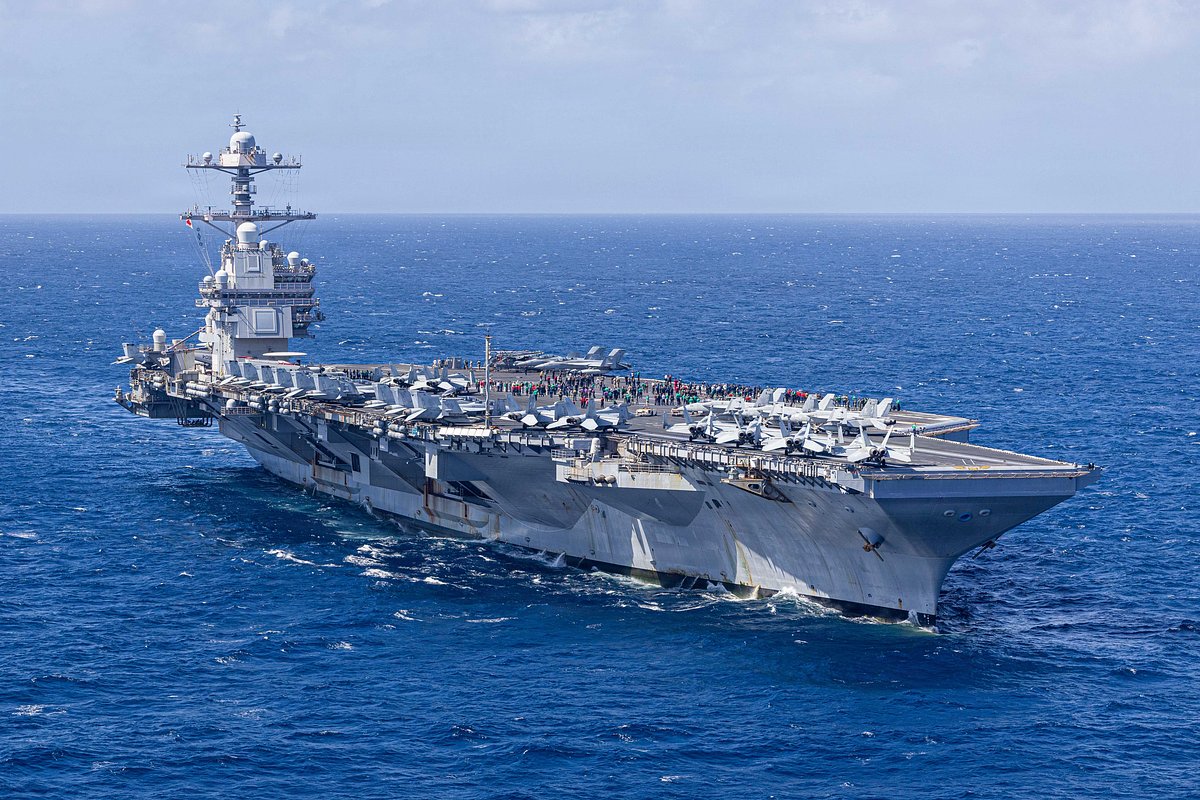
The $418M Elevator Ride: HII’s Key to U.S. Naval Dominance
MCLEAN, VA – June 22, 2026 – At first glance, a corporate announcement about elevator maintenance might be the kind of news that gets lost in the financial pages. But when the elevators are aboard U.S. Navy aircraft carriers and the maintenance contract is worth $418 million, it’s worth a closer look. HII, America’s largest military shipbuilder, just secured this five-year deal, and the story it tells is about much more than mechanical lifts. It’s a story about what it takes to project power across the globe and the intricate, high-stakes business of keeping the world’s most advanced navy ready for anything.
The Critical Link in the Kill Chain
It’s easy to underestimate the importance of an elevator. But on a floating city and airbase like an aircraft carrier, the elevators are the lifeblood of its primary mission. The new contract tasks HII’s Mission Technologies division with maintaining these critical systems on the Navy’s carriers and amphibious ships. This isn't just routine upkeep; it’s a matter of national security. An aircraft carrier with a malfunctioning elevator system is severely hobbled, if not entirely neutralized.
These are not the lifts you find in an office building. The four massive, deck-edge elevators on a Nimitz-class carrier can hoist two fully-loaded fighter jets—weighing up to 150,000 pounds—from the cavernous hangar bay to the flight deck in seconds. They are the most critical vertical logistics link for launching air assets. Without them, aircraft, ammunition, and essential supplies are stuck below deck. The operational tempo, or the rate at which a carrier can launch and recover aircraft, plummets. In a combat scenario, that delay can be catastrophic. The Navy’s newest Ford-class carriers have even integrated advanced electromagnetic elevators that are faster and more reliable, underscoring the constant push for efficiency and readiness.
"Ensuring that essential operational systems — including shipboard elevators — run reliably is central to meeting the readiness needs of our U.S. sailors and Marines,” said Michael Lempke, president of Mission Technologies’ Global Security group, in the company's announcement. His statement highlights the core issue: reliability is readiness. For the men and women serving on these vessels, it's also a matter of safety. The complex systems of cables, motors, and platforms require expert, consistent oversight to prevent accidents involving personnel and billion-dollar assets.
Beyond the Shipyard: A Strategy of Sustainment
The $418 million figure isn't just a win for HII; it's a clear signal of the company's successful strategy to dominate not just shipbuilding, but the entire lifecycle of a naval vessel. Building a ship is a monumental task, but maintaining, repairing, and modernizing it over a 50-year lifespan is an even larger and more consistent source of revenue. This contract falls into the lucrative and growing world of defense sustainment.
The agreement is structured as an Indefinite Delivery/Indefinite Quantity (IDIQ) contract. For those of us who track these things, IDIQs are a fascinating tool. They provide the Navy with the flexibility to order services as needed over the next five years without going through a new procurement process each time, while giving HII a predictable pipeline of work. It’s a mechanism that acknowledges the unpredictable nature of naval operations and the constant need for maintenance.
HII’s position in this market is formidable. While specialized firms like Jered, LLC and Delaware Elevator Marine Division compete in the marine elevator space, HII’s advantage lies in its sheer scale and integrated relationship with the Navy. With a history stretching back 140 years and a role in building or maintaining the vast majority of the current fleet, the company possesses an unparalleled depth of institutional knowledge. This contract leverages over 40 years of specific experience from its Elevator Support Unit. With a total backlog of $54 billion as of the first quarter of 2026, this new award further solidifies HII’s financial stability and its indispensable role as a partner to the Department of Defense.
Global Reach, Rapid Response
The most compelling part of this story might be where the work gets done. The contract specifies that services will be performed not just in U.S. shipyards, but at forward-deployed locations around the world. This is where the concept of HII’s “rapid response fly-away teams” comes into play. When a critical elevator system fails on a carrier operating in the South China Sea or an amphibious ship on a humanitarian mission off the coast of Africa, a team of HII specialists can be deployed globally to fix it.
This capability is a powerful force multiplier for the Navy. It means that complex repairs that once might have required a ship to return to a home port can now be done on-site, minimizing downtime and ensuring the fleet maintains its global presence and posture. The contract also includes training sailors to promote self-sufficiency at sea, a practical measure that empowers the crew to handle more routine issues themselves, saving time and taxpayer money.
This global, on-demand service transforms a maintenance contract into a strategic asset. The $418 million investment isn't just buying parts and labor; it's buying operational availability. It ensures that when a U.S. aircraft carrier arrives in a global hotspot, it is fully capable and ready to perform its mission, from its advanced radar down to the humble, yet absolutely vital, elevators that make it all possible.