
- $11 billion investment target for Abu Dhabi's HELM Cluster by 2045
- 30,000 skilled jobs projected in the biotech sector by 2045
- Sanofi's $3.2 billion acquisition of Translate Bio (2021) to advance mRNA science
Experts would likely conclude that this partnership represents a strategic leap for Abu Dhabi’s transition into a global life sciences hub, leveraging AI and mRNA innovation to enhance vaccine development and regional health security.
Abu Dhabi's Biotech Ascent: Sanofi Partnership Bets Big on AI Vaccines
ABU DHABI, UAE – June 23, 2026
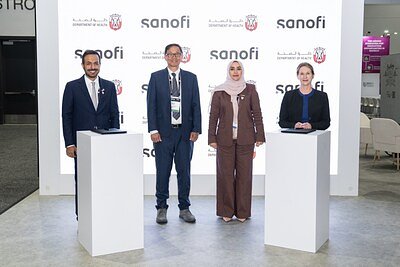
A memorandum of understanding signed this week between Abu Dhabi's Department of Health (DoH) and French biopharma giant Sanofi is far more than a standard corporate handshake. The agreement, announced at the BIO International Convention in San Diego, to explore a joint Vaccine Innovation Centre in the emirate, is a clear and calculated signal of Abu Dhabi's ambition to transform itself from a capital of energy to a global nexus of life sciences innovation.
This isn't just about building another facility; it's about architecting an ecosystem. The proposed centre is the latest and most significant move in the emirate's strategic pivot towards a knowledge-based economy, leveraging deep financial resources to attract world-class partners and build critical infrastructure for the future of global health.
A New Hub in the Global Health Landscape
For years, Abu Dhabi has been methodically laying the groundwork for this moment. The partnership with Sanofi is designed to be a cornerstone of its Health, Endurance, Longevity, and Medicine (HELM) Cluster, a sprawling initiative launched in 2025 to attract over $11 billion in investments and create nearly 30,000 skilled jobs by 2045. The vision is ambitious: to build an integrated platform that seamlessly connects research, investment, manufacturing, and healthcare delivery.
The goal is to solve a fundamental challenge in modern medicine: the long, fragmented journey from laboratory discovery to patient impact. As H.E. Dr. Noura Al Ghaithi, Undersecretary of the DoH, stated, the partnership aims to bring "AI, scientific research, clinical expertise, advanced manufacturing and enabling regulation within a single ecosystem designed to accelerate the journey from discovery to impact." This integrated approach is Abu Dhabi's core value proposition—offering innovators a place to not just invent, but to build, test, and scale solutions for a global market.
By attracting a heavyweight like Sanofi, Abu Dhabi gains more than just technical expertise; it gains a powerful validator for its strategy. For Sanofi, the partnership offers access to a well-funded, agile, and forward-looking sovereign partner eager to cut through red tape and co-invest in high-risk, high-reward technologies.
The Engine Room: AI and mRNA Take Center Stage
The true significance of the proposed Vaccine Innovation Centre lies in its technological focus. The collaboration is explicitly centered on the two forces currently reshaping pharmacology: artificial intelligence and mRNA science. This isn't about producing yesterday's vaccines more efficiently; it's about inventing tomorrow's.
Sanofi has publicly declared its intention to become "the first biopharma company powered by AI at scale." This is not mere marketing. The company has been investing heavily, acquiring mRNA specialist Translate Bio for $3.2 billion in 2021 and expanding partnerships with AI firms like Owkin. Internally, projects like CodonBERT—an AI model that has reportedly halved the time needed to design stable mRNA constructs—demonstrate a deep commitment to embedding machine learning across the R&D pipeline. The Abu Dhabi centre would serve as a powerful new platform to deploy and scale these capabilities.
As Baptiste de Clarens, General Manager for Vaccines in the Greater Gulf at Sanofi, noted, "Vaccine innovation today is being reshaped by artificial intelligence, by advances in mRNA science, and by new models that connect discovery, development and manufacturing." The collaboration in Abu Dhabi is a real-world test case for this new model, aiming to leverage the emirate's vast genomic data sets and clinical infrastructure to accelerate AI-driven discovery.
By focusing on these next-generation platforms, the centre can work on vaccines for which development has previously been too slow or complex, positioning itself at the vanguard of preparedness for future public health threats.
From Global Ambition to Local Impact
While the partnership has global implications, its most immediate impact will be local. The project is a cornerstone of Abu Dhabi's strategy to cultivate a homegrown talent pool and achieve greater self-sufficiency in critical healthcare sectors. The creation of the Vaccine Innovation Centre is designed to be a magnet for talent, drawing in top scientists and creating high-value jobs in fields like bioinformatics, molecular biology, and pharmaceutical engineering.
This aligns with the emirate's Healthcare Education & Training Master Plan, which aims to build a sustainable pipeline of skilled professionals through collaborations with academic institutions like the Mohamed bin Zayed University of Artificial intelligence (MBZUAI) and New York University Abu Dhabi. The goal is to ensure that the 30,000 jobs projected by the HELM cluster are filled by a well-trained local and international workforce, fostering a vibrant, self-sustaining innovation ecosystem.
This investment in human capital is crucial for the long-term success of Abu Dhabi's Economic Vision 2030. By building domestic R&D and manufacturing capabilities, the emirate not only diversifies its economy but also enhances its own health security, reducing its reliance on complex global supply chains.
Reshaping Preparedness and Supply Chains
The recent past has exposed the fragility of a global vaccine manufacturing system concentrated in just a few regions. With an estimated 10 firms controlling nearly 80% of the world's vaccine volume, supply shocks and inequitable access have become defining features of global health crises. The establishment of a state-of-the-art vaccine R&D and manufacturing hub in Abu Dhabi represents a strategic move to de-risk this system.
By creating a new, technologically advanced node in the global network, the DoH-Sanofi partnership can enhance regional supply security for the Middle East and Africa, areas that have been historically dependent on imports. The centre's focus on agile platforms like AI and mRNA means it could potentially pivot quickly to develop and produce vaccines for emerging regional threats, serving as a critical first line of defense.
This move is not just about building capacity, but about building smarter capacity. The collaboration intends to streamline regulatory processes and leverage real-time data to shorten development timelines, addressing the core challenges that have hampered pandemic response in the past. The MoU signed in San Diego is, therefore, more than an agreement to explore a building; it is a foundational step in building a more resilient and equitable global health architecture.