
- $400,000+: Starting cost for major luxury home renovations in Arizona's elite neighborhoods.
- $4.4M: Median sale price in Paradise Valley, highlighting the high-value land assets.
- $3.9M: Median listing price in the Cactus Corridor, reinforcing the premium on location.
Experts would likely conclude that Arizona's high-net-worth homeowners are prioritizing large-scale renovations over relocation to preserve prime locations while modernizing outdated properties.
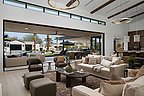
The $400K Facelift: Why Arizona's Elite Renovate, Not Relocate
SCOTTSDALE, Ariz. – June 12, 2026 – In the rarefied air of Arizona’s most exclusive real estate corridors, a quiet but powerful market shift is gaining momentum. While headlines often chase new construction, the real story for many established, high-net-worth homeowners is not about moving out, but digging in. This week, family-led builder Patterson Homes placed a significant bet on this trend, launching a luxury remodel campaign aimed at owners in Paradise Valley, Scottsdale, and the Cactus Corridor. Their premise is simple and potent: "Keep the Location. Elevate the Residence."
This isn't about minor cosmetic updates. The firm is targeting major renovations starting at $400,000, a figure that signals a deeper transformation. The campaign is a calculated response to a growing realization among property owners in these multi-million-dollar enclaves: the most valuable asset they possess—the land, the views, the privacy, the neighborhood—is already in hand. The structure sitting on that land, however, is often a relic of a bygone era.
The New Calculus of Luxury Real Estate
To understand this shift, one must first understand the market dynamics of places like Paradise Valley, where the median sale price recently hovered around $4.4 million. In the nearby Cactus Corridor, median listing prices are approaching $3.9 million. In these markets, the land itself is the ultimate luxury good, an appreciating and irreplaceable asset. Selling a home on a prime lot to buy another often means a lateral move at best, or a compromise on location at worst, all while incurring substantial transaction costs.
Consequently, a new financial and emotional calculus has emerged. Homeowners are recognizing that a six- or seven-figure investment into their current residence can be a more prudent strategy than relocating. They already own the view of Camelback Mountain or the quiet cul-de-sac that can’t be replicated. What they lack are the open-concept living spaces, the spa-level primary suites, and the seamless indoor-outdoor flow that define contemporary luxury living.
Across these neighborhoods, multi-million-dollar properties often feature designs from the 80s and 90s: kitchens disconnected from living areas, formal rooms that go unused, and primary bathrooms that feel functional rather than restorative. Add to this aging mechanical systems and a lack of smart-home integration, and the residence itself begins to feel like a liability against the asset value of the property. This is the pain point Patterson Homes is aiming to solve.
From Custom Build to "Controlled Renovation"
For a builder with two decades of experience in ultra-luxury custom homes, pivoting to large-scale renovations is a significant strategic move. Patterson Homes is leveraging its core competency—the discipline of ground-up construction—and applying it to the complex challenge of transforming an existing structure. This is a key differentiator in a fragmented remodeling market.
"A lot of owners already have the hardest thing to replace: the land, the address, and the neighborhood," said Ryan Patterson, the company's founder, in the announcement. "We bring the same discipline we use in ultra-luxury custom builds to major renovations — because when the property is worth keeping, the residence deserves to be elevated, not patched."
The term "patched" is telling. It speaks to the ad-hoc nature of many renovations. Patterson's philosophy of a "controlled renovation" suggests a more holistic, architectural approach. It’s not about simply replacing finishes but fundamentally rethinking the home’s flow, light, privacy, and systems. It involves the same level of planning, design, and execution as building a new estate from scratch, ensuring the final product feels cohesive and intentional.
"Renovation at this level has to be controlled," Patterson emphasized. "The goal is to make the residence feel intentional again — like the property and home finally match." This approach requires a vertically integrated team of architects, interior designers, and project managers, which the firm brings in-house—a model designed to de-risk a process notorious for budget overruns and timeline extensions.
The Anatomy of a Modern Arizona Estate
So, what does a renovation starting at $400,000 look like? It's about a fundamental reimagining of the living experience. Industry trends for 2026 in Scottsdale and Paradise Valley confirm the demand for the very features these large-scale projects deliver.
Priority number one is often the kitchen and its relationship to the rest of the home. This involves removing walls to create great rooms, installing professional-grade appliances, and adding massive islands that serve as the home's social hub. Next is the primary suite, which is transformed from a simple bedroom into a private retreat with a spa-like bathroom, expansive walk-in closets, and often a direct connection to a private patio or outdoor space.
Perhaps the most significant transformation in the Arizona luxury market is the blurring of lines between indoors and outdoors. Renovations at this level almost always involve creating expansive covered patios with outdoor kitchens, entertainment systems, and comfortable living areas. Walls of glass that retract or fold away are a common request, turning a previously static living room into a dynamic space that embraces the desert climate.
Underneath it all, the home's vital systems are overhauled. This includes high-efficiency HVAC, sophisticated lighting control, and whole-home automation that can be managed from a smartphone. From casita additions to accommodate multi-generational living to RV garages for the modern adventurer, these projects are about tailoring an existing property to the specific lifestyle of its owner, effectively creating a custom home within an existing footprint.