
- $11.6 million secured in C-PACE financing for Dallas data center conversion
- 3.0-megawatt colocation data center to be built in a repurposed 1980s industrial property
- 530 megawatts of data center leasing absorbed in DFW in 2023, a sevenfold increase from 2020
Experts would likely conclude that this project exemplifies how innovative financing mechanisms like C-PACE can bridge the gap between legacy industrial properties and modern digital infrastructure needs, while promoting sustainable redevelopment.
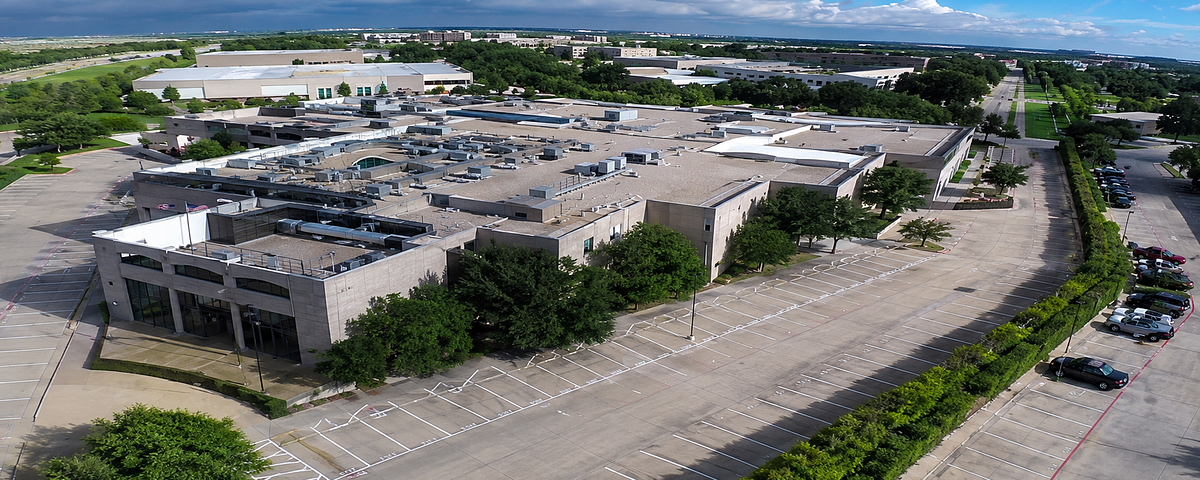
C-PACE Fuels Dallas's Digital Future by Reviving Its Industrial Past
DALLAS-FORT WORTH, TX – June 11, 2026 – A vacant industrial property near DFW Airport is at the center of a strategic maneuver that reveals much about the future of digital infrastructure. Infrascale Systems, a local developer, has secured $11.6 million in specialized financing to convert the 1980s-era building into a modern 3.0-megawatt colocation data center. This isn't just another construction project; it's a prime example of how innovative financial instruments are being deployed to solve the voracious power and space demands of the AI era, all while championing sustainable redevelopment.
The deal was financed by PACE Loan Group and facilitated by Lone Star PACE using a mechanism known as Commercial Property Assessed Clean Energy (C-PACE). This financial tool is rapidly becoming the preferred method for underwriting the capital-intensive, energy-focused upgrades required to turn old real estate into the backbone of the digital economy.
The Strategic Rationale: Adaptive Reuse Meets Innovative Finance
The property at 6001 Campus Circle Drive West was not originally destined for this high-tech future. Its owner, Vesgro, had planned to lease the 113,406-square-foot facility for distribution. However, a critical asset lay dormant: an 8.5 MW power allocation, a golden ticket in a market where securing energy is a primary bottleneck. Infrascale Systems identified this strategic advantage, recognizing the potential to resurrect what was, ironically, a first-generation data center from the 1980s.
“This property started as a first-generation data center in the 1980s, when needs were completely different,” said Brad Lonberger, CEO of Infrascale. “We will be able to leverage the underlying power by adding modern infrastructure to create a premier enterprise colocation facility.”
This is where the C-PACE financing becomes the linchpin. The $11.6 million loan isn't a traditional construction loan. It's specifically earmarked for improvements that boost energy efficiency and resiliency—upgrades to HVAC systems, advanced lighting, electrical infrastructure, backup generators, and the building envelope. C-PACE financing operates as a long-term, fixed-rate assessment on the property's tax bill, tied to the property itself rather than the owner. This structure de-risks the investment for developers and provides a lower cost of capital than typical mezzanine debt, making ambitious energy-centric projects financially viable.
Robbie Pinkas, the senior vice president at PACE Loan Group who originated the loan, noted the growing trend. “Given the demand for data centers across the country, we are increasingly seeing conversions of existing industrial projects or specialized facilities into data centers. C-PACE financing is an ideal solution given the electric and mechanical expenses needed to convert those spaces,” he said. This isn't Pinkas's first foray into such large-scale conversions; his firm also originated a massive $100 million C-PACE loan for the transformation of the former Kansas City Star printing press into an AI data center, signaling a repeatable and scalable financial model.
DFW's Data Center Dominance and the 'Missing Middle'
The Vesgro Data Center project is not happening in a vacuum. The Dallas-Fort Worth region has quietly ascended to become the world's number one data center market, according to Cushman & Wakefield's 2026 global comparison. The market's growth is explosive, with data center leasing in DFW absorbing a staggering 530 megawatts in 2023—a sevenfold increase from 2020. With an astonishing 87% of the 605 MW of colocation space currently under construction already pre-leased, demand is far outstripping supply.
This insatiable appetite is driven by the global arms race for AI supremacy and the relentless expansion of cloud computing. However, the headlines are dominated by hyperscale facilities, massive campuses built for tech giants like Amazon, Google, and Microsoft. The new Vesgro facility is targeting a different, yet equally critical, segment: the 'missing middle.'
Cloudnium, the Texas-based provider tapped to manage the new facility's day-to-day operations, is focused on this niche. “This type of data center fills the void created by the new focus on super-sized AI data centers. We are happy to serve the missing-middle location which companies still need,” explained Earl Adams, CEO of Cloudnium.
This 'missing middle' consists of enterprises that require robust, secure, and high-availability colocation but do not need the planetary scale of a hyperscaler. They are businesses pursuing hybrid cloud strategies, requiring specialized security and compliance, or simply seeking a reliable local presence in the DFW metroplex. Cloudnium’s model, offering everything from single cabinets to private suites, provides the flexibility this market segment demands, ensuring that the digital infrastructure boom serves a wider array of businesses, not just the titans of tech.
A Blueprint for Sustainable Growth in Texas
Beyond the financial and market mechanics, this project embodies a pragmatic and resourceful approach to growth that is becoming a Texas hallmark. As the state grapples with the challenge of powering its economic expansion—with grid operator ERCOT fielding an unprecedented number of requests for new large-load connections—adaptive reuse becomes a critical strategy.
By reviving an underutilized building, the project conserves resources and avoids the significant carbon footprint of new construction. The use of C-PACE financing directly incentivizes this sustainable path. Under the Texas PACE Act, this funding mechanism is designed to reward property owners for implementing upgrades that exceed standard building codes, delivering a public benefit through reduced strain on the power grid and water supplies.
“Projects like this demonstrate how Texas can meet growing digital infrastructure demands while making smarter use of existing buildings and resources,” said Lee McCormick, president of Lone Star PACE. “By helping finance high-efficiency upgrades to an underutilized property, C-PACE supports the conservation of energy and other valuable natural resources while accelerating private investment, job creation and long-term economic growth in our state.”
The impact is quantifiable. In 2025 alone, projects administered by Lone Star PACE were projected to cut energy use by 3 million kWh and water use by nearly 10 million gallons annually. With the state recently increasing the loan-to-value ratio for C-PACE projects to 35%, this financial tool is becoming even more powerful. The Vesgro Data Center conversion, set for completion in September 2026, serves as a powerful case study, demonstrating how strategic capital can unlock the latent potential in legacy assets to build a more resilient and efficient digital future.