
- 14% global market share in battery energy storage systems (BESS) for Sungrow, the second-largest in the world.
- 684Ah cell with an ultra-long cycle life of 12,000–15,000 cycles and 27% reduction in container usage for storage capacity.
- 35,800 tons of CO₂ emissions reduced in 2024 through energy-saving projects.
Experts would likely conclude that Sunwoda's strategic alliance with Sungrow, combined with its advanced battery technology and strong sustainability commitments, positions the company as a key leader in the global transition to renewable energy.
Sunwoda's Global Charge: Powering the Future with New Battery Tech
HEFEI, China – January 08, 2026 – In a significant display of its growing influence in the global energy sector, lithium-ion battery giant Sunwoda took center stage at the 2026 Sungrow Global Partners Conference today. The company reinforced its strategic alliance with energy titan Sungrow, collected prestigious awards for its sustainable practices, and outlined a forward-looking vision for navigating the world's accelerating transition to renewable power.
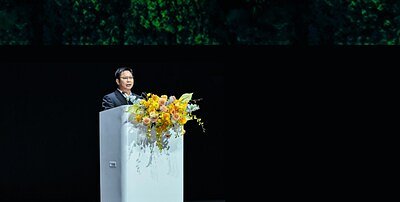
Wang Wei, Chairman of Sunwoda, delivered a keynote speech titled "Globalization Strategy and Sustainable Development," emphasizing that the global energy system is undergoing a profound transformation. He noted that renewable energy is no longer a supplementary power source but is rapidly becoming foundational. In this new era, he argued, industry competition will be defined by system-level capabilities, global delivery capacity, and sustainable governance. The conference culminated in Sunwoda receiving two key honors from its partner: the "Global Strategic Partner Award" and the "ESG Best Practice Award," recognizing the company's extensive global expansion, technological prowess, and deep commitment to environmental, social, and governance principles.
A Deepening Alliance Forged in Energy Storage
The formal recognition from Sungrow underscores a partnership that extends far beyond a simple supplier-client relationship. The collaboration between the two Chinese powerhouses is a deep, evolving alliance that spans the entire energy storage value chain, from joint technology roadmaps and product platform development to integrated manufacturing and global delivery logistics. This synergy is critical in a market where, according to Wood Mackenzie, Sungrow holds the world's number two spot for battery energy storage system (BESS) integration with a 14% global market share, narrowly trailing Tesla.
This partnership is designed to enhance the adaptability and reliability of energy storage solutions worldwide, a crucial task as grids globally strain to integrate intermittent renewable sources like solar and wind. By combining Sunwoda's nearly three decades of battery expertise with Sungrow's system integration leadership, the two firms aim to create more robust and efficient energy infrastructure. This collaboration is a strategic move to solidify their positions in a market dominated by Chinese integrators, which now account for seven of the top ten global BESS providers.
The 684Ah Cell: A New Cornerstone for Grid-Scale Power
At the heart of the Sunwoda-Sungrow collaboration is the 684Ah stacked battery cell, a piece of technology that represents a significant leap forward for utility-scale energy storage. The recent milestone delivery of the one-millionth 684Ah cell is not just a manufacturing achievement; it validates the cell's readiness for mass deployment and serves as a foundation for even higher-capacity storage solutions in the future.
The technical specifications of this Lithium Iron Phosphate (LFP) cell are formidable. Sunwoda reports an ultra-long cycle life of 12,000 to 15,000 cycles, which translates to a service life of over 20 years under typical grid operating conditions. Its volumetric energy density exceeds 440 Wh/L, a figure that surpasses many competing products. This high density allows for a 27% reduction in container usage for a given storage capacity, directly lowering system costs.
Safety, a paramount concern in large-scale battery deployments, is addressed through a multi-layered approach. This includes using intrinsically safe materials and a unique "thermal-electric separation" design with a 3D cooling structure to optimize thermal management and prevent runaway events. The company claims these innovations, combined with streamlined assembly, contribute to an 8% reduction in the Levelized Cost of Electricity (LCOE), a key metric for the economic viability of energy projects.
Integrating Sustainability into a Global Footprint
Sunwoda's receipt of the "ESG Best Practice Award" is a testament to a corporate strategy that places sustainability at its core. In March 2025, the company launched its "LEAP toward a Sustainable Future" strategy, which embeds ESG management across its operations through four pillars: Lifecycle, Ecology, Accountability, and Partnership. This commitment is backed by some of the most ambitious climate goals in the industry: achieving operational carbon peak by 2029 and full carbon neutrality by 2050.
These are not just distant targets. In 2024 alone, Sunwoda increased its green electricity usage to nearly 30% and completed over 200 energy-saving projects, cutting carbon dioxide emissions by an estimated 35,800 tons. This progress has earned external validation, with MSCI upgrading Sunwoda's ESG rating to 'A' in 2025, a significant jump that places it in a leading position globally. The company also holds a top-tier 'AA' rating from Wind ESG Ratings, ranking it in the top 0.9% of its sector.
Furthermore, Sunwoda is actively building a circular economy for its products. It is advancing initiatives like a digital Battery Passport for traceability and expanding its battery recycling and material reuse programs. The company plans to establish new recycling centers in Europe and Thailand, aiming to process 120,000 tons of used batteries annually by 2025.
Navigating a Fiercely Competitive Clean Energy Market
Sunwoda's strategic initiatives are set against the backdrop of a booming but intensely competitive global energy storage market. BloombergNEF forecasts the market will grow by 23% in 2025 alone, with cumulative capacity projected to increase eight-fold by 2035. While China remains the largest single market, aggressive overseas expansion is a key priority for leading firms.
Sunwoda has already established a formidable global presence to capitalize on this growth. It ranked among the top ten global suppliers for both power batteries and energy storage cells in 2024 and secured a top-five position for energy storage system shipments. Its status as a Bloomberg Tier 1 Energy Storage Manufacturer further cements its bankability for major projects.
The company's internationalization strategy includes R&D centers and localized service networks across Asia, Europe, the Middle East, and North America. Critically, it has established manufacturing bases in key regions, including a new facility in Hungary to serve the European electric vehicle market and other plants in India, Vietnam, and Morocco. This distributed manufacturing footprint is a crucial advantage, allowing Sunwoda to navigate complex geopolitical tensions and trade policies while ensuring a rapid response to customer needs in local markets.
As the world races to build a next-generation energy system, Sunwoda's multi-pronged strategy of technological innovation, deep strategic partnerships, and an unwavering commitment to sustainability positions it not just as a supplier, but as a key architect of a cleaner energy future.