
- 262 MW: Capacity of SPS’s Virtual Power Plant (VPP) platform, enabling real-time grid support.
- 1MW/2MWh: Scale of the AI-driven microgrid at NTUST, providing 4 hours of autonomous power during outages.
- 2MW/8MWh: Size of SPS’s energy storage EMS site successfully deployed in Japan.
Experts agree that SPS’s AI-driven approach to grid management represents a critical advancement in ensuring stability and resilience amid the growing integration of renewable energy sources.
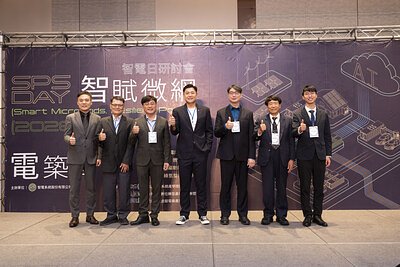
SPS Taps AI to Future-Proof Grids at Home and Abroad
TAIPEI, Taiwan – April 30, 2026 – In an era defined by the twin challenges of climate change and an accelerating energy transition, Taiwanese tech firm Smart Power System (SPS) has unveiled an ambitious strategy to redefine power grid stability. At its annual “Smart Power Day” seminar, the company declared a full-scale commitment to artificial intelligence as the core of its mission, outlining two strategic pillars for 2026: deepening the deployment of disaster-resilient microgrids in Taiwan and accelerating its expansion into overseas markets.
Gathering over 250 leaders from industry, government, and academia, the event solidified SPS's position not just as a component supplier, but as an architect of intelligent, autonomous energy systems. The company’s roadmap signals a pivotal shift from simply managing energy to actively predicting and orchestrating it, promising a future where power is more reliable, even as the grid becomes more complex.
The AI Solution to the Renewable Challenge
The fundamental dilemma of the modern grid is the volatility of renewable energy. While solar and wind power are critical for decarbonization, their intermittent nature threatens grid stability. Addressing this, SPS Chairman Kuo Shou-Fu stated that a new paradigm is required. “Precision energy dispatching is the core of realizing the value of microgrids,” Kuo emphasized during his opening remarks, noting that simply building more power plants is no longer a viable solution.
SPS’s answer lies in its AI-centric dispatching engine. This technology moves beyond simple management to predictive control. By analyzing vast datasets—including weather forecasts, historical consumption patterns, and real-time market prices—the AI can anticipate fluctuations in both renewable energy supply and consumer demand. This allows it to transform unpredictable solar and wind generation into stable, dispatchable resources.
The practical application of this technology is the company’s Virtual Power Plant (VPP) platform. By intelligently coordinating a network of behind-the-meter batteries and other distributed energy resources, SPS has aggregated a formidable 262 MW of capacity. This VPP doesn't just sit idle; it actively participates in Taiwan's electricity trading market, demonstrating a commercially viable model for leveraging distributed assets to support the central grid. This capability showcases a mature system that can make thousands of optimized decisions in real-time, a feat impossible without a sophisticated AI backbone.
A Lifeline Beyond the Blackout
The most immediate and tangible impact of this technology is its application in disaster resilience. With extreme weather events causing more frequent and prolonged grid outages, ensuring continuous power for critical infrastructure has become a national security imperative. SPS’s first strategic pillar directly targets this vulnerability.
The company highlighted its recently completed project at the National Taiwan University of Science and Technology (NTUST) as a landmark achievement. The 1MW/2MWh microgrid, powered by SPS’s intelligent Energy Management System (EMS), can seamlessly island itself from the main grid during an outage and provide four hours of autonomous power to the campus. For a university, this means critical research, data centers, and safety systems remain operational when they are needed most.
This project serves as a blueprint for SPS's broader vision. The company plans to modularize this AI-driven microgrid solution for rapid deployment in other critical sectors, including hospitals, government emergency centers, and transportation hubs. As one energy analyst noted, “The value of a microgrid isn't measured on a normal day; it's measured during a crisis. Providing hours of stable power to a hospital during a typhoon isn't just a technical achievement—it's a public service.” This focus aligns with growing demand and government policies in Taiwan and globally that prioritize hardening infrastructure against climate-related disruptions.
Exporting Resilience: Taiwan's Global Energy Play
While fortifying domestic infrastructure, SPS is simultaneously pursuing an aggressive international expansion, positioning Taiwan as a key exporter of high-tech energy solutions. This second strategic pillar leverages the company's proven expertise to tap into burgeoning global markets for grid modernization.
SPS has already established a significant foothold in Japan, having successfully deployed and maintained a 2MW/8MWh energy storage EMS site. Japan, a nation acutely aware of natural disaster risks, has been a major investor in decentralized energy and grid stability, making it a natural market for SPS's technology. The successful project there serves as a powerful validation of the system’s reliability and adaptability to different regulatory environments.
Now, the company is actively developing projects in New Zealand and Australia. These markets are ideal proving grounds, as both countries have high levels of renewable energy penetration and are grappling with the associated grid challenges. Australia, in particular, faces grid stability issues and the threat of bushfires, driving significant investment in microgrids and energy storage. By exporting its integrated EMS, SCADA, and Power Plant Controller (PPC) solutions, SPS is not just selling hardware and software; it is exporting a comprehensive methodology for intelligent grid management, a highly sought-after capability worldwide.
From Bedrock to Blueprint: A Full-Stack Approach
Underpinning SPS's ambitious strategy is its deep, vertically integrated technical capability. Led by General Manager Huang Li-chien, the company’s core team demonstrated a command of the entire energy management stack, from foundational SCADA and EMS infrastructure that forms the nervous system of a power plant, to the high-level AI algorithms that act as the brain.
This full-stack approach is a key competitive advantage, enabling SPS to deliver turnkey solutions that are robust and seamlessly integrated. The company showcased its readiness for large-scale projects, such as the upcoming energy storage system at Taipower’s Shenao Power Plant, confirming its product line can handle utility-grade requirements.
Looking further ahead, SPS also shared its long-term roadmap for integrating green hydrogen. This forward-thinking vision signals an understanding that the energy transition will involve multiple energy carriers. By planning for hydrogen, the company is preparing for the next evolution of energy storage and dispatch, ensuring its platform remains relevant as the technology landscape matures. This comprehensive vision, from current deployments to future innovations, provides a robust foundation for the ongoing energy transition.