
- 1,300 kg: Amount of expired raw materials discovered at Softcare's Senegal factory
- 30 countries: Softcare's market presence across Africa and Latin America
- 2,800+ distributors: Softcare's supply network
Experts conclude that Softcare's products are safe and compliant with regulations, validating the company's market leadership in Africa.
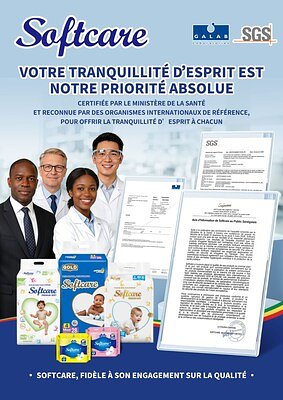
Softcare Cleared in Senegal Probe, Vindicating African Market Leader
DAKAR, Senegal – March 12, 2026
Hygiene products giant Softcare has been formally cleared of wrongdoing following a comprehensive joint investigation, Senegal's Ministry of Health announced today. The conclusion puts an end to months of speculation and public concern that began late last year, ultimately validating the safety of the company's products and reinforcing its significant position in the African consumer market.
In a press conference, officials confirmed that the investigation, which also involved the Ministry of Trade and Industry, found no evidence that expired raw materials were used in Softcare's production processes. The probe affirmed that the company's baby diapers, sanitary pads, and other hygiene products comply with all applicable safety and regulatory requirements in Senegal.
Allegations, Unrest, and Official Resolution
The investigation was launched following a tumultuous period for the company in Senegal. In early December 2025, the Senegalese Pharmaceutical Regulatory Agency (ARP) issued an alert concerning approximately 1,300 kilograms of expired raw materials, specifically polyethylene film, discovered at Softcare's local factory. The agency initially requested a market withdrawal of the company's products.
This announcement sparked significant public alarm, fueled by social media reports of skin irritation and a broader call for transparency. A petition demanding government action garnered over 1,000 signatures, and a parliamentary information mission was established to scrutinize the case. A Senegalese doctors' union leader noted at the time that such sensitive products, if improperly manufactured, could potentially cause irritation, allergies, or infections.
However, the situation grew more complex when the ARP reversed its decision just eight days later, stating that Softcare had demonstrated the expired materials were not used in production. This swift reversal led to public skepticism and unproven allegations of impropriety, which the company denied. The subsequent inter-institutional investigation was initiated to provide a definitive and transparent resolution.
In a press conference preceding today's final announcement, Health Minister Ibrahima Sy acknowledged that the presence of expired materials in the factory's production area was a regulatory breach. However, he emphasized that rigorous scientific analysis concluded these materials were never incorporated into products sold to the public, and he criticized the ARP’s initial inspection for lacking sufficient rigor. The final report formally closes this chapter, with Softcare stating it cooperated fully with all authorities throughout the process.
A Test of Market Leadership and Trust
The outcome is a critical victory for Softcare, a multinational group that has built a dominant presence in Africa's fast-growing personal care sector. According to a 2024 report by market research firm Frost & Sullivan, Softcare ranked first in Africa by sales volume for both baby diapers and sanitary pads. The company's network spans over 30 countries in Africa and Latin America, supplying more than 2,800 distributors and retailers.
This market leadership, however, comes with intense competition from global giants like Procter & Gamble (Pampers, Always) and Kimberly-Clark (Huggies), as well as ascendant regional players like Hayat's Molfix brand. The public nature of the Senegal investigation represented a significant threat to the consumer trust Softcare has cultivated over 15 years of local operations.
To bolster its quality credentials, Softcare points to a comprehensive management framework and independent verification. Its production plants in Benin, Cameroon, and Zambia hold ISO 9001 (quality), ISO 14001 (environmental), and ISO 45001 (occupational health) certifications. The company also regularly commissions independent testing from internationally recognized laboratories like SGS and GALAB to ensure its products are free from harmful substances and comply with European EDANA industry standards.
Local Roots and a Broader Commitment
Beyond regulatory compliance, Softcare's strategy has been heavily reliant on establishing deep local roots through in-country manufacturing and corporate social responsibility (CSR). The company has manufacturing facilities in Ghana, Kenya, Tanzania, and Senegal, which it frames as a commitment to local industrialization and job creation.
This approach has earned the company significant political and consumer goodwill. In late 2025, Ghana's Vice President, Professor Naana Jane Opoku-Agyemang, personally officiated the ribbon-cutting ceremony for Softcare's local facility, commending its contribution to producing high-quality sanitary pads with a "Made in Ghana" label.
The company has also received numerous consumer-driven accolades, including being named the "Most Admired Personal Care Brand" in Kenya in June 2025 and winning awards for "Most Trusted Sanitary Pad Brand" and "Most Quality Baby Diaper Brand" in Tanzania in December 2025.
Softcare's CSR activities are a visible component of this strategy, with recent initiatives including maternal health partnerships with hospitals in Kenya, road safety campaigns in Ghana, and donations to orphanages and schools in Uganda and Senegal. Following the conclusion of the investigation, Softcare has reaffirmed its dedication to quality management and transparency, stating it will continue working with regulators and independent labs to protect consumer health and maintain long-term trust.