
- 31 years of Operation Chill: The program has been running since 1995, now involving over 1,300 law enforcement agencies.
- 24 million coupons distributed: Over the program's history, with nearly 740,000 issued in 2026 alone.
- 13,000+ stores: 7-Eleven's vast network, including Speedway and Stripes, supports the initiative.
Experts would likely conclude that while Operation Chill is a well-intentioned and effective community engagement tool, it is not a solution to systemic issues in policing but rather a small step toward building trust through positive interactions.
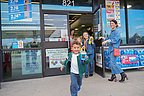
Slurpee Diplomacy: Can a Frozen Drink Mend Public Trust?
IRVING, TX – June 04, 2026 – This summer, as in the 30 summers before it, police officers across the country will be armed with something other than their standard-issue equipment. Their mission: to catch kids in the act—of doing good. Their reward: a coupon for a free Slurpee.
This is Operation Chill, 7-Eleven, Inc.’s signature community outreach program, now entering its 31st year. The premise is disarmingly simple. An officer sees a child wearing a bike helmet, picking up litter, or helping a neighbor, and rewards them with a voucher for the iconic frozen beverage. It’s a transaction that costs the corporation a few cents but aims to purchase something far more valuable: a moment of positive connection between law enforcement and the next generation.
In an age of profound social friction and digital-fueled distrust in public institutions, a program built on sugary drinks and small-town kindness feels like a dispatch from another era. Yet, its endurance for over three decades, expanding from a local Philadelphia initiative in 1995 to a national campaign involving over 1,300 law enforcement agencies, demands a closer look. Is this merely a brilliant piece of marketing, or is there a deeper lesson here about how we build—and rebuild—public trust in the 21st century?
An Enduring Recipe for Engagement
The scale of Operation Chill is impressive. Since its inception, more than 24 million coupons have been distributed. This year alone, 7-Eleven, which now operates a vast network including Speedway and Stripes stores, will issue nearly 740,000 more. The program is a core pillar of the company’s philanthropic mission, which centers on fostering thriving communities.
"Operation Chill represents more than a moment of recognition – it reflects our ongoing commitment to fostering trust, strengthening community relationships and encouraging positive engagement," said Treasa Bowers, Executive Vice President and Chief People and Sustainability Officer at 7-Eleven, Inc., in a statement. For the convenience store giant, the program is a tangible expression of its "7impact 'Good Made Easy'" strategy, which seeks to weave social responsibility into its vast operational fabric.
Law enforcement partners echo this sentiment, viewing the program as a vital tool for community policing. The interactions it generates are intentionally low-stakes and non-enforcement related. It’s not about investigating a crime; it’s about acknowledging a good deed. "Positive engagement with youth is essential to fostering safe and connected communities," explained Dallas Police Assistant Chief, Teena Schultz. She noted that the program "provides a unique opportunity to recognize good behavior while creating constructive, trust-building interactions between officers and the young people we serve."
This sentiment is shared by officers on the ground. In interviews and public statements over the years, police have consistently described the program as an "icebreaker." One officer in a mid-Atlantic state noted that the coupons provide an "easy and effective way" to initiate conversations that might not otherwise happen, breaking down the uniform's intimidating barrier.
The Soft Power of a Slurpee
The longevity of Operation Chill is a testament to its effectiveness as a form of "Slurpee Diplomacy." In a landscape where police-community relations are often fraught with tension and historical grievances, the program creates a space for a different kind of interaction. It humanizes the badge, reframing the officer, if only for a moment, from an authority figure to a friendly face offering a summer treat.
This approach aligns perfectly with the principles of community policing, a strategy that has gained prominence as departments seek to build trust from the ground up. By embedding officers in the community through positive, non-enforcement activities, the theory goes, you can improve relationships, encourage cooperation, and ultimately enhance public safety. Operation Chill provides a pre-packaged, scalable, and corporate-sponsored mechanism to do just that.
However, it is crucial to maintain perspective. Critics of some community policing initiatives argue that symbolic gestures, while well-intentioned, can sometimes serve as a convenient distraction from the need for deeper, systemic reforms. Handing out a Slurpee does not erase the complex socio-economic factors that contribute to crime, nor does it address fundamental questions about use of force, accountability, or racial bias in policing. No one, least of all the program's architects, would claim it is a panacea for these profound challenges.
What it does offer, however, is a micro-intervention. It creates a positive data point in a young person’s experience with authority. For a child whose perception of police might be shaped by negative media portrayals or tense real-world observations, a friendly interaction over a coupon for a cherry-flavored drink can be a powerful counter-narrative. It doesn't solve the big problems, but it can change the texture of a single afternoon, and perhaps, the trajectory of a single relationship.
The Sweet Spot of Corporate Social Responsibility
Viewed through a wider lens, Operation Chill is a masterclass in modern Corporate Social Responsibility (CSR). It sits at the perfect intersection of brand enhancement, community engagement, and operational synergy. For 7-Eleven, the program is not just philanthropy; it's smart business. It associates one of its most iconic products, the Slurpee, with positive emotions and community values. It drives foot traffic to its 13,000+ stores and strengthens its image as a friendly neighborhood fixture.
This is part of a much larger trend. Consumers, especially younger ones, increasingly expect brands to have a purpose beyond profit. Companies are responding with ambitious CSR and Environmental, Social, and Governance (ESG) platforms. 7-Eleven's own "7impact" framework, which includes partnerships with Children's Miracle Network Hospitals and the Boys & Girls Clubs of America, shows a sophisticated understanding of this new landscape. The company reports that its fundraising and volunteer efforts generated over $17 million for charities in 2024 alone.
Operation Chill stands out within this crowded field due to its simplicity, longevity, and directness. It avoids the administrative bloat of many corporate initiatives, instead empowering thousands of individuals—police officers—to act as brand and community ambassadors. The recent strategic partnership with National Night Out, which brought nearly 95 new law enforcement agencies into the program, demonstrates how 7-Eleven continues to evolve the program, integrating it more deeply into the national community-building calendar.
Ultimately, the program’s success lies in its carefully calibrated ambition. It doesn't promise to solve the crisis of policing in America. It promises to facilitate a conversation, to reward a good deed, and to deliver a moment of shared, simple pleasure. In our complex and often cynical world, the enduring power of that simple proposition is something worth examining.