
- Steam Rating: 'Very Positive' from over 1,000 players
- Award Nomination: 2025 Korea Game Awards
- Release Timeline: Console launch on November 27–28, 2025, with global Switch release by year-end
Experts view 'Who's at the Door?' as a groundbreaking psychological horror title that innovatively blends mental health themes with gameplay mechanics, though its commercial success and ethical approach remain subjects of industry debate.
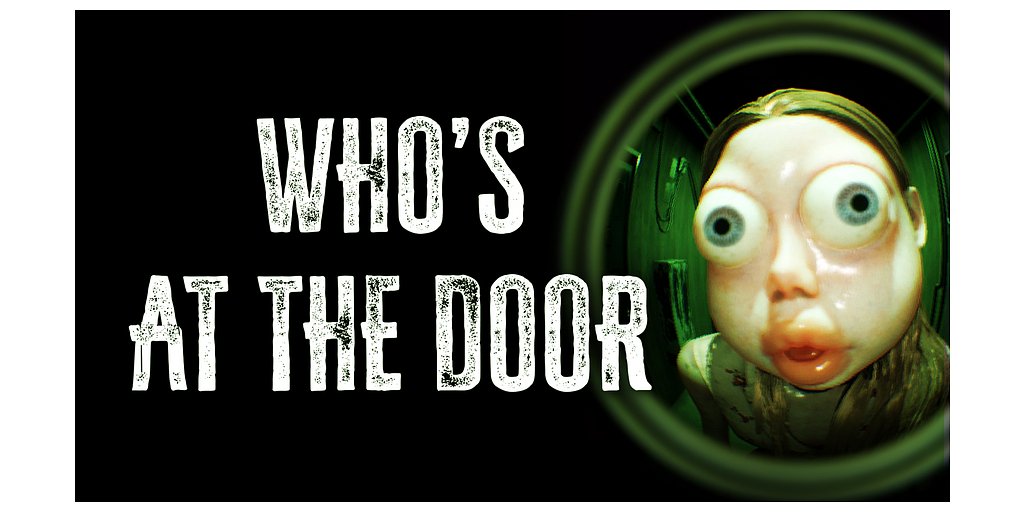
SKONEC's New Horror Game Redefines Fear and Tests Global Markets
SEOUL, South Korea – November 26, 2025 – It begins with a sound both mundane and terrifying: a knock on the door on a dark winter night. This simple premise is the entry point for 'Who's at the Door?', a psychological horror game from South Korean developer SKONEC Entertainment that is rapidly becoming one of the most talked-about titles of the year. Following a successful PC launch, the game has earned a coveted nomination at the 2025 Korea Game Awards, signaling a major validation of its innovative design just as it prepares for a global console release. This confluence of critical acclaim and strategic expansion places SKONEC at a pivotal juncture, testing whether a niche, deeply psychological experience can translate into mainstream international success.
Engineering a New Breed of Dread
'Who's at the Door?' deliberately sidesteps the genre's reliance on overt monsters and cheap scares. Instead, it builds its terror from within, placing players in the role of a protagonist suffering from schizophrenia, trapped alone in an unfamiliar house. The core gameplay loop is a masterclass in tension. Eerie, unsettling "visitors" arrive daily with medication. The player faces a constant, agonizing choice: open the door to these distorted, human-like figures, or take the medicine to quell the terrifying hallucinations that warp the environment. This mechanic moves beyond a simple health bar, turning the management of the protagonist's mental state into the central interactive puzzle.
Since its release on Steam in July, the game has cultivated a 'Very Positive' rating from over a thousand players, who have lauded its unique approach. Praise frequently centers on its ability to generate an "intense psychological pressure like no other." Many have highlighted the game's finale, with one user calling it “the most shocking ending of the year.” While some critics note a short runtime of one to two hours and occasional repetitive moments, the inclusion of multiple endings encourages replayability, inviting players to re-examine every choice.
Drawing inspiration from observational horror titles like 'The Exit 8', where the threat lies in subtle environmental changes, 'Who's at the Door?' carves out its own space. Unlike games that simply use a haunted house as a backdrop, SKONEC makes the protagonist's fracturing perception the primary antagonist. Non-existent shadows writhe in the periphery, whispers echo from empty corners, and the boundary between what is real and what is a symptom collapses entirely. It’s a design philosophy that aims not just to startle, but to deeply unsettle.
A Strategic Knock on the Global Stage
The nomination for the 2025 Korea Game Awards is more than just a critical nod; it's a significant strategic asset. As South Korea's most prestigious gaming honor, presented by the Ministry of Culture, Sports and Tourism, the awards serve as a national seal of quality. For SKONEC Entertainment, a publicly traded company on the KOSDAQ exchange (276040), this recognition provides powerful momentum. The developer, known for its work in XR and successful VR titles like the 2017 PSVR hit 'Mortal Blitz', is now leveraging this acclaim to push a traditional screen-based game to a worldwide audience.
The timing is impeccable. The game's multi-platform launch is imminent, with PlayStation 4 and 5 versions arriving November 28, preceded by the Nintendo Switch release in Asia on November 27. A global Switch release is planned by the end of 2025. This strategy represents a calculated effort to broaden the game’s reach far beyond the PC gaming community. By launching on consoles, SKONEC is betting that the game's unique brand of horror can capture a wider market hungry for innovative narrative experiences.
This expansion is crucial for the company. Despite its creative successes, recent financial reports from 2024 showed a decrease in revenue and widening losses. The commercial success of 'Who's at the Door?' on consoles could therefore be a turning point, validating its creative direction and bolstering its financial standing in the highly competitive global market. The award nomination acts as a powerful marketing tool, elevating its profile and de-risking the investment for potential players on the fence.
The Mind as the Final Frontier
At the heart of the game's innovation lies its most sensitive element: the portrayal of schizophrenia. By making the protagonist's psychosis the central mechanic, SKONEC ventures into territory many developers avoid. The game explicitly asks players to “discern reality from the protagonist’s hallucination,” turning a serious mental health condition into an interactive system. This design choice walks a fine line between fostering empathy and risking sensationalism.
On one hand, it has the potential to give players a sliver of insight into the disorienting and frightening experience of psychosis, where one's own mind becomes an unreliable narrator. The core choice—to trust the distorted visitors or retreat into medicated silence—forces a constant questioning of perception that is rarely explored in media. Following clues left by these visitors gradually uncovers the protagonist's past, weaving the mental health theme directly into the narrative's progression and ultimate resolution.
On the other hand, using any mental illness as a gameplay mechanic carries inherent ethical risks. However, rather than presenting it as a simple 'insanity meter,' 'Who's at the Door?' appears to be attempting a more nuanced narrative exploration. The upcoming console versions aim to deepen this immersion through features like controller vibration, translating the protagonist's internal turmoil into a physical sensation for the player. Ultimately, the game leaves players with a haunting question that encapsulates its entire experience: "Is all of this… really happening, or just a creation of my mind?" For SKONEC, the business question is just as profound: will this bold, psychological gamble be a creation that resonates with a global audience?