
- 7.27% decline: Year-over-year drop in the broader marine market in early 2026.
- 6.46% dip: Decline in the high-volume bass boat category.
- $4.1 billion: Value of the high-performance bass boat market in 2025, projected to reach $6.4 billion by 2034.
Experts would likely conclude that Skeeter's FXE launch represents a strategic bet on high-end innovation to maintain market leadership amid a cooling economy, leveraging precision engineering and brand loyalty to outpace competitors.
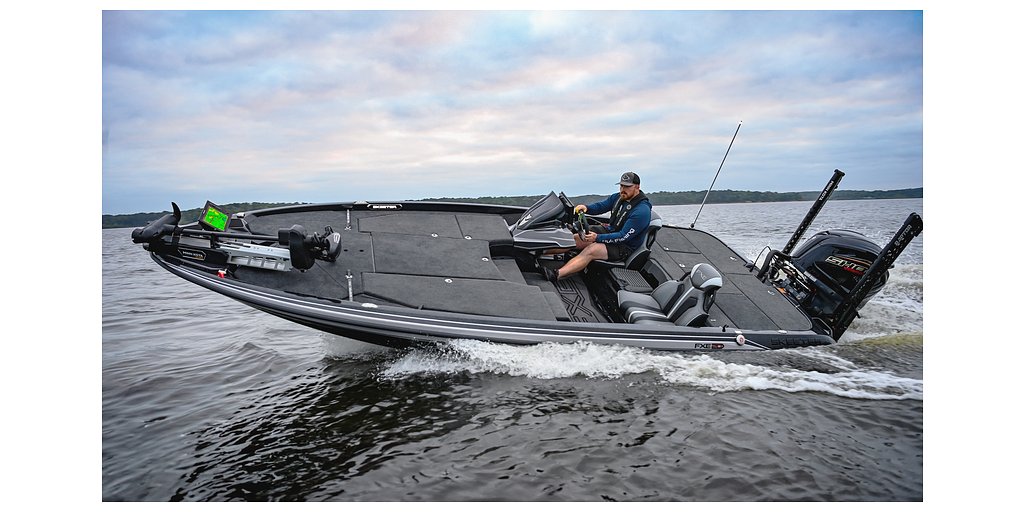
Skeeter's FXE: Engineering a Market Edge in a Cooling Economy
KILGORE, Texas – June 05, 2026
At the 32nd annual Skeeter Owners’ tournament on Lake Fork, a gathering defined by brand loyalty and competitive passion, Skeeter Boats unveiled its new FXE model line. On the surface, it was a classic product launch targeting a dedicated audience. But beneath the polished fiberglass and high-performance sheen lies a sophisticated case study in modern industrial strategy. In launching a premium, technology-forward vessel into a market showing signs of cooling, Skeeter—and its parent company, Yamaha—is making a calculated wager on precision engineering, brand dominance, and the enduring value of the high-end consumer.
Engineering as a Competitive Moat
The central claim for the FXE line is not just performance, but precision. The company touts a new “nex-gen” hull architecture, but the real story lies in how that hull is created. By leveraging advanced Computer-Aided Design and Manufacturing (CAD-CAM) and Computer Numerical Control (CNC) technology, Skeeter is moving boat building further into the realm of digital manufacturing. This process ensures that every FXE hull produced is a near-perfect replica of the original digital model, minimizing the microscopic variances that were once an accepted part of fiberglass boat construction. The result is a level of consistency that directly impacts performance.
“The launch of the FXE Series marks a major step forward in Skeeter’s continued pursuit of innovation, performance, and precision engineering,” said John Clark, General Manager of Skeeter Boats, in the official announcement. He described the FXE as a “new benchmark,” where “every line, angle, and surface of this hull was purpose-built.”
This purpose-built design translates into tangible on-water dynamics. The redesigned center running pad allows the boat to ride higher on the water, reducing drag and improving lift and efficiency. A new planing sponson is engineered to get the 2,500-pound vessel onto a plane faster—a critical metric known as “holeshot” in the bass fishing world. For the driver, a 17-degree deadrise pushes water away from the hull, promising a drier, more controlled ride in the rough conditions often encountered in tournaments. These are not just iterative improvements; they are interconnected engineering choices designed to deliver a superior, and crucially, repeatable, experience.
This manufacturing philosophy serves as a significant competitive moat. While competitors can attempt to mimic a hull shape, replicating a digitally-driven, high-tolerance manufacturing process requires substantial capital investment and institutional expertise—something the backing of a global giant like Yamaha helps provide. It shifts the competitive battleground from simple design to the complex interplay of engineering, software, and production technology.
Navigating a Shifting Market Current
The launch of a flagship model comes at a pivotal moment for the marine industry. After a period of unprecedented growth during the pandemic, the market is recalibrating. Recent industry data from early 2026 indicated a 7.27% year-over-year decline in the broader marine market, with the high-volume bass boat category itself seeing a 6.46% dip. This softening demand suggests consumers are becoming more cautious.
In this environment, launching a premium product like the FXE is a counterintuitive yet classic strategic move. Rather than chasing volume in a contracting market, Skeeter is targeting the most committed and least price-sensitive segment: the serious tournament angler and the well-heeled enthusiast. This strategy hinges on the idea that while casual buyers may delay purchases, the core market continues to demand the latest technology and performance advantages.
The high-performance bass boat market, valued at $4.1 billion in 2025 and projected to reach $6.4 billion by 2034, is a prize worth fighting for. North America remains the undisputed epicenter of this market, and leadership is fiercely contested among a handful of key players, including Ranger Boats, Nitro, and Triton. With the FXE, Skeeter is not just releasing a new boat; it is making an aggressive statement about its intention to lead the segment in innovation, reinforcing a brand legacy that includes creating the world's first bass boat in 1948.
By setting a new, higher benchmark for performance and build quality, the company aims to capture high-margin sales and force competitors into a new cycle of R&D investment. It is a strategic play to consolidate market share during a period of uncertainty, betting that product leadership will win out.
The Modern Angler's Connected Cockpit
The FXE's design also reflects a deep understanding of how technology has transformed the act of fishing itself. The interior of the boat is less a passenger space and more a high-tech cockpit. A two-piece console houses the Skeeter Command Center, designed to integrate the large, power-hungry electronics that are now standard equipment for any serious angler.
Perhaps the most telling detail is the battery compartment, which is 30 percent larger than in previous comparable models. This is not a minor tweak; it is a direct response to a powerful consumer and technology trend. Today’s competitive angler runs multiple high-definition sonar screens, live-imaging transducers, GPS-enabled trolling motors, and power-pole shallow water anchors—all of which create an enormous demand for onboard electrical power. The larger battery compartment acknowledges this reality, providing the infrastructure needed to support the digital ecosystem of modern fishing.
Other features, like the integrated grab handles in redesigned seats, a multi-use step that converts into a cooler or holds tackle boxes, and improved water drainage channels, speak to an obsessive focus on the user experience. These refinements, combined with the company’s 23 consecutive NMMA Customer Satisfaction Index awards, create a powerful narrative of quality and angler-centric design. The FXE is engineered not only to perform at high speed but to function as an efficient, organized, and durable platform for the long, demanding days of a fishing tournament. It is the physical manifestation of a brand that understands its customers' evolving needs, from the hull's interaction with water to the angler's interaction with their equipment.