
- Re-release Date: June 18, 2026 (7 years after original release)
- Global Platform: Featured at the Alliance for Responsible Citizenship (ARC) Conference in London
- Audience Reach: Free distribution to all Canadians via YouTube and dedicated website
Experts would likely acknowledge the film's renewed relevance due to shifting global energy dynamics and Indigenous partnership discussions, though its ideological framing may still spark debate.
Signal Boost: Why a Dismissed Canadian Energy Film Is Now on the Global Stage
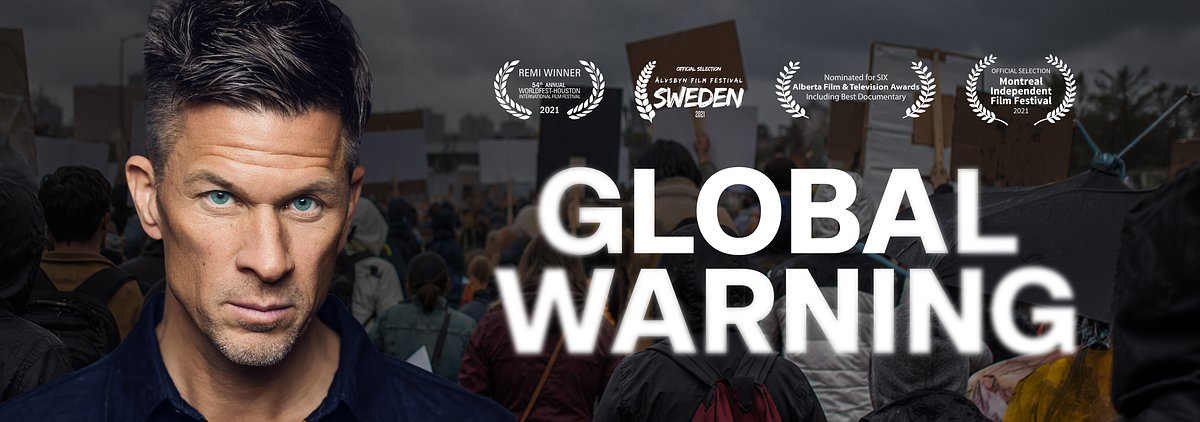
CALGARY, Alberta – June 18, 2026 – In the complex ecosystem of public discourse, some ideas are seeds that lie dormant for years, waiting for the right conditions to sprout. Today, director Mathew Embry is betting that 2026 provides the fertile ground that 2019 did not for his documentary, Global Warning. Seven years after a release that was met with a mix of local dismissal and mainstream indifference, Muster Point Productions is re-releasing the film, free of charge, to all Canadians. The move is a calculated one, framed not as a nostalgic look back, but as an urgent intervention in a nation grappling with the very issues the film claims to have foreseen: economic sovereignty, Indigenous partnership, and the fractious politics of energy.
When Global Warning first appeared, it struggled to find its footing. Local media in its home province of Alberta reportedly labeled it a “pro-oil film,” a tag that can be a badge of honor or a mark of dismissal, depending on the audience. Nationally, it was largely ignored, failing to register on the radars of major critics or cultural commentators. Now, Embry is re-presenting it as a film that was never truly about oil, but about Canada itself. “Energy should not divide Canadians,” Embry states in the re-release announcement. “It is our inheritance, our opportunity, and the foundation of a stronger, more united country.” By making it freely available on YouTube and its own website, the filmmakers are bypassing traditional gatekeepers in a bid to prove that the film’s time has finally come.
A Film Out of Time, or Right on Time?
To understand the film's re-emergence, one must first understand its initial reception—or lack thereof. In 2019, Global Warning entered a media landscape with more clearly defined battle lines. The documentary’s critical stance on the economic impact of certain climate policies and its inclusion of figures known for challenging the mainstream scientific consensus—such as the late physicist Freeman Dyson and author Bjorn Lomborg—placed it firmly outside the prevailing environmental narrative. Supporters at the time claimed a “media blackout,” arguing that its message was unfairly silenced. Critics, in turn, saw it as a one-sided polemic boosting the fossil fuel industry.
Watching the film, it becomes clear that its perspective is rooted in the economic anxieties of Western Canada. It chronicles the impact of environmental policy on Calgary’s energy sector, arguing that these policies were leading to significant job losses and economic decline. Yet, Embry’s ambition was clearly broader than regional advocacy. Filmed across Canada, Germany, and the United States, with access to UN Climate Change Conferences and the U.S. Congress, the documentary attempts to frame a local struggle within a global context. It features a wide array of voices, from industry executives and oil sands workers to environmental activists and Indigenous leaders, creating a tapestry of conflicting, often irreconcilable, viewpoints. This approach, which Embry calls “politically agnostic,” was intended to foster debate, but in the polarized climate of 2019, it seems to have mostly generated quiet dismissal.
The Shifting Ground of Canada's Energy Debate
The core of the filmmakers’ claim to relevance rests on the argument that the world has changed to meet the film’s thesis. On several fronts, they have a point. The global energy conversation of 2026 is vastly different from that of 2019. Geopolitical instability and supply chain disruptions have forcefully reintroduced the concepts of energy security and reliability into the public lexicon, complicating the once-linear narrative of a swift transition to renewables. The film’s focus on “abundant, reliable energy as the foundation of prosperity” now echoes conversations happening in parliaments and boardrooms worldwide.
More significantly, the film’s exploration of Indigenous partnerships in resource development appears genuinely prescient. In 2019, this was a secondary theme in the national conversation. Today, it is arguably central. Indigenous leadership is now widely seen as critical to Canada’s climate and energy future, with Indigenous groups increasingly taking equity stakes and leading major energy projects, both in renewables and traditional sectors. A film that, seven years ago, made a point of featuring “Indigenous voices from across the spectrum of the energy debate” was indeed ahead of a curve that has since become a main artery of Canadian economic policy. The debate is no longer if Indigenous communities should be partners, but how that partnership can drive both economic reconciliation and national prosperity.
While the press release’s mention of Alberta separation may feel like a slight overstatement of the current national mood, it taps into the persistent and undeniable undercurrent of federal-provincial tension over resource development. The film’s narrative of a regional economy struggling under the weight of federal climate policy remains a powerful political force in Alberta, shaping a durable sense of Western alienation that continues to influence national politics. In this, the film acts as a time capsule of a sentiment that has not dissipated but has instead become a permanent feature of the Canadian political landscape.
From Local Dismissal to Global Stage
Perhaps the most compelling evidence for the film’s second act is its international reception. Later this month, Mathew Embry will present Global Warning at the Alliance for Responsible Citizenship (ARC) Conference in London, England. This is no small development. Co-founded by figures like Canadian psychologist Jordan Peterson, ARC is a major international movement aiming to unite conservative voices and promote policy based on what it terms “traditional Western values.”
The ARC platform is ideologically aligned with the film’s core message. One of the conference’s key questions is, “How do we restore abundant, reliable energy as the foundation of prosperity?” Embry’s film is being presented as a potential answer. This invitation catapults Global Warning from a little-seen Canadian documentary into a case study for a global political movement that rejects “declinism” and champions innovation and resource development. Embry’s stated focus for the conference—engaging youth with a message of hope and opportunity rather than “predictions of decline and catastrophe”—fits perfectly within the ARC framework.
This journey from a Calgary editing suite to a London stage highlights a profound shift in the media landscape. The re-release on YouTube is not just a distribution strategy; it is a declaration that the power to set the agenda no longer resides solely with traditional media outlets. By going directly to the audience, and by securing a platform with an influential international organization, Muster Point Productions is leveraging a new ecosystem of influence. The fact that the production company also has a related venture, MusterPoint.ai, which provides compliance software for Western Canada’s energy sector, adds another layer of context, grounding the film’s narrative ambitions in a tangible business reality connected to the very industry it documents.
Ultimately, the re-release of Global Warning is a signal in itself. It signals a belief that the public mood has shifted, that the arguments dismissed in 2019 may find traction in 2026. It represents a collision of persistent Western Canadian economic anxiety, a transformed global energy landscape, and the rise of new international platforms for conservative thought. The filmmakers are making a direct appeal to the Canadian public to re-evaluate not just a film, but the country’s entire approach to its most fundamental questions of unity and prosperity. The coming weeks will reveal whether Canada is now ready to engage in the conversation.