
- $12.5 billion: The hybrid beverage market is forecast to exceed this value by 2030.
- 6,000 miles: The distance spanning the production process from China to Kentucky.
- 100 proof & 92 proof: The alcohol content of SHĀNG's two initial expressions.
Experts would likely conclude that SHĀNG represents a bold, high-stakes experiment in cross-cultural spirits innovation, with potential to disrupt global markets if it successfully bridges the palate gap between baijiu and whiskey.
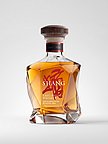
SHĀNG's High-Tech Fusion: Can a Baijiu-Whiskey Bridge Global Tastes?
ELIZABETHTOWN, KY – June 15, 2026 – In an industry steeped in tradition, a bold new experiment is underway that bridges continents, cultures, and two of the world's most dominant spirits. A new product line named SHĀNG is making its debut, billing itself not as baijiu or whiskey, but as something entirely new: a "jiàngxiāng whiskey." This ambitious venture, a complex international partnership, is betting that advanced production technology and a respect for heritage can fuse the fiery, complex soul of Chinese baijiu with the familiar, oak-aged character of American whiskey, creating a spirit that could finally unlock the Western market for China’s national drink.
The project is the brainchild of Maritine Brands, a joint venture between Indianapolis-based True Essence Foods and the Guìzhōu Guótái Shùzhì Liquor Group, one of China's largest baijiu producers. They've marshaled a coalition of specialists, including the state-of-the-art Whiskey House of Kentucky and The Blending House, to execute a production process as intricate as the flavors it aims to create.
The Alchemical Process: Engineering a Cross-Cultural Palate
The creation of SHĀNG is less a simple blend and more a feat of process engineering that spans over 6,000 miles. It begins in China's famed Chìshuǐ River basin, a region synonymous with high-quality baijiu. Here, resilient red sorghum is subjected to solid-state fermentation—a millennia-old Chinese technique involving repeated steaming and fermentation in pits—to create the foundational jiàngxiāng, or "sauce-aroma," baijiu. This style is renowned for its savory, umami-rich complexity. After distillation, this nascent spirit is aged in traditional clay pots in China, allowing it to breathe and develop its initial character.
But this is where tradition takes a sharp turn toward technological fusion. The aged baijiu is then shipped to Kentucky, the heartland of American whiskey. Here, it undergoes a critical transformation: redistillation into a "whiskey base." This proprietary step, likely leveraging the food processing and filtration technologies of partner True Essence Foods, is designed to refine the spirit's character, preparing it for its second life. The final stages mirror American whiskey craftsmanship, with the spirit matured in charred American oak barrels and meticulously blended to ensure consistency.
"Whiskey House was created to enable exactly this type of innovation," said David Mandell, co-founder and CEO of Whiskey House of Kentucky, whose advanced facility plays a key role. "SHĀNG is a powerful example of what's possible when world-class partners come together with a shared vision." The result is a liquid that carries the DNA of both parents—the savory depth of baijiu and the structured, vanilla-and-caramel notes imparted by American oak.
A Gateway Spirit or a Gamble? The Market Challenge
SHĀNG enters a global spirits market hungry for novelty. Driven by Millennial and Gen Z consumers, trends like premiumization, craft production, and flavor experimentation are reshaping the industry. The hybrid beverage market is forecast to exceed $12.5 billion by 2030. On paper, SHĀNG is perfectly positioned to capitalize on this demand. However, its success hinges on overcoming a significant historical barrier: baijiu's notorious difficulty in penetrating Western markets.
Despite being the world's most-consumed spirit by volume, baijiu remains an enigma to most Western drinkers. Its potent and unique flavor profiles are often described as an acquired taste, creating a "palate barrier" that has stymied previous attempts at global expansion. SHĀNG's strategy is to not just sell baijiu, but to re-contextualize it. By marrying it with familiar whiskey characteristics, the brand hopes to create a "gateway spirit"—an approachable introduction to baijiu's complexity for the uninitiated whiskey drinker.
"SHĀNG represents the future of global spirits innovation," stated Maritine Brands CEO Matt Rubin. "By bringing together centuries-old Chinese fermentation techniques with the precision and structure of American whiskey-making, we are creating something entirely new — an authentic collaboration of cultures, craftsmanship, and creativity." The goal isn't to mask the baijiu, but to frame it in a way that a Western palate can understand and appreciate, transforming a potential challenge into a point of intrigue.
More Than a Drink: A Case Study in Global Commerce
Beyond the liquid in the bottle, SHĀNG represents a fascinating case study in modern international business collaboration, particularly in the often-tense arena of US-China trade. The intricate supply chain—sourcing grain and performing initial production in China, then shipping a semi-finished product to the US for finishing, aging, and bottling—is a logistical ballet that requires immense trust and coordination.
This venture navigates a complex web of regulations. The product’s unique nature means it will likely challenge the U.S. Alcohol and Tobacco Tax and Trade Bureau (TTB) to define a new classification, potentially as a "distilled spirits specialty," as it doesn't fit neatly into existing legal definitions of whiskey. Furthermore, the entire operation is subject to the volatile nature of international tariffs and trade policies, which have previously caused severe disruption in the spirits sector.
The partnership itself is a model of symbiotic expertise. Guìzhōu Guótái Shùzhì Liquor Group provides the deep, ancestral knowledge of baijiu. "The unparalleled craft of dual-brewing and dual-aging defines the unique character of SHĀNG," explained Yán Kǎijìng, Chairman of the group, emphasizing the integration of Chinese solid-state brewing with Western liquid-state techniques. Meanwhile, American partners like The Blending House provide the scalable, high-tech infrastructure for aging and bottling. "SHĀNG is a transformational spirit that pushes boundaries," noted Monica Wolf Brown, founder and CEO of The Blending House. This collaboration demonstrates that even in a complex geopolitical climate, specialized knowledge and shared commercial goals can forge powerful alliances.
The initial launch includes two expressions. SHĀNG Dàn Yǎ (100 proof) is the core jiàngxiāng whiskey, promising floral aromatics, umami depth, and notes of fruit and chocolate. The more accessible SHĀNG East + West Kentucky Blend (92 proof) marries the base spirit with a proprietary American red sorghum whiskey, yielding softer notes of vanilla, toasted grain, and caramel. With pricing set in the premium category ($64.99 and $45.99 for 500mL, respectively), the brand is clearly targeting discerning consumers looking for the next frontier in spirits. The success of this venture will ultimately be decided not by press releases, but by the palates of consumers, and whether this high-tech fusion of East and West truly creates a spirit for a globally connected world.