
- $366 billion: Projected AI contribution to Indonesia's annual GDP by 2030
- 270 million: Indonesia's population, representing a massive market opportunity
- 3 years: Duration of Genon's strategic preparation before launching its Jakarta hub
Experts would likely conclude that Genon's calculated entry into Southeast Asia, backed by proven technology and strategic preparation, positions the company as a strong contender in the region's industrial AI transformation, though success will depend on overcoming local implementation challenges.
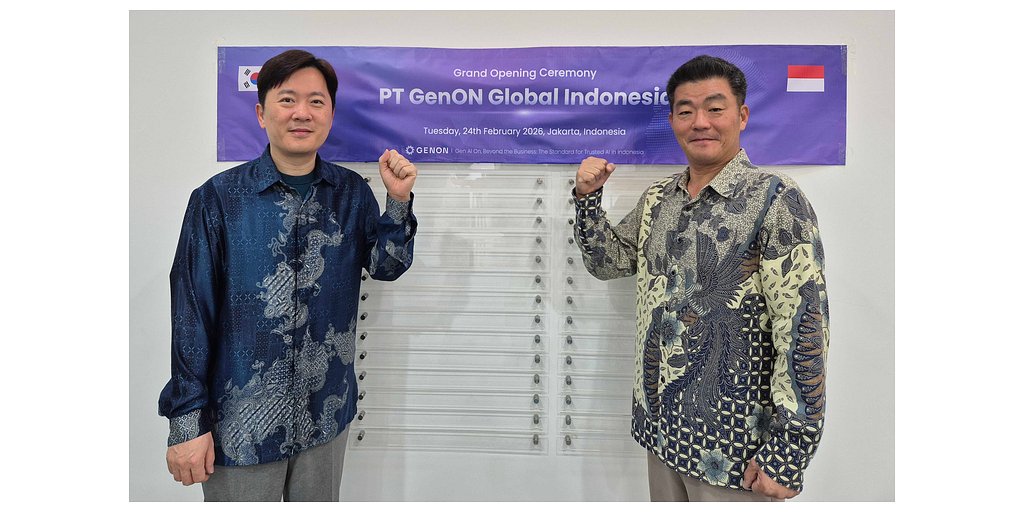
Seoul's AI Gambit: Genon's Jakarta Hub Targets SE Asia's Industry
JAKARTA, Indonesia – February 24, 2026 – South Korean generative AI specialist Genon has officially planted its flag in Southeast Asia, launching its first international subsidiary, “PT. Genon Global Indonesia,” in Jakarta. The move signals a pivotal moment for both the company and the region, positioning the AI firm to tackle the burgeoning, yet complex, industrial landscape of one of the world's fastest-growing economic blocs.
The new office is the culmination of a deliberate, three-year strategy. Far from a speculative leap, it follows a series of successful Vision AI pilot projects in shoe manufacturing facilities for major global brands. These projects, which began in 2023, have already translated into significant revenue, validating the company's technology and business model before committing to a full-scale regional presence. Leading the charge is Tae Ryong Kim, the company's Head of Global Business Development, who has been appointed President and Managing Director of the Indonesian subsidiary.
A Calculated Leap into a High-Growth Market
Genon’s choice of Indonesia is no accident. With a population of over 270 million and a government aggressively pushing for technological advancement, the country represents a colossal opportunity. Jakarta’s “Making Indonesia 4.0” roadmap specifically targets the modernization of key manufacturing sectors—including textiles, automotive, and electronics—through technologies like artificial intelligence. Market analysts project AI could inject up to $366 billion into Indonesia's annual GDP by 2030.
However, this rapid industrial expansion has created a “structural gap” that Genon has identified and is poised to exploit: a sophisticated industrial base coupled with a nascent AI solutions supply chain. Genon's leadership believes its established expertise can fill this void, providing the critical tools for digital transformation.
“Through rigorous preparation over the past three years, rather than a rushed market entry, Genon has laid a solid foundation to secure a stable presence in the Indonesian market,” said Genon CEO Seok Tae Ko in a statement. “Leveraging our proven AI technology and business capabilities, we are poised to become a core partner driving AI adoption across the manufacturing and public sectors in Asia.”
From Proven Concepts to Regional Powerhouse
While the Jakarta office is new, Genon is an established force in South Korea's competitive tech scene. The company, which rebranded from Minds and Company in April 2025, has garnered significant accolades. Its generative AI platform, “GenOS,” and its proprietary “Hunmin” series of language models have received top certifications and have dominated Korean performance leaderboards.
This technical prowess was first applied commercially in its Vision AI solutions for automated quality inspection. By using AI to detect defects in real-time on factory floors, the company demonstrated tangible value, reducing waste and improving efficiency for its manufacturing clients. The new Jakarta hub will serve as the launchpad to scale these proven solutions across the region’s vast network of factories.
Simultaneously, Genon is broadening its scope. The company plans to leverage its deeper expertise in generative AI to introduce workflow automation tools, moving beyond the factory floor to optimize broader enterprise operations. This dual-pronged strategy—perfecting industrial vision while expanding into enterprise-wide intelligence—is central to its ambition of becoming a comprehensive B2B AI provider.
Navigating the 'Implementation Chasm'
Despite the immense potential, Genon faces a landscape fraught with challenges. Indonesia, like much of Southeast Asia, suffers from an “implementation chasm” between ambitious national strategies and the reality on the ground. While large enterprises are beginning to adopt AI, the majority of small and medium-sized enterprises (SMEs), which form the backbone of the industrial economy, lag significantly behind.
Barriers to adoption are steep. A persistent digital skills gap, concerns over data governance, and the high cost of integrating new technology with legacy machinery hinder progress. Many local firms remain stuck in the pilot phase, unable to scale AI solutions into their core business processes. Genon's success will depend not only on the superiority of its technology but also on its ability to provide scalable, accessible solutions that can bridge this divide.
Furthermore, the market is not without competition. Jakarta is already home to Nodeflux, Indonesia’s largest Vision AI company, which presents a formidable local challenge. As Genon expands its sights to Singapore, Vietnam, and Malaysia, it will encounter a host of other specialized AI firms, from Singapore's SixSense in manufacturing analytics to Vietnam's Cinnamon AI in data automation, all vying for a piece of the industrial transformation pie.
The New Arena for Asian AI Competition
Genon's expansion is emblematic of a larger trend: the globalization of South Korean technological innovation. Long a powerhouse in hardware and manufacturing, the country is now exporting its sophisticated software and AI capabilities. Genon’s move into Indonesia places it directly in the new arena for Asian AI leadership, competing and collaborating with players from across the continent.
The Jakarta office is explicitly designed as a regional hub, a command center for planned entries into the key markets of Singapore, Vietnam, and Malaysia. Each of these nations presents a similar dynamic of government-backed industrial growth paired with unique local challenges. By establishing a strong operational base in Indonesia, Genon aims to develop a replicable model for market entry and growth.
The company’s venture is a high-stakes bet that its advanced, battle-tested AI can be adapted to solve the specific, practical problems of Southeast Asia's industrial sector. Its progress will be a closely watched barometer for the future of AI in emerging markets and a test case for whether a foreign tech powerhouse can successfully navigate local complexities to drive a true industrial revolution.