
- Capacity: 10,800 car equivalent units (CEU), among the largest PCTC vessels ever built.
- Emissions Reduction: 24% lower carbon emissions compared to conventional heavy fuel oil-powered ships.
- Future-Readiness: Designed to be adaptable for methanol and ammonia fuels, aligning with IMO 2050 net-zero targets.
Experts would likely conclude that the Glovis Lighthouse represents a pivotal advancement in sustainable maritime logistics, combining unprecedented scale with cutting-edge decarbonization technology, setting a new industry standard for eco-efficient auto shipping.
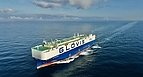
Seaspan's New Green Giant: Glovis Lighthouse Redefines Auto Shipping
SINGAPORE – June 11, 2026 – The global maritime industry watched closely today as the 'Glovis Lighthouse', a colossal new vessel owned by Seaspan Corporation, embarked on its maiden voyage. As the first in a new series of Pure Car and Truck Carriers (PCTC), this ship is more than just a new asset; it represents a significant leap forward in scale, efficiency, and environmental stewardship for the automotive logistics sector. With a staggering capacity of 10,800 car equivalent units (CEU), the vessel is among the largest of its kind ever built, signaling a new era for transporting vehicles across the world's oceans.
Developed in partnership with and chartered long-term to automotive logistics leader Hyundai Glovis, the 'Glovis Lighthouse' is a floating testament to forward-thinking engineering. It immediately sets a new industry benchmark, not just for its size, but for its sophisticated design aimed at decarbonizing one of the world's most critical supply chains.
A New Benchmark in Sustainable Shipping
At the heart of the 'Glovis Lighthouse's' innovative design is its dual-fuel propulsion system, capable of running on liquefied natural gas (LNG). Seaspan projects that using LNG will reduce the vessel's carbon emissions by approximately 24% compared to ships powered by conventional heavy fuel oil. This figure aligns with broader industry data, positioning the vessel at the forefront of the sector's immediate decarbonization efforts.
Beyond CO2 reduction, the ship's design confronts one of LNG's most significant environmental challenges: methane slip. Methane is a potent greenhouse gas, and its release from incomplete combustion has been a major concern for LNG-powered engines. The 'Glovis Lighthouse' is equipped with next-generation engine technology and a shaft generator, systems specifically engineered to enhance fuel efficiency and minimize the escape of unburnt methane. This proactive approach is crucial, as maritime regulations are tightening. The International Maritime Organization's (IMO) Carbon Intensity Indicator (CII) and Energy Efficiency Existing Ship Index (EEXI) already impose strict operational and technical efficiency standards, which this vessel is reported to "significantly exceed." With the EU set to include methane emissions in its Emissions Trading System from 2026, such technological advancements are not just environmentally conscious but also economically prudent.
"The delivery of the Glovis Lighthouse is a defining moment for Seaspan and a clear demonstration of our ability to deliver world-class assets at scale," said Bing Chen, Chairman, President and CEO of Seaspan. "This vessel sets a new benchmark for the PCTC market—bringing together size, efficiency, and fuel-transition readiness to help our customers lead through the next era of automotive logistics."
Reshaping the Automotive Supply Chain
The sheer scale of the 'Glovis Lighthouse' is engineered to meet the evolving demands of the global automotive industry. With a capacity exceeding 10,000 CEU, it joins an elite club of mega-carriers designed for maximum efficiency. This immense capacity helps lower the emissions intensity per vehicle transported, a critical metric for auto manufacturers pursuing greener supply chains.
The vessel's design, however, prioritizes flexibility as much as scale. It features 14 decks, four of which are liftable, along with hoistable ramp systems. This allows the carrier to accommodate a diverse mix of cargo, from standard passenger cars to high-and-heavy vehicles like trucks and construction equipment. This flexibility is particularly important as the automotive market shifts towards electric vehicles (EVs), which are often heavier and have different dimensional requirements than their internal combustion engine counterparts.
The long-term charter to Hyundai Glovis exemplifies a powerful strategic synergy. For Hyundai Glovis, the partnership provides access to state-of-the-art, environmentally compliant tonnage without the massive capital outlay required for ownership. It allows the logistics giant to modernize its fleet and offer its automotive clients a more efficient and sustainable transport solution. For Seaspan, the arrangement secures a stable, long-term revenue stream and validates its business model of investing in premier, future-proofed assets for blue-chip clients.
"By combining scale, cargo flexibility, and fuel transition readiness, this series is well positioned to support the long-term evolution of global automotive supply chains," noted Kun Li, Chief Commercial Officer of Seaspan.
A Blueprint for Future-Proof Maritime Assets
Perhaps the most forward-looking aspect of the 'Glovis Lighthouse' is its designation as "methanol and ammonia ready." While LNG provides a crucial transitional pathway for reducing emissions today, the maritime industry's long-term goal, aligned with the IMO's target of net-zero emissions by around 2050, requires a shift to zero-carbon fuels. Methanol and ammonia are considered leading candidates, and designing vessels to be adaptable for their future use is a key strategy in future-proofing billion-dollar maritime assets.
This 'ready' notation means the vessel's design has accounted for the structural modifications, space allocation, and system integrations that would be required to convert to these new fuels once they become commercially viable and widely available. It represents a strategic hedge against technological obsolescence and regulatory shifts, ensuring the vessel remains a valuable and compliant asset for decades to come.
This approach is central to Seaspan's strategy as a leading maritime asset owner. With a massive operating fleet of nearly 250 vessels, the company focuses on building and leasing technologically advanced ships that provide long-term value to its partners. The 'Glovis Lighthouse' is not merely a single delivery but the first of a series, demonstrating a programmatic investment in upgrading the global PCTC fleet. It serves as a tangible blueprint for how the shipping industry can build for today's needs while preparing for tomorrow's challenges, navigating the complex journey toward a sustainable maritime future.