
- 25% non-fossil energy target by 2030 under China's 15th Five-Year Plan.
- 300% surge in digital infrastructure energy demand by 2035 projected.
- 2 million tons of green hydrogen capacity by 2026 aimed for.
Experts would likely conclude that China is strategically leveraging its energy transition to achieve technological dominance and global influence, balancing decarbonization with energy security through ambitious digital and hydrogen initiatives.
The Qingdao Signal: How China is Engineering its Global Energy Dominance
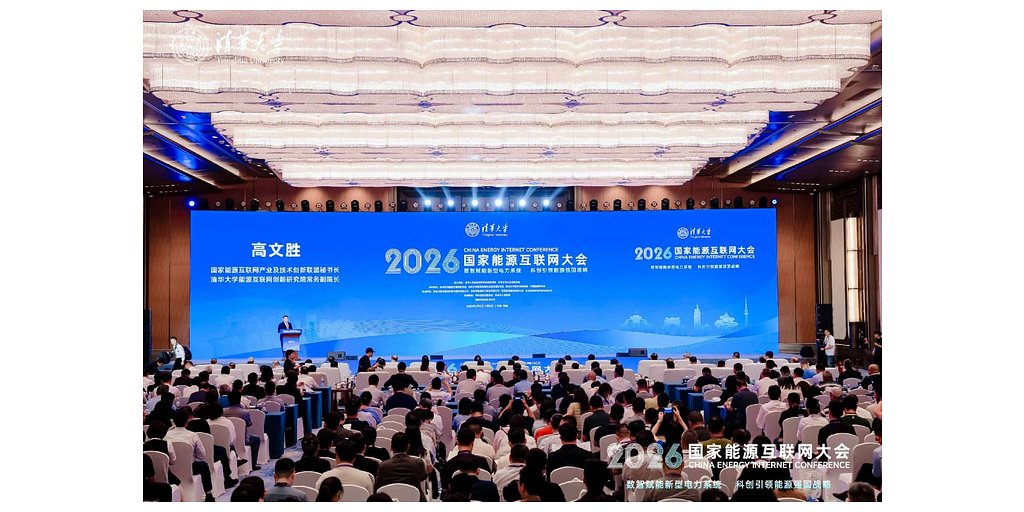
QINGDAO, China – June 11, 2026 – Last week, over a thousand officials, academics, and industry elites gathered in the coastal city of Qingdao for the 2026 China Energy Internet Conference. On the surface, it was a technical forum focused on power grids and digital transformation. But to view this event as merely a conference is to miss the signal for the noise. Hosted by the prestigious Tsinghua University, the gathering was a meticulously orchestrated demonstration of China's strategy to not just participate in the next energy era, but to define its very architecture.
This wasn't just about showcasing innovation; it was about telegraphing intent. The conference themes—'Digital Intelligence,' 'New Type Power Systems,' and the 'Energy Powerhouse Strategy'—are the core components of a national maneuver designed to secure domestic energy independence and project technological power onto the global stage.
The Blueprint for an Energy Powerhouse
The Qingdao conference served as the first major industrial rallying cry for the energy goals embedded in China's 15th Five-Year Plan (2026-2030). For the first time, this foundational policy document explicitly calls for building China into an "energy powerhouse." This is not just rhetoric; it is a strategic pivot driven by the dual imperatives of decarbonization and, more critically, energy security in an increasingly fractured geopolitical landscape.
The plan sets ambitious targets, aiming to increase the share of non-fossil energy in total consumption to 25% by 2030 and reduce energy consumption per unit of GDP. However, the 'powerhouse' strategy reveals a deeper calculus. While committed to its "dual carbon" goals of peaking emissions before 2030 and achieving neutrality by 2060, Beijing is also ensuring its industrial engine remains fueled. The plan calls for maintaining crude oil production at 200 million tonnes annually and emphasizing the "clean and efficient" use of coal, signaling a pragmatic, security-first approach to its energy transition.
This calculated balance was the unspoken context in Qingdao. Every discussion about digital upgrades and green technology is underpinned by this national mandate to build a resilient, self-sufficient, and ultimately dominant energy system. The strategy is to leverage the green transition as a vehicle for industrial and technological supremacy.
The 'Energy Internet': A Digital Nervous System
Central to this strategy is the concept of the "energy internet," a term that vastly understates the ambition. This is not merely a 'smart grid' 2.0. It is a wholesale fusion of internet architecture, artificial intelligence, IoT, and advanced power engineering, designed to create a responsive, decentralized, and intelligent energy ecosystem. As outlined at the conference, this digital nervous system is what will enable China to manage the immense challenge of integrating its world-leading renewable energy capacity.
Having already surpassed coal to become the majority of China's installed power capacity in 2024, the nation's wind and solar installations present a massive grid management problem. The 'energy internet' is the proposed solution. By leveraging AI for predictive dispatching and IoT for real-time monitoring, state-owned giants like the State Grid Corporation of China (SGCC) are building a system that can absorb and distribute intermittent renewable power with unprecedented efficiency. The recent launch of 30 large-scale Vehicle-to-Grid (V2G) pilot projects further illustrates this, aiming to turn millions of electric vehicles into a vast, distributed battery network to stabilize the grid.
However, this digital-first approach creates its own challenges. The voracious energy appetite of China's burgeoning digital infrastructure, including data centers and AI computing, is projected to surge nearly 300% by 2035. The very tools being used to manage the energy transition are also creating a massive new source of demand, a paradox that Chinese planners are racing to solve with green data center mandates and other efficiency measures.
Hydrogen's Horizon: From Seawater to Smart Grids
If the energy internet is the system's brain, hydrogen is its powerful new fuel. The conference placed a significant spotlight on China's hydrogen ambitions, revealing a strategic focus that goes far beyond just transportation. China is already the world's largest hydrogen producer, but it is now aggressively shifting towards 'green' hydrogen, aiming for 2 million tons of annual capacity by 2026.
A key highlight was the discussion around direct seawater electrolysis, a technology that could solve the critical freshwater constraints of hydrogen production. Academics like Tang Bo of the Chinese Academy of Sciences detailed breakthroughs in producing hydrogen directly from seawater without costly and energy-intensive desalination. This is not a distant laboratory concept. Pilot projects are already operational, including a Sinopec facility in Qingdao and an offshore platform in Fujian that successfully tested direct electrolysis using wind power in a real-world marine environment. This move to harness the ocean itself for fuel is a powerful strategic play for a nation with a long coastline.
Furthermore, experts like Professor Guan Xiaohong detailed technical pathways for hydrogen-powered, zero-carbon smart energy systems. The vision is to use green hydrogen not just as a fuel, but as a storage medium to guarantee grid stability, allowing municipal microgrids to run entirely on renewables. This is already being realized at scale. In Inner Mongolia, Envision Energy's Chifeng Industrial Park operates as an off-grid marvel, using AI to convert unstable wind power into green hydrogen and then green ammonia, which it began exporting to Japan and Korea late last year.
A New Global Energy Order
The innovations and strategies showcased in Qingdao are not intended for purely domestic consumption. The press release itself noted the conference's role in offering "valuable insights and practical experience for global climate governance." This is a clear signal that China intends to export its model. By building the world's largest and most advanced integrated energy system, it is also creating the standards, technologies, and supply chains that could define the global energy landscape for decades.
The official release of the "2026 Annual Report on the Development of National Energy Internet" at the event serves as the codification of this playbook. While the full document is not yet public, its purpose is clear: to create a replicable blueprint. As nations grapple with the energy trilemma of security, affordability, and sustainability, China is positioning itself not just as a supplier of solar panels and batteries, but as the architect of the entire operating system.