
- Certification timeline reduction: Salient Motion claims its modular tech can slash aircraft certification from years to months.
- Strategic partnership: Collaborating with Boeing to develop and certify aircraft components.
- Investment backing: Funded by AE Ventures, a sector-focused venture firm.
Experts view Salient Motion’s modular approach as a promising but high-stakes bet to modernize aerospace certification, with initial success hinging on regulatory approval of its flexible platform.
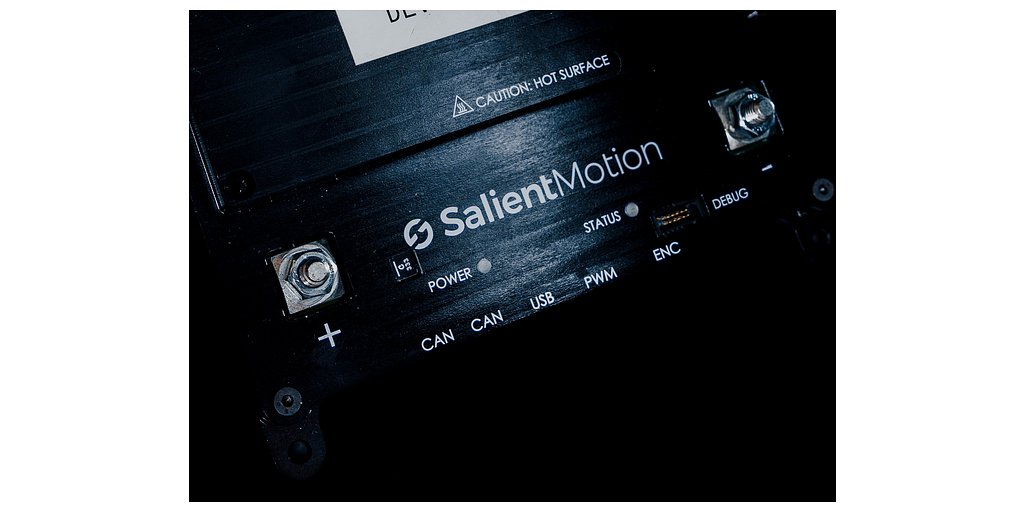
Salient Motion Aims to Slash Aircraft Certification with Modular Tech
TORRANCE, CA – January 15, 2026 – A California-based startup is making a bold play to overhaul the notoriously slow and expensive world of aerospace manufacturing. Salient Motion, founded in 2022, has announced a collaboration with Boeing to develop aircraft components on a modular platform that it claims can slash certification timelines from years to months, a disruptive proposition in an industry where safety and regulation dictate a deliberate pace.
The company is targeting actuation systems—the critical mechanisms that control everything from passenger seats and cargo doors to flight control surfaces. Its approach replaces decades-old, single-use hardware with a reconfigurable platform that functions more like a modern software stack: reusable, upgradable, and designed for rapid validation. This software-first methodology has attracted not only a partnership with an industry giant but also investment from the sector-focused venture firm AE Ventures, signaling a growing appetite for digital transformation in one of the world's most complex industries.
“In aerospace, certification costs and timelines have always been the biggest drag on innovation,” said Vishaal Mali, Salient Motion’s co-founder and CEO, in a statement. “By modularizing hardware and reusing certified software across systems, we're compressing development timelines and cutting those costs dramatically.”
The 'Certify Once, Deploy Everywhere' Paradigm
At the heart of Salient Motion’s strategy is a concept that has long been a goal in avionics but has proven difficult to execute: “certify once, deploy everywhere.” The traditional model requires bespoke engineering and a full, lengthy certification process for nearly every new component on an aircraft. Salient Motion aims to break this cycle by creating a foundational set of hardware and software modules that, once certified by regulators like the FAA, can be reconfigured and deployed across multiple systems with only minimal, targeted re-validation.
This approach mirrors the principles of Integrated Modular Avionics (IMA), an architecture that allows multiple applications to run on a shared set of hardware. While IMA has been adopted in modern aircraft, its complexity has also created certification challenges, as regulators must carefully scrutinize the potential for unintended interactions between functions. Salient Motion believes its platform can overcome these hurdles by simplifying integration through standardized digital interfaces and a robust virtual testing environment.
By treating hardware as a configurable platform for its certified software, the company intends to dramatically lower the non-recurring engineering (NRE) costs that plague new aircraft programs. The vision is to enable aerospace to evolve more like the software industry, where certified code can be reused and updated efficiently. “Certify once, deploy everywhere. That’s the leverage modern aviation has been missing,” Mali stated.
A High-Stakes Bet on Faster Certification
The claim of achieving certification in “months, not years” is ambitious and lands in a landscape defined by caution. The FAA and its global counterparts mandate rigorous, multi-year processes for new, safety-critical components. A full Type Certification for a major aircraft system can easily span five years, involving extensive physical testing and documentation to prove airworthiness under all conceivable conditions.
However, Salient Motion's strategy taps into a broader industry shift. Regulatory bodies are exploring ways to modernize. The FAA is developing strategies to streamline approvals and is increasingly open to methodologies like “Certification by Analysis” (CbA), which uses advanced simulation to supplement physical testing. Salient Motion's claim is most plausible in the context of iterative updates. Once its core modular platform achieves initial certification—a process that will undoubtedly be arduous—subsequent applications built upon that certified base could indeed see dramatically accelerated timelines.
Industry experts note that while the concept is powerful, the initial certification of the modular system itself will be the ultimate test. Regulators will need to be convinced that the platform's flexibility does not introduce unforeseen risks, a significant hurdle for any new technology in this safety-paramount field.
Boeing and a Shifting Supply Chain Strategy
The collaboration with Boeing is more than a vote of confidence; it’s indicative of a strategic shift among major Original Equipment Manufacturers (OEMs). Facing production backlogs, supply chain vulnerabilities exposed by recent global events, and immense pressure to innovate while controlling costs, giants like Boeing are increasingly looking to agile startups for solutions.
Salient Motion has already showcased its actuation systems for aircraft seating and cargo handling at a Boeing exhibit and is actively working toward its first FAA-certified system for both Boeing and Airbus platforms. This partnership deviates from the conventional transactional supplier relationship. Salient Motion is positioning itself as a development partner, sharing in the R&D investment and aftermarket revenue, which in turn reduces the upfront financial burden for the OEM.
This model aligns with Boeing's broader push for a more resilient and innovative supply base. In the wake of quality control issues, diversifying suppliers and integrating modern, digitally-native partners is seen as a crucial step toward building a more robust and efficient production system. For Boeing, a partner that promises to deliver a certified second source for critical components more efficiently than ever before is an attractive proposition.
Navigating a Market of Giants and Hurdles
Salient Motion enters a market dominated by established titans like Safran (which recently acquired Collins Aerospace’s actuation business), Parker Aerospace, and Honeywell. The global aircraft actuator market is valued at tens of billions of dollars and is projected to grow substantially, driven by the demand for more-electric aircraft and enhanced passenger comfort.
While these incumbents are powerful, they are also navigating the same pressures for digital transformation. This creates an opening for a disruptor. Salient Motion's approach finds a strong tailwind in the U.S. Department of Defense's push for a Modular Open Systems Approach (MOSA), which champions interoperable, upgradable systems to avoid vendor lock-in and reduce long-term costs. As a company with both commercial and defense ambitions, Salient Motion is well-positioned to capitalize on this trend.
However, the path to adoption is fraught with challenges. Integrating new technology with legacy aircraft systems is a notorious barrier, and the industry’s deep-rooted risk aversion can lead to a powerful “not invented here” syndrome. The backing from AE Ventures, the venture arm of aerospace-focused private equity firm AE Industrial Partners, is critical in this regard. Their investment provides not only capital but also a strategic bridge to navigate the complex procurement cycles of large OEMs and government agencies.
The company’s broader mission extends beyond actuation, aiming to replace a wide range of legacy components across aviation and space. By positioning itself as a comprehensive technology partner, Salient Motion is betting that the future of aviation will be built not just on new aircraft, but on a fundamentally new way of building them.