
- 30-50% reduction in water consumption with Rosiwit's sustainable cleaning approach
- 30,000 visitors from 140 countries attended Interclean Amsterdam 2026
- 2027 when EU regulations like the Cyber Resilience Act will mandate robust cybersecurity for industrial robots
Experts agree that the future of industrial cleaning lies in autonomous systems that prioritize sustainability and cybersecurity, with Rosiwit's dual approach aligning with emerging regulatory and market demands.
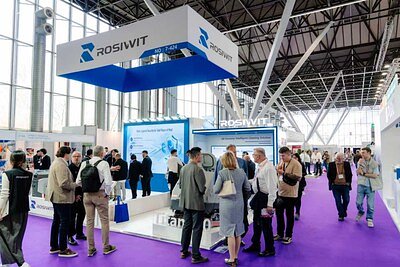
Rosiwit's New Robots Tackle Green Cleaning and Cyber Threats
AMSTERDAM, April 20, 2026 – As the global cleaning industry convened for Interclean Amsterdam 2026, one company’s presentation crystalized the sector's evolution into a high-tech, high-stakes field. Rosiwit, a specialist in intelligent cleaning for industrial environments, took the stage not just to unveil new machinery, but to present a new paradigm: one where autonomous cleaning robots must be as environmentally responsible as they are cyber-resilient.
Amid the bustling halls of the RAI Amsterdam convention center, the company showcased a dual-pronged strategy that addresses two of the most pressing concerns for modern industrial operators. By pairing significant advancements in sustainable cleaning with a new suite of cybersecurity services for its flagship robots, Rosiwit is betting that the future of facility management lies in solutions that are both green and secure.
The Dual Imperative of Modern Industrial Cleaning
Rosiwit’s presentation centered on what it calls the three pillars of responsible automation: environmental responsibility, management efficiency, and employee health and safety. Moving beyond mere rhetoric, the company detailed a tangible commitment to sustainability by emphasizing advanced mechanical cleaning over chemical dependency. According to Rosiwit, its approach is engineered to slash water consumption by 30-50% and dramatically reduce the need for cleaning agents—a significant claim in an industry traditionally reliant on both.
This focus aligns perfectly with a powerful undercurrent seen throughout Interclean 2026, where sustainability was not a niche topic but a central theme. The industry is rapidly shifting away from harsh, solvent-based chemicals toward aqueous-based and biodegradable solutions to reduce toxic waste and volatile organic compound (VOC) emissions. Rosiwit’s strategy, which leans on optimized down-pressure cleaning systems to maintain performance while conserving resources, places it at the vanguard of this movement.
For industrial facilities, the benefits extend beyond environmental stewardship. Reducing water and chemical use translates directly into lower operational costs and helps companies meet increasingly stringent ESG (Environmental, Social, and Governance) targets. As one industry analyst noted, by 2030, the effectiveness of industrial cleaning will be measured not just by its results, but by its environmental footprint, with metrics like water intensity and emissions avoided becoming as critical as traditional performance indicators.
Furthermore, by automating repetitive and often hazardous cleaning tasks in demanding environments like manufacturing plants and logistics centers, Rosiwit’s robots, such as the Titan 810 industrial scrubber, contribute to enhanced workplace safety and free up human workers for more complex, value-added roles.
Hardening the Factory Floor: Cybersecurity in Automation
Perhaps the most forward-looking aspect of Rosiwit's announcement was the introduction of customized cybersecurity services for its flagship Skywalker GT and Titan 810 robots. As industrial facilities become more interconnected under the banner of Industry 4.0, every device on the network—from massive manufacturing arms to autonomous cleaning robots—represents a potential vulnerability.
The new offering is designed to fortify these systems against a growing wave of cyber threats targeting Operational Technology (OT). Rosiwit outlined a multi-layered defense strategy that includes: risk hardening to reduce the system's attack surface, active protection to ensure continuous operation even when under threat, rapid mitigation capabilities to quickly neutralize attacks, and enhanced system visibility for comprehensive auditing and analysis.
This move is not just proactive; it is a direct response to a critical and escalating need. The convergence of IT and OT has blurred traditional security perimeters, making Industrial Automation and Control Systems (IACS) a prime target. The threat is no longer theoretical, as malicious actors could potentially seize control of robotic systems, causing operational disruption, data theft, or even physical danger.
This reality is now being codified into law. Forthcoming EU regulations like the Cyber Resilience Act and the Machinery Regulation, set to take effect in 2027, will mandate robust cybersecurity measures for industrial robot systems. These rules, alongside updated industry standards like IEC 62443, are shifting cybersecurity from a value-added feature to a non-negotiable requirement. By embedding security at the design level and offering ongoing services, Rosiwit is aligning its products with the future of regulatory compliance and industrial best practices.
A Glimpse into the Future of Facility Management
Rosiwit's dual focus on sustainability and security was a microcosm of the larger trends dominating Interclean Amsterdam 2026. The event, which drew 30,000 visitors from 140 countries, was a testament to an industry in transformation. Dedicated zones for robotics, data, and sustainability underscored that the future of cleaning is automated, intelligent, and eco-conscious.
Exhibitors across the board, from established giants to agile startups like KEENON Robotics, showcased innovations in autonomous navigation, multi-robot collaboration, and data-driven performance management. The market is clearly responding to a growing demand from facility managers who are no longer just purchasing a machine, but investing in an integrated system that promises efficiency, safety, and compliance.
The conversation has evolved. It’s no longer just about whether a robot can clean a floor, but how it does so. Does it use water and energy efficiently? Is the data it collects on its cloud platform, like Rosiwit's "Rosiwit 365," securely managed? Can it be integrated seamlessly and safely into a complex, connected smart factory environment? Rosiwit's strategy suggests that the answer to all these questions must be a resounding yes.
By addressing these interconnected challenges head-on, the company is positioning itself not merely as a vendor of cleaning equipment, but as a partner in building the resilient, efficient, and responsible industrial facilities of tomorrow. The 'responsible robot' is no longer a concept; it is a market expectation, and its arrival is reshaping the very definition of a clean and safe industrial environment.