
- 1,000 units monthly: UniX AI aims to scale Panther robot production to 1,000 units per month.
- 87% market share: Chinese manufacturers dominated 87% of global humanoid robot shipments in 2025.
- 12 kg lift capacity: Panther's bionic arms can lift up to 12 kg each with precision.
Experts caution that while Panther's practical design and rapid deployment are innovative, significant challenges remain in ensuring reliable performance in real-world homes and addressing ethical concerns around privacy and safety.
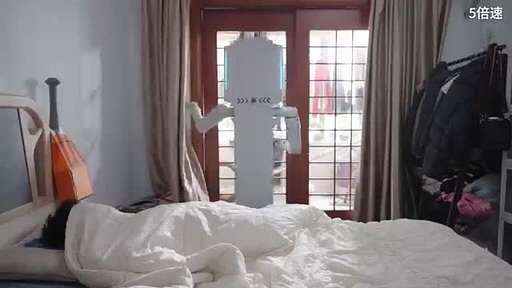
UniX AI's Panther Robot Rolls Into Homes, But Is Society Ready?
SUZHOU, China – April 08, 2026 – UniX AI, a robotics firm founded just two years ago, has begun global deliveries of Panther, a humanoid service robot it claims is the first to be deployed in real household settings. The announcement, accompanied by videos of the machine performing domestic tasks, marks a potential turning point for embodied AI, moving it from the factory floor and laboratory into the living room. Yet, as Panther rolls across the threshold, it brings with it a radical design philosophy and a host of complex questions about technology, competition, and privacy.
The Practicality-First Design: Wheels Over Legs
Unlike the bipedal, human-mimicking designs pursued by competitors like Tesla and Figure AI, UniX AI's Panther takes a different path. It glides on an omnidirectional four-wheel steering and four-wheel drive (4WS+4WD) chassis, a deliberate choice that prioritizes stability and efficiency over anatomical perfection. This wheeled base supports a sophisticated upper body featuring what the company calls the world's first mass-produced 8-degree-of-freedom bionic arms, capable of lifting up to 12 kg each with remarkable precision.
This architecture is the cornerstone of UniX AI's strategy. By opting for wheels, the company sidesteps the immense engineering challenge of maintaining balance in legged robots, which are inherently less stable and more energy-intensive. The result is a platform that excels on the flat, predictable surfaces of most indoor environments. Its omnidirectional chassis allows it to navigate tight spaces with an agility that legged robots struggle to match, executing lateral shuffles and in-place rotations perfect for cluttered kitchens or retail aisles.
The trade-off, however, is significant: Panther cannot climb stairs or navigate uneven terrain, a limitation that could confine its use in many multi-level homes. But for UniX AI, this is a calculated compromise. Founder and CEO Fred Yang has emphasized that the goal is not to build the "most human-like robot," but to prioritize "usability, real-world applications, and customer experience." The company is betting that for the immediate future, a robot that can reliably perform tasks on one floor is more valuable than a robot that can stumble its way up a flight of stairs.
China's 'Deployment-First' Gambit
Panther's design is inseparable from UniX AI's aggressive business model, a strategy that reflects both the vision of its young founder and the broader ambitions of China's tech sector. Fred Yang, who suspended his Ph.D. at Yale University in 2024 to found the company, believes that hardware-related fields will ultimately be dominated by Chinese companies. This conviction fuels UniX AI's 'deployment-first' philosophy.
"We are at a pivotal inflection point where embodied intelligence is evolving from sci-tech innovation into social infrastructure," Yang stated in the company's announcement. He argues that real intelligence comes from real-world data, and the only way to gather that data is by getting robots out of the lab and into the field—a philosophy demonstrated by Panther's live, autonomous tea-making performance at the recent Morgan Stanley China Summit.
This strategy is backed by formidable execution. Since 2025, UniX AI has been mass-producing its previous-generation Wanda robots, delivering over 100 units per month to clients in hospitality, security, and retail. With Panther, the company aims to scale production to 1,000 units monthly. This rapid scaling places UniX AI at the forefront of a powerful trend. In 2025, Chinese manufacturers like Agibot and Unitree accounted for a staggering 87% of all humanoid robot shipments globally. Bolstered by over $57 million in funding, UniX AI is positioning itself not just as a technology innovator, but as a manufacturing powerhouse poised to capture a significant share of the emerging market.
The Robot in the Living Room
While UniX AI's claim to be the "first" in household deployment is bold in a market where competitors like Norway's 1X Technologies are also shipping consumer-focused robots, the arrival of Panther in homes is undeniably a milestone. The robot's capabilities are powered by a self-developed technology 'trinity': UniFlex for learning tasks by imitation, UniTouch for integrating visual and tactile senses for fine manipulation, and UniCortex for long-term task planning.
Demonstrations show Panther sorting objects, pouring liquids, and executing multi-step domestic workflows. However, the gap between a controlled demonstration and robust, reliable performance in the chaos of a real home is immense. Experts caution against the 'ninety-ninety rule' of development, where the last 10% of a project—handling unpredictable edge cases—takes as much time as the first 90%. A real home has pets, children, and constantly shifting clutter, presenting a level of unpredictability that even the most advanced AI struggles with. The true test for Panther will be its ability to generalize its skills and operate safely and effectively outside the sanitized conditions of a promotional video.
Navigating a Minefield of Privacy and Safety
The most profound challenges Panther and its kind introduce are not technical, but ethical. A humanoid robot operating in a home is not just another smart device; it is a mobile, centralized data collection platform on an unprecedented scale. Equipped with cameras, microphones, and depth sensors, it has the potential to record the most intimate details of family life.
This raises urgent questions about data privacy and security. Where is this data stored? Who has access to it? How is it protected from hackers who could turn a helpful assistant into a tool for surveillance or blackmail? Current legal frameworks, designed for static smart speakers and security cameras, are ill-equipped to handle a roving robot that centralizes a household's entire digital footprint. Furthermore, the reliance of some early-generation robots on remote human operators for difficult tasks opens a new privacy Pandora's Box, potentially giving unseen workers a direct view into private homes.
Safety is an equally pressing concern. A robot weighing 80 kg moving through a home poses a physical risk, especially to children and the elderly. While industrial safety standards exist, comprehensive regulations for consumer-grade humanoid robots are still nonexistent. As nations adopt different regulatory postures—from China's innovation-first approach to the EU's precautionary stance—the global rollout of these machines will likely become a fragmented and contentious process. UniX AI may have solved the problem of getting a robot into the home, but society has only just begun to grapple with the consequences of letting it stay.