
- $41 million in seed funding from Asian industrial giants
- RLWRLD aims to launch its robotics foundation model in late 2026
- Carl Choi, veteran operator, appointed as U.S. President to lead industrial AI push
Experts view RLWRLD's strategic hiring and U.S. expansion as a bold move to challenge industrial automation norms, leveraging real-world data to bridge the 'reality gap' in robotics.
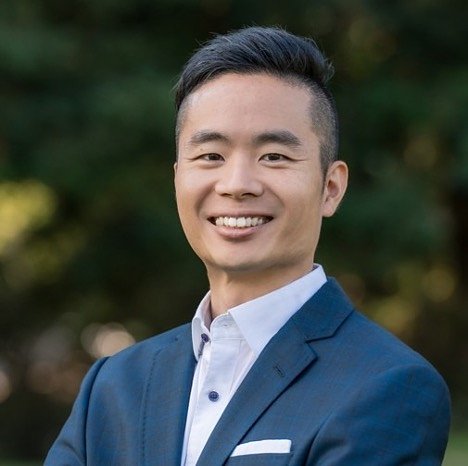
RLWRLD Taps Veteran Operator for U.S. Industrial Robotics Push
SAN FRANCISCO, CA – March 24, 2026 – In a significant move signaling its ambitions for the American market, Physical AI company RLWRLD has appointed veteran investor and operator Carl Choi as the President of its U.S. division. The appointment is a clear strategic gambit to establish deep-rooted partnerships within the U.S. industrial sector ahead of the company's highly anticipated robotics foundation model launch, planned for later this year.
Backed by $41 million in total seed funding from a consortium of powerful Asian industrial giants, RLWRLD is positioning itself to challenge the norms of industrial automation. Choi's mission is to lay the commercial groundwork in the United States, a market hungry for advancements in manufacturing and logistics, before the company unveils its core technology.
A Strategic Bet on U.S. Industrial Automation
Carl Choi is not a typical executive hire. His career weaves through deep-tech venture capital, corporate strategy, and operational leadership at major technology firms. Most recently a Partner at Alumni Ventures' Deep Tech Fund and Managing Partner at Solasta Ventures, Choi has spent years evaluating and backing the next wave of AI and robotics. His operational experience is just as extensive, with senior vice president roles at platform giant Upwork and networking firm Riverbed Technology, following earlier strategic roles at Cisco and McKinsey & Company.
This blend of investment acumen and operational know-how is precisely what RLWRLD needs to navigate the complex U.S. industrial landscape. His primary task is to build a network of partnerships with American manufacturers and logistics companies, evangelizing a technology that is not yet fully public.
“Carl understands both the industrial realities that make our technology valuable and the North American ecosystem,” said Junghee Ryu, Founder and CEO of RLWRLD, in a statement. “He has the technical fluency to speak credibly about what we’ve built and the relationships to open the right doors.”
The timing of this expansion is critical. The U.S. is currently grappling with a confluence of factors creating immense demand for advanced robotics: persistent labor shortages in manufacturing, a national push for reshoring critical supply chains, and the relentless pursuit of efficiency in the face of global competition. RLWRLD is betting that its technology offers a more profound solution than the piecemeal automation currently available.
The 'Physical AI' Differentiator
At the heart of RLWRLD's strategy is its unique approach to building artificial intelligence for robots. The company is developing what it calls a robotics “foundation model.” Similar to how large language models (LLMs) like GPT-4 learn from vast amounts of text to generate human-like language, a robotics foundation model learns from vast amounts of physical data to generate intelligent, adaptable robotic actions.
While competitors like Google's DeepMind are also working on similar concepts, RLWRLD's key differentiator is its data source. The company's models are not primarily trained in simulations or controlled lab environments. Instead, they are trained directly on live production floors, in partnership with industrial clients. This “Physical AI” approach aims to create a powerful data moat and solve the persistent “reality gap,” where models trained in pristine digital worlds often fail in the chaotic, unpredictable messiness of a real factory.
“What drew me to RLWRLD is something rarely seen in the space: a foundation model developed by world-class researchers, and trained directly on real production floors alongside our industrial partners,” Choi stated. “That approach creates a fundamentally unique platform and powerful data moats.”
By capturing complex, multi-sensor data—from vision to force and touch—from diverse industrial settings, RLWRLD is building a rich dataset that it believes will produce far more robust and adaptable robotic intelligence. The goal is to create a single, underlying AI that can be deployed across a wide variety of tasks, robots, and industries with minimal task-specific retraining.
Redefining Dexterity on the Factory Floor
RLWRLD makes the ambitious claim that its technology enables “human-level dexterity and perception.” In the world of industrial robotics, this is the holy grail. For decades, robots have excelled at highly repetitive, structured tasks—welding the same spot on a car door thousands of times. They have struggled with tasks that require adaptability, fine motor skills, and nuanced understanding of their environment.
Achieving human-level perception means a robot can identify and locate objects accurately despite variations in lighting, partial occlusion, or clutter—much like a person can find a specific bolt in a messy bin. Human-level dexterity means the robot can then pick up that bolt, orient it correctly, and insert it into a complex assembly, adjusting its grip and force in real-time.
If successful, the practical implications are transformative. It would allow for the automation of intricate assembly tasks in electronics, the gentle handling of variable produce in food processing, and the complex sorting of diverse packages in logistics warehouses—jobs that have thus far remained firmly in the domain of human workers due to their complexity. This technology promises not just to replace simple labor but to augment production capabilities in ways previously thought impossible for machines.
A New Front in the Global AI Race
RLWRLD’s U.S. expansion is more than just a corporate growth story; it represents a new front in the global competition for industrial AI supremacy. The company's backing is a roster of Asian industrial powerhouses, including South Korean conglomerates SK and LG, and Japanese giants KDDI (a telecom leader) and ANA (the parent company of All Nippon Airways).
This is not passive financial backing. These strategic investors represent a built-in ecosystem for technology validation and deployment. LG and SK provide access to some of the world's most advanced manufacturing environments. ANA offers a direct line into the complex world of aviation logistics and ground operations. KDDI's involvement points to the future of 5G-enabled factories where low-latency networks are essential for coordinating fleets of intelligent robots.
This tight integration of AI development with industrial application, backed by significant Asian capital and market access, positions RLWRLD as a formidable contender. Its entry into the U.S. market is a direct challenge, bringing technology forged in Asia's top manufacturing hubs to compete for leadership in America's industrial heartland.
As RLWRLD prepares to unveil its foundation model in the first half of 2026, all eyes will be on Carl Choi. His success in building a beachhead of U.S. industrial partnerships before the official launch will be a critical test of the company's global strategy and could determine the future landscape of intelligent automation.