
- 5.4 million Americans living with paralysis
- $40 million awarded across 3,900 grants by the Quality of Life Grants program
- ONWARD Medical's ARC-EX system, first FDA-approved spinal cord stimulation technology, showing lasting improvements in arm and hand function
Experts agree that the fight against paralysis is gaining unprecedented momentum, with breakthroughs in neuromodulation, injectable therapies, and brain-spine interfaces accelerating the path toward a cure, while robust support systems enhance quality of life today.
Reeve Summit Signals Unstoppable Momentum in Paralysis Fight
BOSTON, MA – May 12, 2026 – A palpable sense of progress filled the air at the Christopher & Dana Reeve Foundation's 2026 Reeve Summit, held here from May 6-8. Under the banner of "Today's Innovation, Tomorrow's Impact," the event convened a diverse coalition of individuals living with paralysis, caregivers, pioneering researchers, and policymakers, all united by a shared mission. The summit served as more than a conference; it was a powerful demonstration of a community mobilizing to redefine the future of paralysis, blending cutting-edge science with a profound focus on present-day quality of life.
"The Reeve Summit reflects a rapidly evolving community," said Regina Blye, Chief Program & Policy Officer of the Reeve Foundation, in a statement. "This year, the momentum feels unstoppable." That momentum is fueled by a dual-pronged strategy: aggressively pursuing cures through innovative research while simultaneously building a robust ecosystem of support, advocacy, and resources that empower millions to live full and independent lives today.
The New Frontier of a Cure
For decades, the consensus was that a damaged spinal cord could not be repaired. Today, that dogma has been shattered. The conversation among the world's leading neuroscientists is no longer about if a cure for paralysis is possible, but when it will be achieved and what form it will take. The Reeve Summit highlighted several therapeutic strategies that are rapidly moving from the realm of science fiction to clinical reality.
A key area of advancement is neuromodulation, particularly spinal cord stimulation (SCS). This technology uses targeted electrical pulses to reawaken and amplify dormant neural pathways below the site of injury. A leading example is ONWARD Medical's ARC-EX system, the first FDA-approved technology developed specifically for the spinal cord injury community. In clinical trials, this external stimulation system, when paired with rehabilitation, has shown significant and lasting improvements in arm and hand function. The Reeve Foundation, which maintains a strategic partnership with ONWARD, sees this as a monumental step. Further innovation is seen in implanted devices like the ARC-IM system, which has demonstrated the ability to immediately restore blood pressure stability—a critical and often life-threatening secondary complication of paralysis.
Beyond stimulation, researchers are making strides with injectable therapies. At Rowan University, scientists are developing a hydrogel that can deliver multiple therapeutic agents to an injury site to reduce scarring and guide nerve regrowth. Meanwhile, a Northwestern University therapy using "dancing molecules" has shown remarkable success in lab models, regenerating nerve fibers and earning an FDA Orphan Drug Designation. These advancements, alongside progress in brain-spine interfaces that create a "digital bridge" to bypass injury and promising stem cell and gene therapies, paint a picture of a multi-faceted assault on paralysis itself. The Foundation, under the scientific leadership of Dr. Marco Baptista, is strategically funding preclinical grant programs to bridge the notorious "translational gap," ensuring these lab breakthroughs have a clear path to becoming accessible treatments.
Redefining Life with Paralysis Today
While the search for a cure accelerates, the Reeve Foundation remains firmly grounded in the daily realities of the 5.4 million Americans living with paralysis. This commitment is embodied by the National Paralysis Resource Center (NPRC), a comprehensive support hub operated by the Foundation and funded by a $10 million award from the Administration for Community Living (ACL) at the U.S. Department of Health and Human Services.
The NPRC is a lifeline, providing everything from one-on-one consultations to broad-based community support. At the summit, attendees had the opportunity to meet directly with experts like "Nurse Linda" Schultz, a rehabilitation nursing expert who worked with Christopher Reeve, to discuss personal health questions. This personalized approach is a hallmark of the NPRC's work.
Its impact is perhaps most visible through its Quality of Life Grants program. Since its inception, the program has awarded over $40 million across more than 3,900 grants to non-profit organizations nationwide. These funds support tangible, community-level projects—from adaptive sports leagues and accessible playground construction to assistive technology lending libraries and caregiver support networks. This is where innovation meets the immediate needs of the community, improving mobility, social connection, and independence in countless ways. The federal government's substantial and continued investment in the NPRC underscores its vital role in the national landscape of disability services.
The Power of Voice and Representation
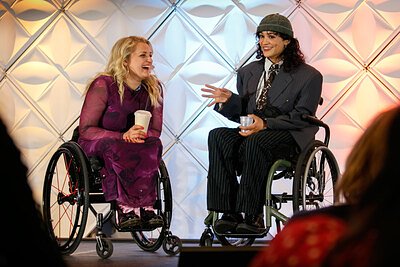
Progress is not measured solely in the lab or through support programs; it is also driven by cultural and political change. The 2026 Summit placed a significant spotlight on the power of advocacy, particularly in entertainment and policy. A keynote conversation featured actress Marissa Bode, who is making history as the first wheelchair-user to play Nessarose in the Wicked film duology. Emceed by Ali Stroker, the first actor in a wheelchair to win a Tony Award, the discussion centered on the urgent need for authentic representation in Hollywood.
Bode and Stroker are at the forefront of a movement demanding that disability be portrayed authentically and that disabled actors be given the opportunity to tell their own stories and compete for any role. Their visibility on major platforms challenges outdated stereotypes and demonstrates that inclusion is not only a matter of social justice but also a driver of compelling art and commercial success. Their message, as Bode stated, is clear: "disabled people aren’t going anywhere."
This push for representation extends to the halls of government. The presence of Rebecca Hines, Ph.D., Commissioner of the Administration on Disabilities, highlighted the crucial link between community advocacy and federal policy. The ACL's funding of the NPRC is a direct result of the recognized need for centralized, expert resources. The Foundation’s model proves that when the voices of those with lived experience are amplified, it can directly influence policy and funding decisions that advance independence and quality of life for millions.
By bringing together researchers, advocates like Bode, and policymakers like Hines, the Reeve Summit creates a unique ecosystem where scientific innovation, social change, and practical support can converge. This collaborative blueprint is the engine behind the community's unstoppable momentum, ensuring that the fight against paralysis is waged on all possible fronts. The focus remains clear: to accelerate the arrival of tomorrow's cures while building a more accessible, inclusive, and empowered world today.