
- $45,000 prize pool: The contest offers a substantial reward for human-driven 3D artistry.
- 267 submissions in 2024: Demonstrates global participation and prestige.
- 55 countries represented: Highlights international engagement in the competition.
Experts would likely conclude that Reallusion's contest underscores the ongoing value of human artistry in the 3D industry, even as AI tools become more prevalent, by providing a platform that emphasizes skill and creativity over automation.
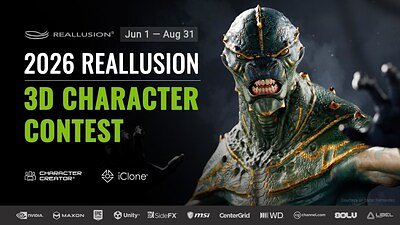
Reallusion's $45K Contest: A Stand for Human Artistry in an AI World
SAN JOSE, CA – June 02, 2026 – As generative AI continues to send shockwaves through the creative industries, 3D software developer Reallusion has announced its 2026 3D Character Contest, planting a flag firmly in the soil of human craftsmanship. With a $45,000 prize pool and backing from industry titans like NVIDIA and Epic Games, the contest is more than a competition; it’s a deliberate statement on the enduring value of artistic skill in an increasingly automated world.
A Clear Line in the Digital Sand
While the tech world buzzes with the promise of AI-generated content, Reallusion is drawing a distinct line for its flagship competition. The company, which has integrated AI-powered features like its Headshot photo-to-model tool into its product line, is mandating that all final contest submissions be the product of traditional 3D workflows. Artists are welcome to use AI as a creative partner for brainstorming concepts or generating references, but the final renders, character turntables, and animation clips must be crafted by human hands, not generated by an algorithm.
This decision directly addresses a growing anxiety within the professional artist community. "The 3D industry is going through extraordinarily tough times in the age of AI," stated Charles Chen, CEO of Reallusion, in the official announcement. "That's exactly why we keep running this contest. We want to give talented artists a stage to show the world what they can do."
Chen’s sentiment reflects a broad industry concern. Reports and forum discussions across platforms like ArtStation reveal widespread apprehension about job displacement and the potential devaluation of skills that take years to master. By creating what it calls "a level playing field where artistry and skill speak for themselves," Reallusion is positioning its contest as a sanctuary where technical proficiency and creative vision are the sole metrics of success. This nuanced stance—embracing AI in its commercial tools while championing human-driven creation in its competition—highlights a sophisticated strategy for navigating the industry's turbulent transition.
More Than a Prize: A Career Launchpad
Beyond the substantial $45,000 prize pool, the contest’s true value may lie in its comprehensive support system for artists. Through its exclusive "Portfolio Artist Program," Reallusion is eliminating one of the biggest barriers to entry for aspiring creators: access to professional-grade tools. Qualified applicants receive a free, three-month license for the company's full software workgroup, including Character Creator 5, iClone 8, Headshot 3, and a suite of powerful integration tools for Unreal Engine, Unity, and Blender.
In a first for the competition, participants will also receive bi-weekly "premium content airdrops" throughout the contest period. This initiative will stock their digital toolkits with an ever-growing library of production-ready assets like hairstyles, outfits, and motion packs, including best-sellers like Hair Builder and Casual 20. This is not just a free trial; it's a fully-equipped virtual studio designed to empower artists to produce their best work without financial constraints.
For many artists, this access is a career-defining opportunity. Building a professional portfolio that can attract clients or land a studio job requires high-quality work, which often necessitates expensive software and assets. By providing these resources, the software developer is investing directly in the talent pipeline, offering a launchpad for artists to hone their skills, create standout portfolio pieces, and gain visibility in a competitive market.
A Decade of Artistry and Industry Backing
This year marks the sixth iteration of the 3D Character Contest, celebrating a decade since its inception in 2016. Over the years, the competition has evolved from a nascent event with a modest $4,000 cash prize to a premier global showcase. The 2024 contest, for example, attracted 267 submissions from 55 countries, demonstrating its significant international prestige. Maintaining a prize pool in the $45,000 range places it among the most significant character art contests actively run by a software company.
The event’s credibility is further bolstered by a powerhouse roster of sponsors. Industry leaders including NVIDIA, Maxon, Epic Games, Unity, Houdini, MSI, Western Digital, and CenterGrid are backing the contest. This support extends beyond prize contributions of hardware and software licenses; it signifies deep industry validation. The partnership with Epic Games and Unity, for instance, underscores the seamless integration of Reallusion’s character pipeline into the world’s leading real-time game engines, a critical workflow for modern 3D production. This ecosystem approach ensures that the skills artists develop during the contest are directly applicable to professional environments.
The Gauntlet: Categories, Judging, and Transparency
To accommodate a wide range of styles and skills, the competition is divided into five categories: Best Character Design (Realistic and Stylized), Best Character Animation (Realistic and Stylized), and the highly accessible Best AccuRIG Character category. This last category only requires artists to rig their own model with the AccuRIG tool and present it in several poses, opening the door for modelers who may not specialize in the full Reallusion software suite.
A core requirement across all categories is the submission of behind-the-scenes documentation. Artists must provide work-in-progress screenshots, wireframe models, or process notes. This emphasis on transparency serves a dual purpose: it provides the community with invaluable educational insight into the creative process and gives judges the "structural proof" needed to verify that the work is a product of genuine 3D craftsmanship.
Entries will be evaluated by a distinguished international panel of judges, including ZBrush Guide founder Pablo Muñoz Gomez, acclaimed visual effects artist Reza Sarkamari, and CG director Martin Klekner. The involvement of such respected figures, who are masters of industry-standard tools and creative pipelines, ensures that the winning entries are recognized for meeting the highest standards of artistic quality and technical execution.
With submissions open until August 31, 2026, the stage is set for 3D artists around the world to demonstrate the irreplaceable power of human creativity.