
- Labor Costs: Warehouse labor constitutes 45-57% of total operating expenses, with wages rising ~8% since mid-2020.
- Real Estate Costs: U.S. logistics real estate rents are 59% higher than pre-pandemic levels; Europe saw a 33% increase.
- Space Shortage: Industrial and logistics deliveries projected to fall 42% below 2023 peak, exacerbating supply constraints.
Experts agree that customized, intelligent storage solutions are becoming essential for addressing global warehouse strain, as traditional expansion is increasingly costly and impractical.
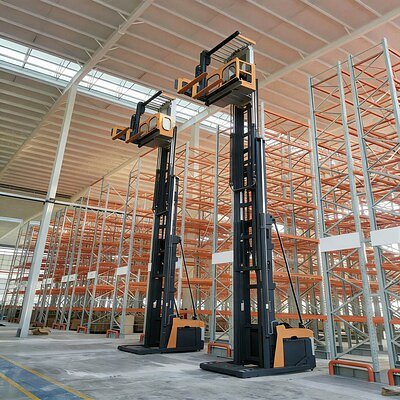
Racking Up Resilience: Custom Storage Tackles Global Warehouse Strain
NANTONG, China – January 26, 2026 – Across the globe, the four walls of the modern warehouse are closing in. Businesses are grappling with a dual crisis: skyrocketing operational costs and a critical shortage of available space. This economic vise grip, tightened by the relentless growth of e-commerce and complex supply chain demands, is forcing companies to rethink the very foundation of their logistics operations—the space itself.
In this high-stakes environment, a specialized sector of industrial engineering is stepping into the spotlight. China-based manufacturer Everunion Intelligent Logistics Equipment Co., Ltd., with over two decades of experience, is one of the companies at the forefront of this shift, demonstrating how intelligent, customized storage solutions are becoming a critical weapon in the fight for efficiency and profitability.
The Squeezed Warehouse: A Global Cost Crisis
The pressure on warehouses is not just a perception; it's a quantifiable reality backed by stark economic data. Labor, which already constitutes between 45-57% of a warehouse's total operating expenses, has become significantly more expensive, with wages rising approximately 8% since mid-2020. This trend shows no signs of abating, putting immense strain on operational budgets.
Compounding the issue is the cost of real estate. While global logistics real estate rents saw a slight moderation in 2024 after a decade of relentless growth, they remain at historically high levels. In the U.S., market rents are still 59% higher than pre-pandemic levels, with Europe seeing a 33% increase over the same period. This has made physical expansion a prohibitively expensive option for many.
Simultaneously, the space itself is vanishing. Low vacancy rates persist in key markets, driven by robust industrial demand that has outpaced new construction for years. With industrial and logistics deliveries projected to fall 42% below their 2023 peak, the supply of new facilities is tightening, exacerbated by competition for land from data centers and other industrial uses. The result is a simple but challenging equation: more goods, higher costs, and less room to operate.
Engineering a Solution: The 'Manufacture-to-Solution' Approach
In response to this crisis, companies like Everunion are championing a philosophy that moves beyond selling products to delivering outcomes. The company's 'manufacture-to-solution' approach is built on a foundation of deep in-house manufacturing control. From its two advanced production bases in Kunshan and Nantong, spanning over 40,000 square meters, Everunion commands its entire production chain.
With an annual output of 40,000 tons, these facilities are not simple assembly plants. They are advanced manufacturing centers equipped with automated punching lines, robotic welders, and Swiss Gema automated powder coating systems. This level of technological integration allows for precise control over every stage of production, a critical factor in delivering the customized and high-quality systems demanded by today's market. This internal control is what enables reliable delivery to a diverse client base in more than 90 countries.
This manufacturing prowess is externally validated by a suite of international certifications, including ISO 9001, 14001, and 45001, alongside CE, FEM, and EN standards compliance. This commitment to verifiable quality demonstrates a strategic decision to compete on a global stage based on factory-floor integrity and engineering excellence.
Beyond the Pallet Rack: Customization as a Strategic Asset
The core of Everunion's strategy lies in customization. The company posits that warehouse inefficiency cannot be solved with a one-size-fits-all product. Instead, it requires a tailored deployment of systems designed to address specific operational pain points. Its extensive portfolio—ranging from flexible selective pallet racking to high-density systems like double-deep and drive-in racks, and sophisticated automated storage and retrieval systems (AS/RS)—acts as a toolkit for its engineers.
This bespoke approach is evident in its work with major global players. For a logistics giant like Maersk, which is investing hundreds of millions to expand its warehouse capacity, the challenge is managing vast, large-scale operations. For a rapidly expanding retailer like POP MART, the need is for high-density solutions to manage a growing inventory within a dynamic distribution network. In each case, the solution begins not with a product catalog, but with a detailed analysis of spatial constraints, material flow, and inventory turnover.
"The industry often focuses on the product alone. We focus on the outcome," said Christina Zhou, Senior Sales Manager of Everunion, in a recent statement. "Only by starting from the customer's operational reality and considering the perfect usage efficiency and optimal cost-performance ratio throughout the entire process, from design and manufacturing to final implementation, can we demonstrate our uniqueness and earn our clients' long-term trust and partnership."
This ethos highlights a crucial shift: viewing storage infrastructure not as a sunk cost, but as a dynamic, strategic asset that can unlock efficiency, maximize space utilization, and ultimately bolster the bottom line.
A Chinese Manufacturer's Global Footprint
Everunion's success in over 90 countries illustrates a broader trend in global manufacturing and logistics. The 'Made in China' label, once associated primarily with mass production, is increasingly synonymous with sophisticated engineering and customized, high-value equipment. This evolution is occurring within a powerful national export ecosystem; in 2025, China's machinery exports, including industrial equipment, accounted for nearly 16% of its staggering $3.57 trillion in total exports.
Rather than relying solely on direct sales, the company has built its international presence through a network of local dealers. By providing comprehensive support, from product training to after-sales service, Everunion empowers its regional partners while gaining crucial market-specific insights. Proactive engagement through international exhibitions and direct customer factory visits from as far as Guatemala and Morocco further cements its position as a global player actively seeking collaboration.
As businesses worldwide continue to navigate the turbulent waters of modern logistics, the ability to maximize the efficiency of every square meter of warehouse space has become paramount. The focus is shifting from merely storing goods to engineering intelligent, resilient, and cost-effective logistical foundations. Companies that combine manufacturing depth with a flexible, solution-oriented mindset are poised to play a pivotal role in shaping the warehouses of tomorrow.