
- 2029: Mass production of BorgWarner's 800V Integrated Drive Module (iDM) for a premium European automaker's REEV
- 45%: BorgWarner's target for EV-related revenue by 2030
- 23%: Year-over-year increase in BorgWarner's light vehicle e-product sales
Experts view this deal as a strategic validation of BorgWarner's electrification strategy and a key milestone in the industry's transition to high-voltage hybrid systems as a bridge to full electrification.
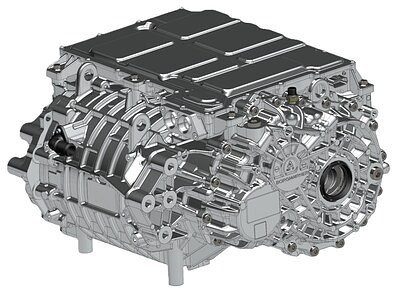
BorgWarner Powers Future European Hybrids with 800V Tech Deal
AUBURN HILLS, MI – February 11, 2026 – Automotive supplier BorgWarner has secured a major program award to supply an advanced 800-volt Integrated Drive Module (iDM) to an unnamed premium European automaker. The high-tech component is destined for a future Range Extended Electric Vehicle (REEV), with mass production slated to begin in 2029, marking a significant step in the evolution of hybrid technology.
The deal underscores a growing trend in the industry: the strategic use of sophisticated hybrid systems as a bridge to a fully electric future. For BorgWarner, it represents a crucial validation of its electrification strategy and its leadership in complex powertrain technologies.
A Strategic Win in a Shifting Market
This program award is more than just a new contract; it's a strategic victory for BorgWarner as it navigates its "Charging Forward" initiative, a plan to pivot the legacy supplier into an electric vehicle powerhouse. The company aims for EV-related products to constitute 45% of its revenue by 2030. Recent wins, including a 23% year-over-year increase in light vehicle e-product sales, show the strategy is gaining traction.
Securing a partnership with a premium European original equipment manufacturer (OEM) is particularly noteworthy. The premium automotive segment, which includes brands like BMW, Mercedes-Benz, and Porsche, maintains high profit margins, allowing for significant investment in cutting-edge technology. This segment's adoption of BorgWarner's 800V iDM signals strong market confidence in the technology's performance and value.
"Securing this program award underlines BorgWarner's strength in electric drive technology and system integration," said Dr. Stefan Demmerle, Vice President of BorgWarner Inc. and President and General Manager, PowerDrive Systems, in a recent statement. He highlighted the global effort behind the product, noting, "With the China team taking the lead and collaborating with a global team, we have created a highly integrated solution that balances performance, efficiency, and packaging."
The Technology Driving the Future
At the heart of the deal is BorgWarner's highly advanced 800V Integrated Drive Module. This isn't a standard hybrid component. The move to an 800-volt architecture, up from the more common 400-volt systems, brings substantial benefits that are critical for the next generation of electrified vehicles.
Higher voltage allows for faster charging times by reducing the electrical current and associated heat, a key factor in improving the user experience and reducing wait times at charging stations. It also enhances overall efficiency, as lower current minimizes energy lost as heat in wiring and components. This efficiency can translate to longer driving ranges or the use of smaller, lighter batteries.
BorgWarner's iDM is a masterclass in integration. It combines an inverter, two clutches, and a dual-mass flywheel into a single, compact unit. Crucially, it features an innovative single-electric-machine design that can act as both a propulsion motor to drive the wheels and a generator to recharge the battery using the vehicle's internal combustion engine. This dual-functionality, housed in one product, simplifies the vehicle's architecture, reduces weight, and saves precious space. The module also enables an all-wheel-drive mode when needed, adding to its versatility.
The system's performance is further boosted by BorgWarner's proprietary Viper power switches and dual-side cooled power module technology, which are essential for managing the high-voltage, high-current demands of an 800V system and ensuring robust thermal management.
Why Range-Extended Hybrids Still Matter
While the industry's ultimate goal is a zero-emission future dominated by battery electric vehicles (BEVs), the path to get there is not a straight line. Range-Extended Electric Vehicles, or REEVs, are emerging as a vital transitional technology, particularly in markets like Europe.
REEVs offer the best of both worlds: they provide enough battery-only range for daily commuting and errands to be completed with zero tailpipe emissions, while an onboard gasoline engine acts as a generator to eliminate "range anxiety" on longer trips or in areas with sparse charging infrastructure. This addresses one of the single biggest hurdles to widespread EV adoption.
In the European context, where charging infrastructure development is uneven across the continent, REEVs offer a practical solution. They allow consumers to embrace electric driving without making compromises, and they help automakers meet increasingly stringent emissions regulations. Some analysts predict that various forms of electric hybrids will still make up a significant portion of new EV models well into the next decade, acting as a crucial bridge technology that reduces demand for scarce battery materials and eases pressure on supply chains.
Navigating a Competitive Powertrain Landscape
BorgWarner's win did not occur in a vacuum. The market for electric drive modules is fiercely competitive, populated by global giants like ZF Friedrichshafen, Robert Bosch GmbH, and Magna International, all of whom offer sophisticated e-drive systems.
To stand out, BorgWarner has focused on a strategy of deep integration and high performance. Its ability to deliver a complete, scalable 800V iDM that combines multiple functions into one package is a key differentiator. This "all-in-one" approach simplifies the development and manufacturing process for automakers and allows for more flexible vehicle designs.
By securing this high-profile contract for a 2029 model, BorgWarner has not only added a significant piece of business to its order book but has also cemented its reputation as a key enabler of the industry's complex and ongoing transition to electrification. The technology developed for this premium REEV will likely cascade through the market, influencing the design and capability of electrified vehicles for years to come.
Topics & Related
Generative AI
Industry 4.0
Software & SaaS
AI & Machine Learning
Venture Capital
Related Company Pulse