
- 11%: Energy drinks account for just 11% of total caffeine consumption among American adolescents (2025 study).
- 80 mg: A typical 250-ml energy drink contains about 80 mg of caffeine, comparable to a cup of instant coffee.
- 2026 Ban: The UK and Norway will ban sales of energy drinks to minors under 16 starting in 2026.
Experts are divided: the Canadian Beverage Association argues for evidence-based regulation across all caffeinated products, while public health organizations emphasize unique risks of energy drinks for adolescents and advocate for targeted restrictions.
Québec's Energy Drink Debate: Health Scare or Misguided Ban?
TORONTO, ON – April 23, 2026 – A contentious debate is brewing in Québec over the future of energy drinks, pitting public health advocates against the beverage industry in a battle over science, safety, and regulatory scope. As provincial lawmakers consider a ban on the sale of these caffeinated beverages to minors, the Canadian Beverage Association (CBA) has launched a staunch defense, arguing such a move is a disproportionate reaction unsupported by scientific evidence and consumption data.
The proposed regulations, which include a potential sales ban to individuals under 16, have gained significant traction. The push for legislation intensified following the tragic death of a Québec teenager in 2024, whose parents and a coalition of school organizations believe was linked to energy drink consumption. This has placed the brightly colored cans squarely in the crosshairs of a government grappling with how to protect its youth.
The Industry's Stand: A Question of Science
The Canadian Beverage Association, which represents over 60 beverage brands, is challenging the premise of the proposed ban. In a recent press release, the industry group argued that policy decisions must be rooted in science, not emotion or public pressure. The CBA contends that energy drinks are being unfairly singled out when they represent only a fraction of teenagers' overall caffeine intake.
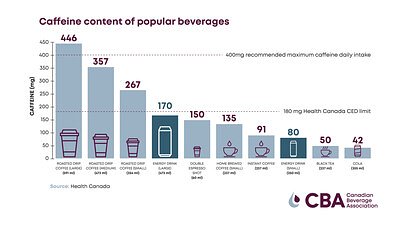
Citing a 2025 peer-reviewed study on American adolescents, the association highlights that energy drinks account for just 11% of total caffeine consumption in that demographic. They point to data from Québec's own public health institute, INSPQ, which suggests that coffee and tea are consumed in higher quantities by teens. The CBA's argument is that caffeine is the same regardless of its source, and therefore any regulation should apply universally across all caffeinated products, including coffee, tea, and chocolate.
"Providing clear, accurate information about energy drinks is critical," said Krista Scaldwell, President of the Canadian Beverage Association, in a statement. "Our industry is committed to strict marketing guidelines... The Canadian Beverage Association believes that an evidence-based discussion about caffeine is more constructive than singling out a specific product category without regard to scientific evidence or consumption patterns."
The association also emphasizes that a typical 250-ml energy drink contains about 80 mg of caffeine, an amount comparable to a cup of instant coffee. They argue this makes a product-specific ban an illogical approach to managing total caffeine consumption among young people.
The Public Health Counterpoint: A Precautionary Principle
While the industry focuses on caffeine equivalency, public health organizations are sounding a different alarm. The Canadian Paediatric Society (CPS) strongly advises that children and youth avoid caffeinated energy drinks altogether. The organization warns of a range of potential health risks that go beyond a simple caffeine jolt, including increased anxiety, sleep disruption, poor concentration, dental cavities, and even serious cardiac issues.
Medical professionals argue that the high levels of caffeine, often combined with other stimulants like guarana and taurine, and the way they are marketed and consumed—often quickly and in large volumes—create a unique risk profile for adolescents whose bodies are still developing. An INSPQ report from 2013 warned that a single energy drink could be enough to push a child over the suggested maximum daily caffeine intake.
This perspective is shared by public health officials within Québec, who are reportedly in favor of a ban. For them, the issue is not just about the percentage of total caffeine intake but about the potential for acute health problems from high-concentration products that are particularly appealing to a vulnerable demographic.
Navigating the Regulatory Maze
At the heart of the CBA's argument is the assertion that energy drinks are already one of the most heavily regulated beverage categories in the country. Under Health Canada's "Supplemented Foods Regulations," these products face strict rules. The maximum allowable caffeine content is 180 mg per single-serving container and 400 mg per liter. Furthermore, packaging must feature prominent labels, including a "high caffeine content" warning and cautionary statements advising against consumption for those under 14, pregnant or breastfeeding women, and individuals sensitive to caffeine.
Starting January 1, 2026, these regulations will become even more stringent, with new labels required to display a detailed "Supplemented Food Facts table" that clearly itemizes ingredients like caffeine. The Canadian Food Inspection Agency (CFIA) actively monitors the market, recently issuing recalls for non-compliant products.
However, Québec would not be acting in a vacuum if it proceeds with a ban. A growing number of jurisdictions worldwide have already taken similar steps. The United Kingdom is set to ban sales to individuals under 16 in 2026. Several European Union countries—including Lithuania, Latvia, Poland, and Romania—have already implemented sales restrictions for minors. Norway will join them on January 1, 2026. Further afield, Australia and New Zealand enforce some of the world's strictest regulations, capping caffeine content at 32 mg per 100 mL, equivalent to 80 mg in a 250 mL can—the very limit being considered in Québec.
This international trend suggests a global shift towards treating energy drinks differently from other caffeinated products, a move driven by the same pediatric health concerns echoed in Québec. As lawmakers in the province weigh their options, they face the difficult task of balancing industry arguments for evidence-based, holistic policy against a rising tide of public and medical concern focused specifically on the potential harms of energy drinks to young people.