
- 20-qubit quantum computer integrated into Oak Ridge National Laboratory's HPC environment.
- $125 million in funding over five years for ORNL's Quantum Science Center to enhance hybrid computing.
- 23 systems sold globally by IQM, claiming the most on-premises quantum computers delivered.
Experts would likely conclude that the integration of IQM's Pathfinder quantum computer with Oak Ridge's supercomputing infrastructure marks a significant milestone in advancing hybrid quantum-classical computing, with potential implications for scientific discovery, national security, and U.S. leadership in emerging technologies.
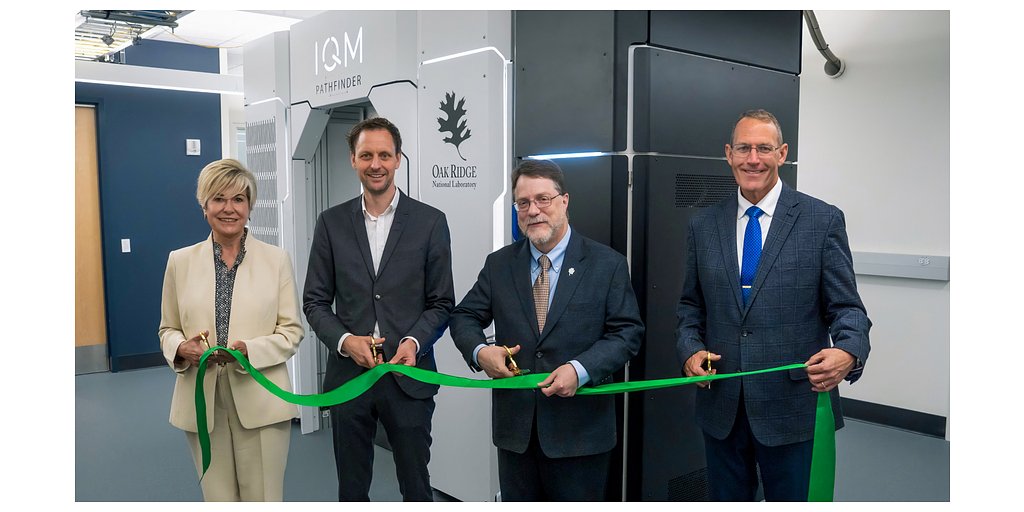
Quantum Pathfinder: IQM and Oak Ridge Forge a Hybrid Supercomputing Future
OAK RIDGE, TN – June 16, 2026 – In the sprawling campus of the Department of Energy's Oak Ridge National Laboratory (ORNL), home to the world's most powerful supercomputer, a new kind of machine has been switched on. Named 'Pathfinder', the 20-qubit quantum computer from Finnish manufacturer IQM Quantum Computers is not just another piece of hardware. Its arrival marks a pivotal moment in the evolution of computation: the deep integration of a commercially procured quantum system directly into a premier high-performance computing (HPC) environment. This move signals the dawn of a hybrid quantum-HPC era, a strategic expansion for IQM into the U.S. market, and a significant step in America's push to maintain leadership in next-generation technology.
The Hybrid Frontier: Integrating Quantum and Classical Supercomputing
While quantum computers hold the promise of solving problems intractable for even the fastest classical machines, their true power in the near term lies in partnership. The deployment of Pathfinder is the physical manifestation of ORNL's long-term strategy to build a cohesive hybrid ecosystem where the strengths of quantum and classical computing are fused. Pathfinder now sits inside the National Center for Computational Sciences' test bed, directly connected to HPC systems and in close proximity to Frontier, the exascale supercomputer that holds the top spot in global rankings.
This integration is far from a simple plug-and-play operation. It represents a deliberate effort to solve one of the key challenges in the field: making quantum processors work as co-processors alongside classical machines to accelerate complex scientific discovery. "On-premises systems enable us to demonstrate quantum computing concepts that realize our goal of building a scalable, hybrid HPC ecosystem," said ORNL Quantum Science Center Director Travis Humble. He noted that the physical presence of the IQM system has already expedited integration efforts, allowing research teams to develop new methods for materials simulations, chemistry, and artificial intelligence.
The initiative is backed by significant institutional commitment. The Quantum Science Center, headquartered at ORNL, recently saw its funding renewed with $125 million over five years, specifically to enhance quantum computing's impact through convergence with exascale systems like Frontier. Researchers at the lab are actively developing a unified software stack, including the XACC programming framework, designed to allow scientists to write code that can seamlessly execute tasks across both quantum and classical processors. This work is critical to lowering the barrier to entry and making hybrid computation a practical reality for a broader scientific community.
A New Model for Quantum: IQM's On-Premises Push and Wall Street Debut
For IQM Quantum Computers, the Oak Ridge deployment is more than just its first installation in the United States; it's a powerful validation of its core business model. Unlike many competitors that offer access to their quantum hardware exclusively through the cloud, IQM specializes in building and deploying full-stack, on-premises systems. This gives customers like ORNL direct ownership and control over the quantum computer, the data it generates, and the intellectual property built upon it.
This model is particularly attractive to national laboratories, government agencies, and HPC centers that manage sensitive research and prefer to maintain control over their own infrastructure. "Our first U.S. system now sits on Oak Ridge campus, connected to their HPC environment, owned and operated by their teams,” said Jan Goetz, CEO and Co-founder of IQM. “Quantum becomes useful when it works inside real computing infrastructure, and there is no better place to prove that." The company's success with this strategy is evident in its sales figures; with 23 systems sold globally, IQM claims to have delivered more on-premises quantum computers than any other manufacturer.
The timing of this high-profile U.S. deployment is no coincidence. IQM is on a clear path to the public markets, with a planned business combination with Real Asset Acquisition Corp. set to close in mid-2026, which would list the company on the Nasdaq Global Select Market. Successfully planting its flag at one of the world's most prestigious computing centers provides a powerful proof point for potential investors, demonstrating both technological maturity and a viable, differentiated market strategy. It solidifies the company's position not as a distant European entity, but as a key hardware partner for the American research community.
The Quantum Race: Geopolitics, Policy, and Tennessee's Ascent
The hum of the Pathfinder system at Oak Ridge resonates far beyond the hills of East Tennessee. It represents another strategic move in the global race for quantum supremacy, a field with profound implications for national security, economic competitiveness, and scientific leadership. The partnership is a direct outcome of national policies like the U.S. National Quantum Initiative Act, which aims to accelerate quantum research and development.
The involvement of state and federal officials underscores the project's significance. "The debut of Oak Ridge National Laboratory's IQM Pathfinder quantum computer is a major milestone that will empower Tennessee to strengthen America's leadership in quantum science and other emerging technologies," commented Senator Marsha Blackburn. Her colleague, Senator Bill Hagerty, echoed this sentiment, calling the partnership a "tremendous technological investment" and another example of Tennessee establishing itself as a global leader in innovation.
This investment is not isolated. IQM has also established its first U.S. Quantum Technology Center in Maryland, signaling a long-term commitment to building local teams and collaborating with American federal and research communities. For Tennessee, the ORNL-IQM partnership reinforces its growing reputation as a high-tech hub, attracting talent and further investment in advanced energy, nuclear science, and now, the frontier of computing. As researchers at Oak Ridge begin to chart the capabilities of their new Pathfinder, they are not just running experiments; they are helping to define the future of computation itself.