
- 264.6 meters: Exceptionally wide drill intercept of lithium-bearing rock at Q2 Metals' Cisco Lithium Project in Quebec.
- 215 to 329 million tonnes: Initial Exploration Target for potential lithium resource based on early drilling results.
- 1.5 kilometers: Current span of the main mineralized zone at Cisco, with potential for expansion.
Experts view Q2 Metals' discovery as a significant step toward establishing Quebec as a key player in North America's critical minerals supply chain, though they caution that the project's long-term success will depend on thorough resource validation and responsible stewardship.
Q2 Metals Hits Massive Lithium Veins, Fueling Quebec's EV Ambitions
VANCOUVER, BC – March 23, 2026 – By George Flores
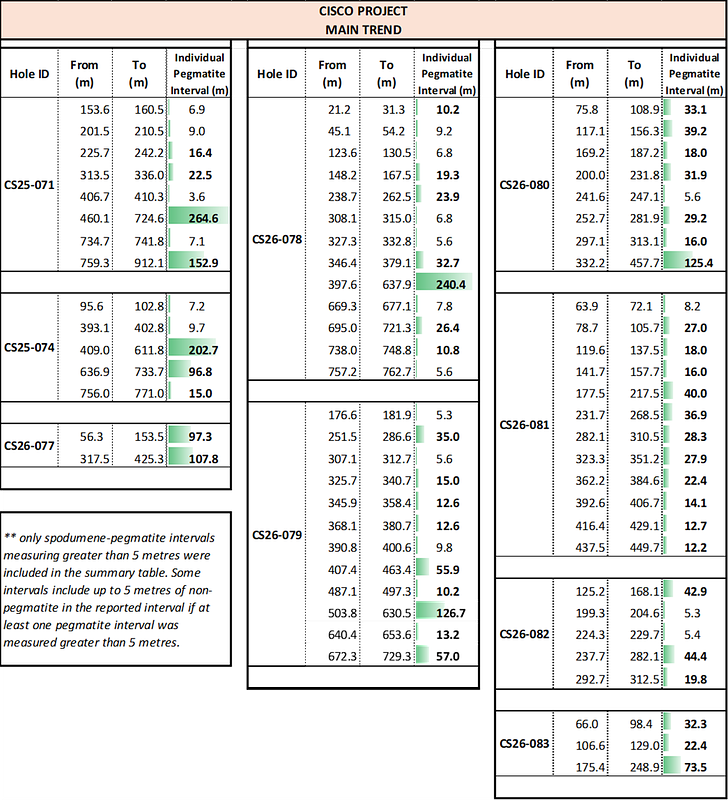
Junior explorer Q2 Metals Corp. today announced exceptionally wide drill intercepts of lithium-bearing rock at its Cisco Lithium Project in Quebec, including a staggering continuous interval of 264.6 meters. The results add to a growing body of evidence that the James Bay region could host a world-class lithium deposit, a critical component for North America's electric vehicle and renewable energy ambitions.
However, the company simultaneously tempered the excitement by extending the timeline for its inaugural Mineral Resource Estimate (MRE), a crucial step in defining the project's economic potential. In a high-stakes move, Q2 Metals is betting that incorporating more data from its ongoing drill program will yield a more impressive and accurate initial resource, even if it means a longer wait for investors.
The announcement highlights the dual reality of mineral exploration: the thrill of discovery against the meticulous, time-consuming process of proving a resource's true scale. As drill rigs continue to turn at the Cisco project, the results are feeding directly into a larger narrative about Quebec's emergence as a cornerstone of the West's critical minerals supply chain.
The Scale of a Potential Giant
The latest drill results from the Cisco project are significant by any industry measure. Drill hole CS25-071 not only hit a continuous 264.6-meter interval of spodumene pegmatite—the primary host rock for hard-rock lithium—but followed it with another 152.9-meter section before the hole was terminated due to drilling difficulties. Other holes reported similarly robust intercepts, including 202.7 meters in CS25-074 and 240.4 meters in CS26-078.
To put these numbers in context, they rival some of the discoveries that have defined Quebec's lithium belt. The nearby Corvette Project, operated by Patriot Battery Metals, is considered one of the largest lithium pegmatite resources in the Americas, with its maiden resource estimate clocking in at 109.2 million tonnes at 1.42% Li2O. While Q2 Metals has yet to publish a formal resource, the sheer width of its intercepts suggests a system of considerable size. The company's initial Exploration Target from July 2025, based on only the first 40 holes, already conceptualized a potential of 215 to 329 million tonnes.
“Drilling this winter continues to demonstrate strong continuity of spodumene-bearing pegmatite across the Mineralized Zone, with multiple wide intervals reinforcing the scale of the system,” said Neil McCallum, Q2's Vice President of Exploration, in the company's press release. He noted that geological logging confirms mineralization is extending beyond the currently modeled limits.
The main mineralized zone at Cisco currently spans approximately 1.5 kilometers and remains open for expansion both along its length and at depth, leaving significant room for the deposit to grow as the 37,372-meter drill program continues.
A Calculated Delay
For a junior mining company, publishing a maiden Mineral Resource Estimate is a pivotal moment, transforming a conceptual target into a tangible asset. The decision by Q2 Metals to extend the MRE timeline, therefore, did not come lightly. The company stated the delay would allow its independent consultant, BBA Inc., to conduct more detailed geological modeling and incorporate compelling new data from the winter 2026 drill campaign.
“We have opted to extend the timeline for completion of the MRE to enable BBA’s detailed interpretation and modeling of the Cisco Project’s mineralization,” said President and CEO Alicia Milne. “Cisco continues to deliver robust, industry leading drill intercepts... the inclusion of which will maximize both the quality and impact of the Company’s first resource.”
This strategy is a calculated trade-off. While investors must wait longer for a definitive tonnage-and-grade framework, the company believes a more comprehensive initial estimate will better reflect the project's “world-class potential” and avoid a premature, potentially understated valuation. This approach appears to have the backing of market analysts, who have maintained a “Strong Buy” consensus on the company's stock, with price targets revised significantly upwards in recent months. The delay is seen not as a sign of trouble, but as a reflection of a rapidly expanding and complex mineralized system that warrants a more thorough analysis.
The MRE will incorporate analytical results from 74 holes drilled in 2025. While assays for the 2026 holes are still pending and will not be included in this specific MRE, the geological information from select new holes will be used to refine the model and potentially expand the resource boundaries.
Powering North America's Future
The developments at the Cisco project are not happening in a vacuum. They are part of a global rush to secure the raw materials needed to power the green energy transition. With demand for lithium projected to rise by 20% annually, driven by EV battery production, North American governments are aggressively promoting domestic supply chains to reduce reliance on foreign sources.
Canada, with its vast mineral wealth and stable jurisdiction, is central to this strategy. The federal government’s Critical Minerals Strategy, backed by nearly CAD $4 billion, is designed to fast-track projects like Cisco. Quebec, in particular, aims to become a fully integrated hub, from mining raw lithium to manufacturing batteries and electric vehicles.
The Cisco project is strategically located just 6.5 kilometers from the Billy Diamond Highway, providing crucial infrastructure access to rail lines and, ultimately, to markets. If the project's immense potential is realized, it could become a key supplier for decades to come, underpinning the economic and energy security of the entire continent.
Balancing the Boom with Stewardship
As the Cisco project advances, its success will depend on more than just geology and market dynamics. The project is located within the traditional territory of the Eeyou Istchee James Bay, home to the Cree Nation of Nemaska. Q2 Metals has emphasized its commitment to building transparent and constructive relationships with Indigenous partners, a critical component for any major resource project in modern Canada.
Navigating Quebec’s rigorous environmental assessment process, which includes mandatory public and Indigenous consultation, will be a key hurdle in the project's future. The provincial government is working to streamline these reviews to accelerate critical mineral development, but insists it will not compromise environmental standards or its duty to consult.
For Q2 Metals and its shareholders, the massive spodumene intercepts are a thrilling sign of the potential wealth beneath the ground. But as the project moves from pure exploration toward potential development, the company's ability to manage its environmental responsibilities and foster genuine community partnerships will be just as crucial to unlocking the true value of the Cisco Lithium Project.
Topics & Related
Related Company Pulse