
- Payload Capacity: 650 pounds maximum, with a mission range exceeding 1,000 miles carrying 400-500 pounds.
- Precision Airdrop: Delivers 200-pound payloads from 300 feet to within 50 feet of target.
- Development Speed: From concept to flight-ready capability in just 8 months.
Experts would likely conclude that Pyka's DropShip represents a transformative leap in logistics, offering a cost-effective, autonomous solution for military, humanitarian, and commercial applications, with significant potential to redefine supply chain resilience in contested environments.
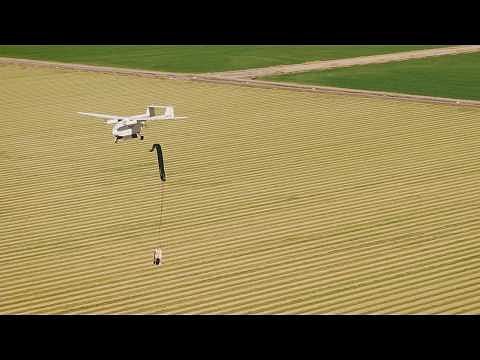
Pyka's DropShip: The Autonomous Drone Rewriting the Rules of Logistics
ALAMEDA, Calif. – June 11, 2026 – In a move that signals a tectonic shift in the landscape of global logistics, autonomous aircraft manufacturer Pyka has unveiled a capability that many have pursued but few have perfected: fully autonomous, low-altitude, precision airdrops from a heavy-lift drone. The company’s DropShip aircraft successfully demonstrated this feature, delivering 200-pound payloads from just 300 feet in the air to within 50 feet of its target.
This isn't merely a technical milestone; it's the unlocking of a new strategic paradigm. For military commanders, disaster relief coordinators, and commercial operators, the "last mile" of delivery into remote or dangerous territory has always been the most perilous and expensive. With this development, Pyka is making a credible claim to have solved it.
"Until now, there hasn't been a safe, economical, or practical way to autonomously deliver critical supplies directly to a specific location hundreds or even thousands of miles away," said Michael Norcia, CEO and Co-Founder of Pyka. "Whether it's fuel, water, medical supplies, repair parts, or other mission-essential cargo, DropShip gives operators the ability to get what they need exactly where they need it, same day."
Redefining the Contested Last Mile
The strategic implications of Pyka's announcement are profound, particularly for modern military operations. The concept of "contested logistics"—the challenge of supplying forces in an environment where the enemy can actively disrupt supply lines—has become a central concern for the Pentagon. High-value manned aircraft like the C-130 or large, expensive legacy drones are increasingly vulnerable to sophisticated and often inexpensive air defense systems. Losing such an asset, along with its crew and cargo, is a devastating blow.
The DropShip platform is engineered as a direct answer to this challenge. Military planners are increasingly focused on "attritable" systems—platforms that are effective enough to be crucial but inexpensive enough to be lost without crippling a mission or budget. By providing the capabilities of a multi-million-dollar legacy system at a fraction of the cost, Pyka's aircraft allows for a new calculus of risk. It can be sent into areas deemed too hazardous for piloted aircraft, ensuring that frontline units receive critical supplies without jeopardizing human lives.
This potential has not gone unnoticed. The U.S. Air Force's innovation arm, AFWERX, has already selected Pyka for a Small Business Innovation Research (SBIR) program focused on the DropShip. This partnership, aimed at addressing critical challenges for the Department of the Air Force, is a clear indicator of the government's serious interest in integrating this technology into its operational toolkit. The plan to proceed with customer evaluations and operational exercises with the U.S. Government later this year suggests a rapid path from demonstration to potential deployment.
From Concept to Capability in Record Time
What makes the DropShip's arrival so disruptive is not just its capability, but the astonishing speed of its development. Pyka progressed from a clean-sheet concept to a flying aircraft in just six months, achieving its first flight in April 2026. A mere two months later, it demonstrated the complex, fully autonomous precision airdrop. This eight-month journey from idea to mission-ready capability is almost unheard of in the aerospace and defense sectors, where development cycles are often measured in years, if not decades.
This velocity is a direct result of Pyka's strategic foundation. The company didn't start from scratch. The core technology stack—the proprietary flight software, autonomous systems, and electric propulsion controls—was forged and hardened in the demanding world of commercial agriculture. Pyka's Pelican crop-spraying drones, which are already the largest FAA-certified commercial drones, have logged thousands of real-world operational hours. This experience provided a proven, reliable backbone for the DropShip, dramatically de-risking and accelerating its development.
The aircraft's specifications underscore its purpose-built design. With a maximum payload of 650 pounds and a mission range exceeding 1,000 miles with a 400-500 pound cargo, it can bridge vast distances. Its hybrid-electric propulsion system is a key enabler, offering a ferry range of over 3,500 miles while also providing up to 45 minutes of all-electric, low-signature flight for quiet approaches to sensitive locations. Furthermore, its modular design allows it to be deployed from a standard 20-foot shipping container and be flight-ready in under an hour with a single operator, offering unparalleled operational flexibility in austere environments.
A Platform Built for a New Era of Operations
To view the DropShip as simply a flying truck would be to miss its true significance. Pyka has designed it as a modular, multi-mission platform. Its open architecture means it can be rapidly configured for a variety of roles beyond logistics. The same airframe that delivers ammunition and medical supplies one day could be outfitted with advanced sensor pods for Intelligence, Surveillance, and Reconnaissance (ISR) the next.
This versatility is a force multiplier. In a dynamic battlespace, a single DropShip could serve as a communications relay, extending a secure network across a wide area. It could act as a "mothership," deploying smaller drones for localized tasks. It could even provide expeditionary power to a forward operating base. This ability to perform multiple missions with a single, scalable, and cost-effective platform is exactly what modern, distributed military operations require. It provides commanders with flexible, resilient options that are not tied to massive, centralized infrastructure.
This positions Pyka not just as an aircraft manufacturer, but as a key enabler of a new operational doctrine. The DropShip embodies the shift toward more agile, distributed, and resilient forces, where the ability to sustain operations far from established bases is paramount.
Beyond the Battlefield: A Lifeline for Humanity?
While the immediate focus is on its military applications, the DropShip's potential extends far beyond the realm of defense. The very same attributes that make it invaluable in a contested zone make it a potential game-changer for humanitarian aid and disaster relief. When an earthquake, hurricane, or flood severs roads and destroys infrastructure, the DropShip can be deployed to deliver life-saving food, water, and medical supplies to isolated communities with a precision that helicopter airdrops often lack.
The ability to operate without risk to a human pilot and with minimal ground support is critical in chaotic post-disaster environments. As CEO Michael Norcia noted, the platform is designed for "remote, disaster-affected, and contested environments," a mission set that applies equally to a warzone and a natural disaster zone. The company’s vision includes civilian applications like inter-island commerce and supplying remote industrial sites, suggesting a long-term strategy that leverages this technology for broad commercial and social good.
As Pyka prepares for military evaluations, the world will be watching. The DropShip is more than a new piece of hardware; it is a powerful demonstration of how autonomous technology, when matured in one industry, can be rapidly adapted to solve critical challenges in another. It represents a future where the delivery of critical goods is no longer constrained by terrain, danger, or distance.