
- Rp1,183 trillion: Total project value financed by PT SMI over 17 years
- Rp36.5 trillion: Value of PT SMI's green financing portfolio by the end of 2025
- 10.9 million jobs: Estimated number of jobs created through PT SMI's projects
Experts would likely conclude that PT SMI's transformation into a Development Finance Institution marks a critical shift toward measurable, sustainable impact, aligning with Indonesia's long-term economic and social development goals.
PT SMI's New Era: Driving Indonesia's Growth with Impact and Scrutiny
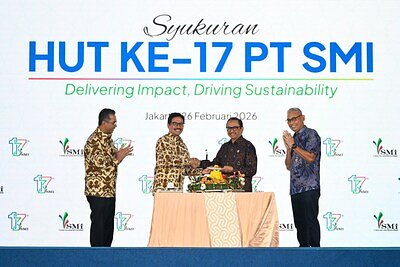
JAKARTA, Indonesia – March 02, 2026 – As PT Sarana Multi Infrastruktur (Persero) celebrated its 17th anniversary, the mood was one of both reflection and forward-looking ambition. The state-owned enterprise, a cornerstone of Indonesia's development strategy, marked the occasion not just with ceremony but with a renewed commitment to its evolving role in nation-building. With a staggering Rp1,183 trillion in total project value financed over its lifetime, PT SMI has cemented its position as a financial juggernaut. Yet, the message from its primary stakeholder, the Ministry of Finance, was clear: the era of measuring success by sheer volume is over. The next chapter demands a sharper, more tangible, and verifiable impact on the lives of Indonesians.
Under the theme "Delivering Impact, Driving Sustainability," the anniversary event at the Dhanapala Building reaffirmed PT SMI's dual identity as a Special Mission Vehicle (SMV) and its transformation into a full-fledged Development Finance Institution (DFI). This shift signals a deeper strategic purpose, moving beyond simply funding projects to actively shaping a sustainable and equitable future for the archipelago.
From Catalyst to Architect: The DFI Transformation
For years, PT SMI has operated as an SMV, a critical catalyst for accelerating infrastructure development by addressing market gaps and providing innovative financing. However, its formal evolution into a Development Finance Institution represents a fundamental change in its mandate and operational philosophy. This transformation equips PT SMI to function more like a national development bank, empowered to de-risk strategic projects that are vital for long-term growth but may not attract purely commercial capital.
This enhanced role involves strengthening its partnership with local governments, acting as a "Mini World Bank" to unlock financing for regional development and ensure that growth is not confined to major economic hubs. By providing early-stage project support, advisory services, and facilitating Public-Private Partnership (PPP) schemes, PT SMI is now positioned to be an architect of development, not just a financier. The goal is to build a robust ecosystem where public funds are used strategically to mobilize and attract much larger pools of private and multilateral capital for the nation's most pressing infrastructure needs.
President Director Reynaldi Hermansjah emphasized this long-term vision during the anniversary celebration. "This milestone is not just a commemoration of age but a reflection of dedication, learning, and commitment that continues to be strengthened to deliver real impact for national development," he stated. "We have chosen the theme 'Delivering Impact, Driving Sustainability' as a reflection of our commitment to ensuring that every role and contribution made can provide meaningful and long-term benefits for Indonesia."
The Trillion Rupiah Footprint: Quantifying 17 Years of Development
The scale of PT SMI's operations is immense. Over its 17-year journey, it has disbursed financing amounting to Rp274.96 trillion. This capital has supported a total project value of Rp1,183 trillion, a figure that underscores the institution's significant multiplier effect on the economy. These are not just abstract numbers; they represent tangible infrastructure—roads, ports, power plants, and digital networks—that form the backbone of the modern Indonesian economy.
Company estimates suggest this financial activity has contributed an aggregate of Rp1,160 trillion to the national economy and, crucially, has been instrumental in creating jobs for an estimated 10.9 million people. These roles span the entire project lifecycle, from initial construction to long-term operations and maintenance, providing livelihoods and stimulating local economies across the country. As Hermansjah noted, these figures are "a reflection of real involvement in the socio-economic life of the Indonesian people," demonstrating a tangible impact on the national economic structure.
The Accountability Imperative: A Call for 'Sharper Impact'
While celebrating these achievements, the anniversary also served as a moment for critical direction from the government. Deputy Minister of Finance, Juda Agung, delivered a message that is set to define PT SMI's future trajectory. He challenged the institution to move beyond a focus on disbursements and project completions.
"Impact cannot be abstract," Juda Agung asserted. "We hope that PT SMI's financing in the future must have a sharper impact framework. Don't be easily satisfied just because the project is completed or the money has been disbursed, but the most important thing is what changes have been produced and how it impacts the community and their quality of life."
This call for a "sharper impact framework" signals a significant shift toward outcome-based evaluation. It requires PT SMI to develop and implement robust methodologies to measure the real-world social and economic benefits of its investments, from reduced travel times and lower logistics costs to improved access to healthcare and cleaner air. The directive also came with a stern reminder to uphold the highest standards of corporate governance and integrity—a critical point of emphasis given the persistent challenges of transparency and corruption within some state-owned enterprises in the region.
In response, PT SMI is bolstering its governance frameworks, including its comprehensive Environmental and Social Safeguards (ESS) and a new Sustainable Funding Framework launched in 2025. These initiatives are designed to ensure that projects are not only financially viable but also socially responsible and environmentally sound, with transparent reporting on their ultimate impact.
Greening the Archipelago: Pioneering Sustainable Finance
A key area where PT SMI is already demonstrating its commitment to impactful development is in sustainable finance. Juda Agung acknowledged the institution's impressive green financing portfolio, which had reached Rp36.5 trillion by the end of 2025. This portfolio includes a diverse range of projects in renewable energy, energy efficiency, clean transport, and waste management. Notably, PT SMI has actively pivoted away from fossil fuels, having ceased financing for new coal-fired power plants since 2018.
The Deputy Minister urged the institution to further leverage blended finance to fund sustainable and social projects. PT SMI is well-positioned to lead this charge through its management of the SDG Indonesia One (SIO) platform. This innovative blended finance mechanism has already mobilized over $3.17 billion from public, private, and philanthropic sources to fund projects aligned with the UN Sustainable Development Goals, with a strong focus on renewable energy.
This commitment to green finance is further validated by international recognition. PT SMI was the first entity in Southeast Asia to receive accreditation from the Green Climate Fund (GCF), a credential that not only unlocks access to global climate finance but also signifies adherence to stringent international standards of environmental and social governance. Through these efforts, PT SMI is not only financing Indonesia's infrastructure but also steering its development pathway towards a more resilient and low-carbon future. As it enters its 18th year, the institution faces the profound task of scaling its vast financial power while embedding a deeper, more measurable, and sustainable impact into every project it undertakes.