
- 43% of a home's total energy use is consumed by HVAC systems (U.S. Department of Energy).
- $6.6 billion to $15 billion market growth for heat pumps in North America by 2035.
- Up to $10,000 in rebates available for heat pump conversions in Massachusetts.
Experts agree that upgrading to energy-efficient heat pumps is becoming a financial necessity due to rising energy costs and aging HVAC infrastructure, with government incentives making the transition more accessible.
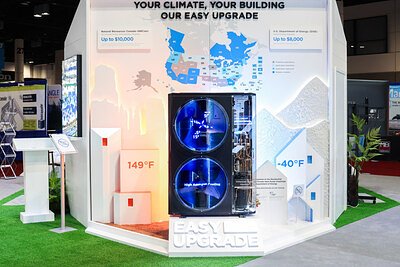
Beat the Heat and Your Bills: The Easy HVAC Upgrade Homeowners Need Now
LOUISVILLE, Ky. – May 18, 2026 – As another summer approaches with forecasts of record-breaking temperatures, homeowners across North America are bracing for the dual impact of relentless heat waves and the soaring energy bills that follow. The strain on household finances is becoming as palpable as the heat itself, forcing a critical reevaluation of one of the home's biggest energy consumers: the heating, ventilation, and air conditioning (HVAC) system.
The New Climate Reality for Homeowners
The data paints a stark picture. According to the EPA, heat wave seasons are lasting longer and occurring more frequently, pushing residential HVAC systems to their limits. These systems, which the U.S. Department of Energy estimates account for about 43 percent of a home's total energy use, are running for longer periods simply to maintain a comfortable indoor environment. This increased workload is particularly problematic for the millions of homes built during the housing boom of the 2000s. Approximately 14.6 million homes constructed between 2000 and 2009 now house HVAC units that are well past their 10-year prime, as noted by ENERGY STAR. As these systems age, their efficiency plummets, causing them to consume more electricity to produce the same cooling effect, leading to a cycle of declining performance and escalating costs.
This convergence of aging infrastructure and extreme weather is hitting homeowners' wallets hard. The U.S. Energy Information Administration projects a continued rise in electricity prices, making energy efficiency less of a green luxury and more of a financial necessity. For many, the question is no longer if they should upgrade, but how they can do so without breaking the bank or undertaking a disruptive, wall-breaking renovation.
A Market Heats Up: The Race for Heat Pump Dominance
Responding to this urgent consumer need, the HVAC industry is undergoing a rapid transformation, with inverter heat pumps emerging as the leading solution. This technology, which provides both heating and cooling in a single, highly efficient unit, is at the heart of a market projected to explode from $6.6 billion in 2026 to $15 billion by 2035 in North America alone. At the forefront of this shift is Midea, one of the world's largest appliance manufacturers, which is making a strategic push to capture this growing market with its EVOX line of heat pumps.
The company's key innovation isn't just in efficiency but in accessibility. Midea is championing the concept of the "drop-in" replacement, engineering its systems to be compatible with the existing ductwork, thermostats, and electrical infrastructure found in millions of American homes. This approach directly tackles the biggest barrier for many homeowners: the high cost and complexity of a full system overhaul.
"The modular design and direct furnace replacement capability are game-changers," noted one HVAC contractor in an online industry forum. "It significantly reduces labor hours and simplifies what can be a very complex job, especially in retrofit situations."
The EVOX lineup is tailored for diverse climates and budgets. The flagship EVOX All Climate is engineered to provide 100% heating output in frigid temperatures down to -31°F, making it a viable option for the Northeast and Midwest. For more temperate regions or budget-conscious consumers, the EVOX Lite offers a competitive SEER2 rating up to 17, a key measure of cooling efficiency. And for hot climates, the EVOX PowerCool provides a dedicated cooling-only solution. This strategy, combined with the use of future-proofing technologies like low-GWP R454B refrigerant, positions the company to challenge established players like Carrier and Trane.
Unlocking Savings: How Incentives Are Fueling the Switch
The transition to energy-efficient heat pumps is being significantly accelerated by a wave of government and utility incentives. These programs are designed to slash the upfront cost for consumers, making the long-term investment in energy savings more immediately attainable. The landmark Inflation Reduction Act (IRA) is a cornerstone of this financial support.
Under the IRA, homeowners can claim the Energy Efficient Home Improvement Credit (Section 25C), which provides a federal tax credit of 30% of the cost, up to $2,000, for the purchase and installation of a qualifying heat pump. This credit can be claimed annually, allowing for phased home upgrades. Furthermore, the High-Efficiency Electric Home Rebate Act (HEEHRA) offers point-of-sale rebates for income-qualified households, providing up to $8,000 for a heat pump system.
Crucially, these federal incentives can be stacked with a growing number of state and local programs. For example:
- In California, homeowners can combine federal credits with the statewide TECH Clean California rebate of $1,000, in addition to local utility rebates that can add thousands more in savings.
- New York's NYS Clean Heat program offers rebates up to $2,400 per unit, which can be combined with IRA incentives to drastically reduce project costs.
- In Massachusetts, the Mass Save program provides some of the most generous rebates in the country, offering up to $10,000 for a whole-home heat pump conversion, with even higher amounts available for income-eligible residents.
To qualify for these programs, systems must meet stringent efficiency standards, often aligning with ENERGY STAR or Consortium for Energy Efficiency (CEE) tiers. Manufacturers like Midea have designed their EVOX systems specifically to meet and exceed these requirements, ensuring their customers can maximize the available financial assistance.
From Blueprint to Backyard: The Homeowner and Contractor Perspective
While press releases and policy documents tell one side of the story, the real-world experiences of homeowners and installers reveal the practical impact of this technological shift. Online communities and consumer forums are filled with discussions from homeowners who have made the switch, often motivated by a combination of high bills and rebate availability.
Many report high satisfaction with the performance of modern inverter heat pumps. A common point of praise is the quiet operation compared to older, single-stage air conditioners that cycle on and off with a jarring thud. Users of Midea's EVOX systems in cold climates have expressed satisfaction with their ability to maintain a comfortable temperature without relying on expensive auxiliary electric heat strips, even during deep freezes. The variable-speed technology not only saves energy but also provides more consistent temperatures and better dehumidification, enhancing overall home comfort.
The "drop-in" installation promise is also resonating. By avoiding the need for extensive and costly ductwork modifications, homeowners can see a clearer and more predictable path to upgrading their systems. For contractors, the simplified, modular designs reduce physical strain and installation time, allowing them to complete more jobs and pass some of those labor savings on to the customer.
As temperatures climb and energy costs remain a top concern, the convergence of advanced, accessible technology and robust financial incentives is creating a pivotal moment for residential energy use. The move to a high-efficiency heat pump is rapidly shifting from a discretionary upgrade to a strategic and financially sound decision for the modern homeowner.