
- 80% of U.S. wine production occurs in California, where Prodalim's new facility is located.
- The Hopland facility has an initial processing capacity of 15 million liters (4 million gallons) per year.
- The global NoLo market is valued at over $10 billion and is projected to grow at a 6% annual rate through 2027.
Experts would likely conclude that Prodalim’s high-tech facility in California represents a strategic and innovative leap forward in the NoLo beverage market, addressing key challenges in de-alcoholization while aligning with sustainability and consumer demand trends.
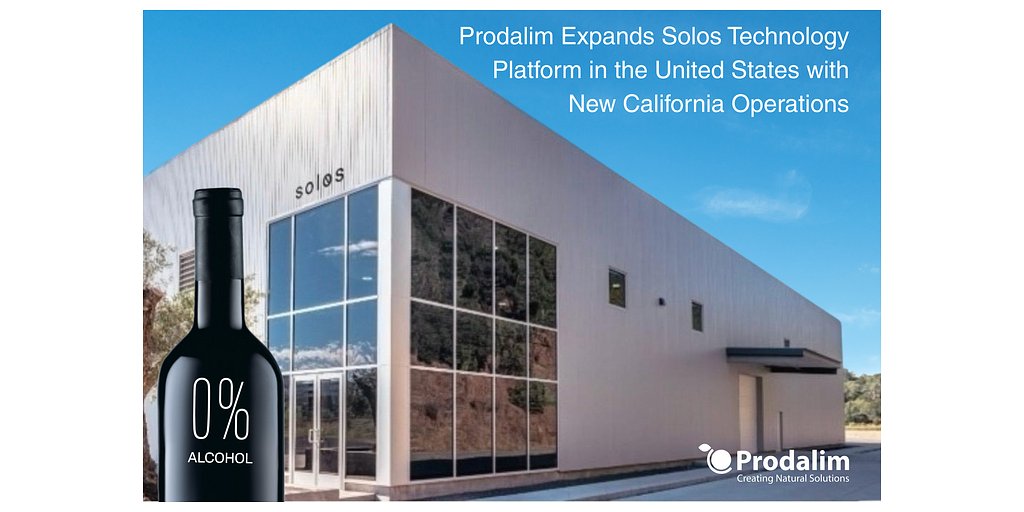
Prodalim Uncorks High-Tech Facility in California's Wine Country
HOPLAND, CA – April 13, 2026 – Global ingredients leader Prodalim has officially launched operations at a new, state-of-the-art facility in Hopland, California, making a significant strategic move to capture the burgeoning no- and low-alcohol (NoLo) beverage market. The facility is dedicated to its patented Solos technology platform, an advanced system designed to produce de-alcoholized beverages that retain the authentic aroma and flavor of the original wine, directly addressing one of the biggest challenges in the rapidly growing sector.
This expansion places Prodalim at the epicenter of the American wine industry, as California accounts for over 80% of the nation's wine production. The move signals a major investment in the future of beverage innovation, providing local wineries with a powerful tool to meet escalating consumer demand for premium, mindful drinking options without sacrificing taste.
The Science of Preserving the Sip
For years, the primary obstacle for non-alcoholic wine has been the loss of character during the de-alcoholization process. Traditional methods often strip out not just the alcohol but also the delicate volatile compounds that create a wine's signature aroma and sensory profile, resulting in products that consumers often describe as tasting flat or overly sweet. Prodalim aims to solve this with its proprietary Solos platform.
The Hopland facility combines two key technologies. The first is a Centec DeAlcoTec vacuum distillation column, which gently removes alcohol at low temperatures to minimize thermal stress on the beverage. The true innovation, however, lies in Prodalim’s patented Aroma Recovery System (ARS). This system employs a sophisticated process known as solid-phase extraction to capture the full spectrum of aroma compounds directly from the wine’s distillate before they are lost. After the alcohol is removed, these captured natural aromas are precisely reintroduced into the final product.
This “true-to-source” approach is what sets the Solos platform apart from competing technologies like spinning cone columns or reverse osmosis, which have long dominated the industry. By focusing on capturing and re-infusing the original aroma signature, the company asserts it can create a de-alcoholized wine that maintains its authentic “vinosity” and complexity. The Hopland site includes a pilot plant, allowing producers to conduct trials and perfect their product before committing to large-scale production, ensuring the final beverage meets the high standards of both the winery and the consumer.
A Strategic Bet on the Golden State
The decision to establish a presence in Hopland is a calculated move to embed Prodalim within the Northern California wine ecosystem. With an initial processing capacity of approximately 15 million liters (four million gallons) per year and the potential for near-term expansion, the facility is poised to become a critical hub for the region's beverage producers.
Underscoring this strategy is a key partnership with Rack & Riddle Holdings, LLC, the largest custom sparkling wine producer in the United States. Rack & Riddle will serve as the exclusive partner for sparkling wine production utilizing the Solos technology, a collaboration expected to significantly elevate the quality of non-alcoholic sparkling options available in the U.S. market. The partnership leverages Rack & Riddle's extensive production facilities across Sonoma County, which will also act as a center for research and development.
This American expansion is a key pillar in Prodalim's broader global strategy. It follows the recent inauguration of Solos Iberia and joint ventures in Germany and Switzerland, creating a network of high-tech de-alcoholization centers in the world’s most important wine regions. With existing U.S. operations including its Florida headquarters and terminals in New Jersey and Southern California, the Hopland facility solidifies Prodalim’s coast-to-coast footprint and its focus on the high-growth NoLo segment, which is managed under its dedicated SOLOS division.
Riding the Wave of Mindful Consumption
Prodalim’s investment is timed perfectly to capitalize on a profound cultural shift in drinking habits. The global NoLo market, valued at over $10 billion, is projected to grow at a compound annual rate of over 6% through 2027, with the non-alcoholic segment leading the charge. This growth is fueled by health and wellness trends, particularly among Millennials and Gen Z, who are increasingly “sober curious” and seek sophisticated alternatives for social occasions.
Consumers are no longer satisfied with simple juice substitutes; they demand the complexity, mouthfeel, and social experience of traditional alcoholic beverages. By providing a technological solution that promises superior flavor and authenticity, Prodalim is enabling wineries to meet this demand head-on. The ability to produce a premium non-alcoholic vintage that reflects the terroir and craftsmanship of its alcoholic counterpart allows brands to expand their portfolio, reach new demographics, and command higher price points in a competitive market.
Innovation Rooted in Sustainability
Beyond technological prowess, Prodalim has built its corporate identity around a deep commitment to sustainability and the circular economy. This ethos is woven into the fabric of its operations, from its vertically integrated supply chain to its product development. The company actively upcycles fruit side streams, such as extracting functional citrus fibers from discarded peels, to minimize waste and maximize resource efficiency.
This commitment is backed by concrete action and third-party verification. Prodalim has committed to the Science Based Targets initiative (SBTi) for emissions reduction and aims to power all its production sites with 100% renewable energy by 2030. The company holds an extensive list of certifications, including Ecovadis for corporate social responsibility, Rainforest Alliance for sustainable agriculture, and FairTrade for ethical practices. All of its sites are certified to Global Food Safety Initiative (GFSI) standards.
By integrating these principles, Prodalim offers its partners not just a technological solution but a sustainable one. For beverage brands increasingly focused on their own environmental, social, and governance (ESG) credentials, partnering with a supplier that has a transparent and certified commitment to sustainability provides a significant competitive advantage. The new Hopland facility, therefore, represents more than just a production site; it embodies the convergence of cutting-edge food science, strategic market positioning, and a forward-thinking vision for a more sustainable and mindful beverage industry.