
- Global data center power usage projected to double to nearly 1,000 terawatt-hours by 2030
- 2,300 gigawatts of generation and storage capacity currently stuck in U.S. interconnection queues
- Potential annual revenue of $60,000 to $80,000 per megawatt for data centers participating in grid services
Experts view PowerX Energy Blade as a transformative solution that could turn data centers from energy drains into grid-stabilizing assets, addressing critical infrastructure challenges posed by AI's growing power demands.
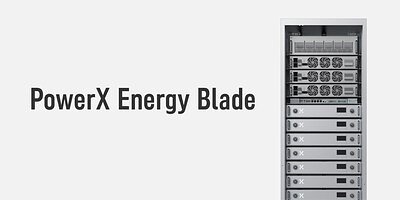
PowerX Energy Blade: Turning AI Data Centers Into Grid Assets
TOKYO, JAPAN – May 14, 2026 – As the artificial intelligence boom pushes global energy grids to their limits, Japanese technology firm PowerX, Inc. today unveiled a product concept aimed at transforming the industry's biggest power consumers into its saviors. The "PowerX Energy Blade" is a rack-mounted battery energy storage system designed to turn power-hungry data centers into flexible, revenue-generating assets for the electrical grid.
The announcement comes at a critical juncture for the tech industry. The computational demand of AI is causing an unprecedented surge in electricity consumption, with global data center power usage projected to double to nearly 1,000 terawatt-hours by 2030, according to the International Energy Agency. This insatiable appetite is creating enormous challenges, from skyrocketing operational costs to multi-year delays in securing grid connections for new facilities. PowerX's new system, slated for a 2027 release, proposes a radical shift: instead of just drawing power, data centers can actively help stabilize the grid.
The AI Power Paradox
The rapid advancement of AI has created a paradox: the technology promising to solve humanity's greatest challenges is creating a formidable one of its own. The power density required for AI servers is exploding, jumping from a historical average of 5-10 kilowatts per rack to upwards of 100kW. This ten-fold increase is straining every component of data center infrastructure, from cooling systems to electrical distribution.
More alarmingly, this demand is overwhelming public utilities. In major development hubs across North America and Europe, the wait time for a new high-capacity grid connection can now stretch from five to ten years, a timeline that is fundamentally incompatible with the tech industry's rapid pace of innovation. Access to power has become the single biggest bottleneck for AI expansion, with nearly 2,300 gigawatts of generation and storage capacity currently stuck in U.S. interconnection queues alone. Companies have the capital and the chips, but they often cannot find a place to plug them in.
This grid strain is not just about capacity; it's also about stability. The fluctuating, high-intensity workloads of AI training models can cause unpredictable power draws, threatening the delicate balance of the electrical grid. In response, utilities are becoming more stringent, and some are even discussing new connection schemes that would require data centers to curtail their demand during periods of grid congestion. It is this complex and urgent problem that PowerX aims to address directly.
From Passive Consumer to Active Grid Partner
The PowerX Energy Blade is engineered to fundamentally change the relationship between data centers and the power grid. Designed to be installed directly into standard server racks, the system acts as both a high-speed battery backup and an intelligent energy gateway.
At its core, the system uses advanced lithium-ion cells optimized for extremely fast charge and discharge cycles. This allows it to respond to grid signals in milliseconds, either absorbing excess electricity from the grid when supply outstrips demand (such as during peak solar or wind generation) or discharging power back into the grid to cover shortfalls. This bidirectional capability is key to turning a data center from a simple load into a dynamic, flexible resource.
The system is also built for the future of computing, supporting the 800V DC power delivery that the latest generation of power-intensive AI GPUs require. By integrating this capability, the Energy Blade can also replace conventional battery backup units (BBUs), streamlining the power infrastructure within the data center and potentially reducing capital costs and physical footprint.
Unlocking New Economic Models for Data Centers
Beyond technical innovation, the most compelling aspect of the Energy Blade may be the new business model it unlocks. By enabling data centers to participate in grid services markets, PowerX is offering operators a path to turn a major cost center—electricity—into a new revenue stream.
The system is designed for participation in programs like Frequency Containment Reserve (FCR) and Demand Response (DR). In FCR markets, grid operators pay for the capacity to rapidly inject or absorb power to maintain grid frequency at a stable level, a service for which the Energy Blade's millisecond response time is ideally suited. In DR programs, facilities are compensated for reducing their power consumption on demand. Industry analysis suggests that flexible data centers participating in such energy markets could generate an additional $60,000 to $80,000 per megawatt of capacity annually.
PowerX also highlights its proprietary "Compute Modulation" technology as a key enabler. This software layer intelligently manages server workloads, allowing the data center to provide grid services without disrupting its core computing operations. The system can identify non-critical or flexible compute tasks that can be momentarily throttled or rescheduled, ensuring that essential AI training or customer-facing applications are never impacted. This addresses a major concern for operators, for whom uptime and performance are paramount.
The financial benefits extend beyond direct revenue. By using the battery to store cheap off-peak energy and discharge it during expensive peak hours—a practice known as peak shaving—operators can significantly lower their electricity bills. This capability could also help them secure more favorable power supply contracts and, crucially, may allow for earlier grid interconnection under new flexible connection schemes, bypassing the long queues that currently plague the industry.
This product launch follows PowerX's February announcement of the "Mega Power DC," a scalable modular data center concept. Together, these initiatives paint a picture of a company building a holistic ecosystem for the AI era, addressing the critical infrastructure needs from both the computing and power perspectives. By embedding energy storage and grid intelligence directly into the heart of the data center, PowerX is betting that the future of computing is not just about processing power, but also about power itself.