
- 13MW Solar Array: One of the largest onsite solar installations in Maine, generating ~18 million kWh annually.
- 20-25% Electricity Coverage: Expected to reduce the plant's electricity needs by this percentage.
- 7,500 Metric Tons of CO₂ Reduction: Equivalent to removing over 1,600 gasoline-powered cars annually.
Experts view this project as a model for corporate renewable energy adoption, demonstrating how strategic partnerships and onsite solar can reduce emissions, stabilize energy costs, and advance regional clean energy goals.
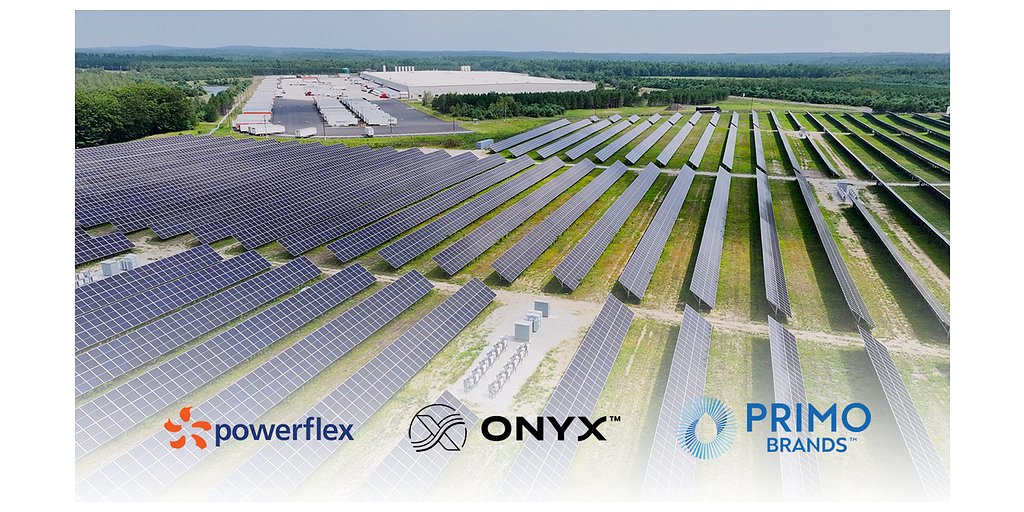
Poland Spring Plant Powers Up with 13MW Maine Solar Project
HOLLIS, Maine – February 19, 2026 – A sprawling, 13-megawatt (MW) solar array has been energized at the Primo Brands bottling facility for Poland Spring, marking a significant step in corporate renewable energy adoption in the Northeast. The ground-mounted project, developed in partnership with Onyx Renewables and PowerFlex, is one of the largest onsite solar installations of its kind in the state and is poised to generate approximately 18 million kilowatt-hours of clean electricity annually.
Located adjacent to the bottling plant, the system is engineered as a “behind-the-meter” project, meaning the solar energy it produces will be consumed directly by the facility. This design is expected to cover 20-25% of the plant's electricity needs, drastically reducing its carbon footprint by an estimated 7,500 metric tons of CO₂ each year—equivalent to removing over 1,600 gasoline-powered cars from the road. The project not only advances Primo Brands’ sustainability objectives but also provides a powerful hedge against volatile energy markets.
“At Primo Brands, water is our business, and being good stewards of natural resources is core to who we are,” said Charles Fogg, Chief Sustainability Officer at Primo Brands. “Powering our facility in Hollis, Maine with renewable energy reduces our reliance on traditional energy sources and helps us reduce greenhouse gas emissions.”
A Strategic Leap in Corporate Sustainability
The Hollis solar project is a cornerstone of Primo Brands' comprehensive environmental strategy, as detailed in its recently released sustainability reports. The company has laid out a 10-year roadmap focused on reducing greenhouse gas emissions, promoting circular packaging, and ensuring responsible water stewardship. By directly powering a significant portion of its operations with renewable energy, the company makes tangible progress on its Scope 1 and 2 emission reduction goals.
Financially, the project is structured under a long-term Power Purchase Agreement (PPA), a model that is gaining widespread traction in the commercial and industrial sector. Under this arrangement, Onyx Renewables financed, owns, and operates the solar array, while Primo Brands purchases the electricity generated at a predictable, fixed rate. This insulates the beverage company from the price swings of the conventional grid and eliminates the need for a massive upfront capital investment, which can be a major barrier to large-scale renewable projects.
“Projects like this represent the shift to a new power paradigm where businesses can take control of their energy future,” stated Patty Rollin, Chief Commercial Officer of Onyx Renewables. “By adopting onsite solar, Primo Brands gains cost predictability and reliable clean power.” This structure allows the company to realize the environmental and financial benefits of clean energy while focusing on its core business of hydration solutions.
Powering Maine's Ambitious Clean Energy Goals
Beyond the gates of the Poland Spring facility, the project serves as a powerful catalyst for Maine's statewide energy transition. The state has enacted some of the most ambitious clean energy legislation in the nation, with a mandate to achieve 80% renewable electricity by 2030 and 100% by 2040. The 13 MW Hollis installation represents a significant private-sector contribution toward meeting these targets.
Large-scale projects undertaken by major industrial energy users are critical for achieving these goals, demonstrating the viability and economic sense of distributed generation. The project showcases how public policy and corporate action can align to accelerate the shift away from fossil fuels while supporting local economies. The multi-year development and construction process supported local jobs and investment in the region.
The collaboration has earned praise from local leadership. “It’s a win-win. Primo Brands brings clean, fresh water to the community… the solar panels are clean energy,” said Richard Morin, the Town Manager for Hollis. “It’s a great partnership.” This sentiment reflects the broader community benefit when major employers invest in sustainable infrastructure that aligns with regional environmental objectives.
A Blueprint for Partnership and Innovation
The success of the Hollis solar project hinges on a strategic partnership that leverages the specialized expertise of multiple industry leaders. PowerFlex, the second-largest commercial solar installer in the U.S., served as the development and engineering, procurement, and construction (EPC) partner. The company navigated the complex multi-year process of permitting, interconnection, and system design, ultimately building the high-performance array.
Onyx Renewables brought crucial financial expertise to the table, underwriting the project and taking on the role of long-term owner and operator. This division of labor—development and construction expertise from PowerFlex, paired with long-term financing and asset management from Onyx—creates a seamless, de-risked solution for the corporate client, Primo Brands.
“Projects like Hollis succeed when each partner brings deep specialization,” noted Nate McMurry, Chief Commercial Officer at PowerFlex. “At 13 megawatts-DC, Hollis is a large onsite solar system by commercial standards. We’re seeing growing demand for projects at this scale as companies look to reduce emissions, manage energy costs, and invest in resilient, distributed energy solutions.”
This collaborative model serves as a blueprint for how other large energy consumers can deploy complex renewable solutions without having to become energy experts themselves. It effectively removes the financial and operational hurdles that have historically slowed corporate clean energy adoption.
The Growing Trend of Onsite Energy Generation
The Primo Brands project is emblematic of a broader shift in the energy landscape, where large corporations are increasingly viewing energy not just as a utility expense but as a strategic asset. The move toward onsite, behind-the-meter generation is driven by a convergence of factors: the falling cost of solar technology, the rising volatility of grid electricity prices, and mounting pressure from investors and consumers for robust environmental, social, and governance (ESG) performance.
By generating power at the point of consumption, facilities like the Hollis plant enhance their energy resilience, making them less vulnerable to grid outages and transmission failures. The non-export design ensures that all the clean power produced is used efficiently on-site, maximizing the operational and environmental benefits. For an energy-intensive operation like a bottling facility, securing a reliable and cost-stable power source is a significant competitive advantage.
As more companies seek to decarbonize their operations and take control of their energy destiny, large-scale, behind-the-meter projects like the one in Hollis are becoming an increasingly vital tool in the global transition to a clean energy economy.