
- 75% of office workers experience symptoms of digital eye strain
- 60% of employees report that screen-related eye strain negatively affects their productivity
- 85% post-consumer recycled plastic used in monitor construction
Experts agree that Philips' Natural-Eyecare monitors represent a significant advancement in addressing digital eye strain through hardware-level innovations like Circular Polarization Light, backed by rigorous certifications and sustainability standards.
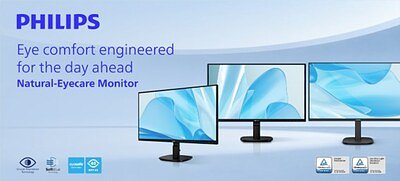
Philips Targets Eye Strain with Natural Light Monitor Tech
SINGAPORE – May 19, 2026 – Philips today unveiled its new Natural-Eyecare business monitor lineup, a direct response to the growing health concerns surrounding prolonged screen time in the modern workplace. The new series, featuring models 24B2N2200G, 27B2N2200G, and the premium 27B2N3500G, introduces an innovative, TÜV Rheinland-certified Circular Polarization Light technology designed to mimic natural light and significantly reduce digital eye strain.
As professionals spend an ever-increasing portion of their day in front of displays, complaints of headaches, dry eyes, and visual fatigue have become commonplace. Philips aims to address this pervasive issue head-on by integrating a suite of health-focused technologies into a product line that also boasts high performance and a strong commitment to sustainability.
The Science of Comfortable Viewing
The headline feature of the Natural-Eyecare series is its use of Circular Polarization Light. Unlike conventional LCD screens that emit linearly polarized light—a known contributor to visual discomfort over long periods—this new technology uses an additional optical layer to create light that more closely resembles natural sunlight. The human eye has evolved to perceive natural, unpolarized, or circularly polarized light, and this innovation is engineered to activate the eye's natural adaptive defenses.
Recent scientific studies support the benefits of this approach. Research has indicated that screens using circular polarization can significantly reduce subjective visual fatigue and help maintain alertness during extended tasks. Studies published by institutions like the National Institutes of Health (NIH) have found that circularly polarized screens can lessen adverse effects on eye dryness, even in different lighting conditions. This is because linearly polarized light has been shown to negatively impact tear film stability, a key factor in dry eye syndrome. By creating a more natural viewing experience, Philips' technology aims to deliver a smoother, healthier, and more comfortable experience for users clocking long hours.
While the concept of circular polarization is not new, its dedicated application and third-party certification for eye comfort in the business monitor segment represents a significant step forward. It moves beyond common software-based solutions to a hardware-level innovation aimed at the root cause of light-induced discomfort.
A Fortress of Certifications
To bolster its health claims, Philips has subjected the Natural-Eyecare line to a battery of tests from independent bodies like TÜV Rheinland and Eyesafe. The monitors carry multiple certifications that work in concert to protect users' vision. In addition to the novel Circular Polarization Light certification, the displays are Eyesafe CERTIFIED 2.0.
This advanced standard, developed with TÜV Rheinland, goes beyond simple blue light reduction. It uses a metric called Radiance Protection Factor (RPF) to quantify blue light filtration, ensuring a high level of protection while maintaining color accuracy. The monitors integrate a hardware-based low blue light solution, marketed as SoftBlue, which selectively filters harmful shortwave blue light at the source (the LED backlight) without causing the yellow tint often associated with software-based night modes. This ensures that the visuals remain crisp and color-accurate, a crucial requirement for many professionals.
Further complementing these features is Flicker-Free technology, which eliminates the subtle screen flicker that can cause headaches and eye strain over time. This combination of verifiable, lab-tested technologies provides a multi-layered defense against the common culprits of digital eye strain, offering a level of assurance that corporate buyers and health-conscious individuals increasingly demand.
The Growing Epidemic of Digital Eye Strain
The launch of the Natural-Eyecare line is strategically timed to address a near-universal problem. Recent surveys reveal that up to 75% of office workers experience symptoms of digital eye strain. With employees now spending upwards of 90 hours a week looking at screens across their work and personal lives, the impact is substantial. Nearly 60% of employees report that screen-related eye strain negatively affects their productivity, with some studies suggesting it contributes to the loss of nearly a full day of work per week.
This isn't just a matter of comfort; it's a significant business and public health issue. Over half of employees feel that digital eye strain diminishes their overall quality of life, and more than a quarter have taken time off work because of it. While HR leaders are aware of the problem, the adoption of effective solutions has been slow. Philips' new monitors offer a tangible, technology-driven solution that directly targets this pain point, providing a compelling argument for companies investing in employee wellness and productivity.
Redefining Workplace Sustainability
Beyond user health, Philips has placed a strong emphasis on environmental responsibility. The entire Natural-Eyecare lineup is built with sustainability at its core, meeting a trifecta of leading environmental standards: EnergyStar 8.0 for energy efficiency, RoHS for restricting hazardous substances, and a high EPEAT rating, which assesses a product's full environmental lifecycle.
Notably, the monitors are constructed with 85% post-consumer recycled plastic and are shipped in 100% recyclable packaging. This high percentage of recycled material is a significant achievement in the electronics industry and positions the product line as a leader in circular economy principles. For organizations with robust Corporate Social Responsibility (CSR) goals, these green credentials make the monitors an attractive choice that aligns with both human and planetary health.
All models in the series come equipped with a fast 144Hz refresh rate for exceptionally smooth motion, minimizing screen tearing and stuttering, along with standard HDMI and DisplayPort inputs. The premium 27-inch 27B2N3500G model further enhances the offering with a crisp QHD resolution, a high 1500:1 contrast ratio for detailed image processing, and a fully ergonomic stand that supports height, tilt, swivel, and pivot adjustments. The new Philips Natural-Eyecare business monitors are now available across APAC markets, offering a versatile and health-conscious option for modern office environments.