
- $124 million raised by PassiveLogic to date, including a $74 million Series C round in 2025
- 28.3% average reduction in energy usage and 32% cut in CO2 emissions with AI-driven building management
- $1.3 trillion projected market for autonomous buildings by 2030
Experts view PassiveLogic's hiring of a seasoned CFO from Rivian and Waymo as a strategic move to scale its disruptive 'physical AI' technology, positioning it to lead the transition to autonomous, sustainable buildings.
PassiveLogic Taps Rivian, Waymo Vet to Steer Autonomous Building Future
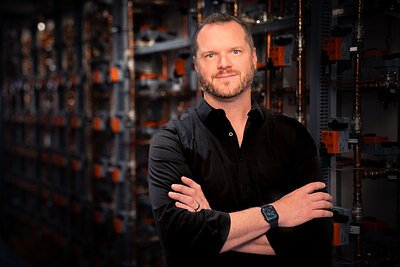
SALT LAKE CITY, April 22, 2026 – PassiveLogic, a company at the forefront of artificial intelligence for physical systems, today announced the appointment of Joel Harvill as its new Chief Financial Officer. The move signals a pivotal moment for the firm, bringing in a seasoned financial leader from high-growth, disruptive technology companies like Rivian and Waymo to steer its next phase of expansion in the burgeoning autonomous buildings sector.
Harvill's appointment is a strategic play for PassiveLogic as it prepares to scale its generative autonomy platform. The company aims to redefine how commercial buildings are designed, managed, and operated, transforming them from static structures into intelligent, self-managing ecosystems. This hire underscores a transition from a period of intense research and development to one focused on aggressive market penetration and commercial growth.
A Financial Architect for a New Industrial Frontier
Joel Harvill brings nearly two decades of formidable experience in corporate finance, capital markets, and private credit, having managed and closed over $15 billion in transactions throughout his career. His resume reads like a tour of industrial and technological transformation, with senior finance roles at electric vehicle maker Rivian and autonomous driving pioneer Waymo, alongside tenures at financial giants like GE Capital, AIG Investments, and BNP Paribas.
This background is particularly relevant for a "deep tech" company like PassiveLogic, which operates at the complex intersection of advanced software and physical infrastructure. Such companies often face long development cycles and significant capital requirements before achieving widespread market adoption. Harvill’s experience guiding Rivian and Waymo through their own capital-intensive scaling phases provides him with a unique playbook for navigating the financial challenges inherent in bringing revolutionary physical technology to market.
"Joel is a powerful addition to the PassiveLogic leadership team," said Troy Harvey, CEO and co-founder of PassiveLogic, in a statement. "He brings an exceptional combination of financial rigor, capital markets experience, and strategic leadership from companies that are reshaping major industries. As PassiveLogic continues to define the category of physical AI, Joel's experience building durable financial foundations for transformative businesses will be critical to our next phase of growth."
Harvill's philosophy, shaped by years of operating through both market growth and disruption, emphasizes the dual importance of a resilient capital structure and strong operational execution—a mindset essential for a company aiming not just to innovate, but to endure.
Beyond Smart: The Push for Autonomous, Sustainable Buildings
The mission Harvill is joining is one of significant global consequence. Buildings account for an astonishing share of global energy consumption and nearly 40% of global carbon emissions from operations. PassiveLogic aims to tackle this head-on by moving beyond the current paradigm of "smart buildings" into the realm of true autonomy.
The company’s platform uses what it calls "physical AI" and "Quantum digital twins" to create a complete, physics-based understanding of a building's systems. This allows its AI agents to control HVAC, lighting, and other systems in real-time, making predictive decisions that optimize energy use, reduce operational costs, and enhance occupant comfort. In essence, the technology enables buildings to manage themselves as cohesive, infrastructural robots.
"While much of the world is still debating what AI might do, PassiveLogic is already applying it in the physical world," Harvill stated, highlighting the company's tangible impact. He emphasized its ability to improve existing assets without requiring costly, large-scale retrofits, a key factor for accelerating adoption. The potential impact is substantial. Independent industry studies have shown that AI-driven building energy management systems can reduce energy usage by an average of 28.3% and cut related CO2 emissions by over 32%.
Navigating a Trillion-Dollar Market Opportunity
Harvill’s career path from autonomous vehicles to autonomous buildings charts a course through the major waves of technological disruption. The challenge at PassiveLogic—scaling a platform that merges complex AI with real-world physical systems—mirrors the journeys of his previous employers. The company is positioning itself not just as a participant in the existing smart building market, which is projected to exceed $200 billion by 2032, but as the creator of a new category: autonomous buildings, a market it projects could reach $1.3 trillion by 2030.
The competitive landscape includes established industrial giants like Siemens, Honeywell, and Schneider Electric. However, PassiveLogic's approach is one of fundamental disruption rather than incremental improvement. This is validated by its impressive list of investors, which includes NVIDIA's venture arm, Brookfield, Prologis Ventures, and even an industry incumbent, Johnson Controls. This strategic backing suggests a broad consensus that PassiveLogic's technology represents a genuine leap forward.
For Harvill, the task will be to secure the financial resources and build the operational discipline needed to seize this generational opportunity, turning advanced technology into a scalable, market-leading enterprise that sets a new global standard for the built environment.
Building the Financial Bedrock for a Generative Future
PassiveLogic is already well-capitalized for its mission, having raised over $124 million to date, including a significant $74 million Series C round that closed in 2025. Harvill's arrival is not just about the next funding round; it's about architecting a long-term financial strategy that can support sustained growth and solidify the company's leadership position. His role will involve everything from managing treasury and financial planning to negotiating strategic contracts and ensuring the company has robust access to capital markets.
This strategic hire signals that PassiveLogic is maturing beyond its startup roots and is building the executive leadership required for a major commercial assault on the global real estate and industrial markets. By bringing in a CFO with a proven track record of scaling world-changing technologies, PassiveLogic is making a definitive statement about its readiness to transform the world's buildings and take a leading role in addressing the climate challenge.