
- 819 MW: New power barges proposed to replace aging units in Brooklyn.
- 50% reduction: Emissions intensity cut with new generators.
- 446 MW shortfall: Projected electricity deficit in NYC by summer 2025.
Experts agree that while AlphaGen's proposal offers a short-term solution to NYC's reliability crisis, it sparks debate over whether fossil-fuel-based 'bridge' technologies align with the state's long-term zero-emissions goals.
NYC's Power Dilemma: A Bridge or Barrier to a Green Future?
NEW YORK, NY – March 16, 2026 – As New York City faces a looming electricity shortfall that state grid operators warn could trigger blackouts within years, a new proposal is forcing a difficult conversation about the future of the city's power. Alpha Generation (AlphaGen) has formally submitted a plan to Con Edison to overhaul some of the city's oldest and most controversial power sources, promising a cleaner, more reliable grid. But the proposal, which combines new fossil-fuel-burning generators with large-scale batteries, walks a fine line between pragmatic solution and a potential detour on the state's path to a zero-emissions future.
The plan responds to a direct plea from Con Edison for solutions to a projected reliability gap that could leave the city short by hundreds of megawatts during peak summer demand. AlphaGen's proposal aims to replace aging power barges in Brooklyn with modern, more efficient units while adding significant battery storage, framing it as a necessary bridge to maintain stability during the clean energy transition.
The Two-Pronged Plan: Cleaner Barges and Big Batteries
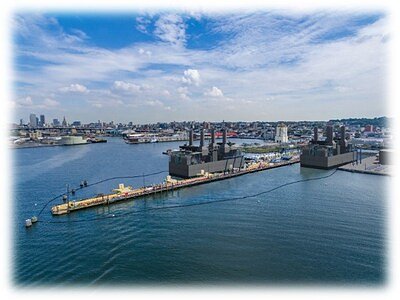
At the heart of AlphaGen's multi-faceted proposal are the Gowanus and Narrows Repowering Projects. The plan calls for retiring six aging, less efficient power generation barges currently moored at the Gowanus and Narrows Generating Stations in Brooklyn. In their place, AlphaGen would deploy three new state-of-the-art power barges, providing a potential 819 megawatts of fast-start, dispatchable power.
According to the company, these new units would be significantly cleaner, reducing emissions intensity by more than 50% compared to the existing fleet. Crucially, AlphaGen highlights that the new turbines are designed to be "hydrogen-ready," theoretically allowing them to burn a blend of natural gas and carbon-free hydrogen in the future, and eventually run on 100% hydrogen as the technology and supply chain mature.
"New York City's electric grid is facing a growing reliability gap as older infrastructure retires and demand continues to rise," said Curt Morgan, CEO of AlphaGen, in the announcement. He emphasized that the new barges would occupy the same footprint, utilize existing infrastructure, and offer a faster path to operational readiness to meet the city's urgent needs.
Complementing the repowered barges, the proposal includes a significant investment in battery energy storage. AlphaGen plans for two utility-scale battery systems totaling 126 MW / 504 MWh at its Astoria Generating Station site in Queens, and another 150 MW / 600 MWh battery project at the Gowanus site. These batteries are designed to provide near-instantaneous power to stabilize the grid during short-term fluctuations, while the repowered barges would offer sustained power during extended heatwaves or extreme weather events.
Racing Against a Blackout Clock
AlphaGen's proposal does not exist in a vacuum. It lands squarely in the middle of a well-documented and escalating reliability crisis for New York City. A July 2023 report from the New York Independent System Operator (NYISO), which manages the state's grid, projected a potential electricity supply shortfall of up to 446 megawatts in the city as early as summer 2025. Subsequent reports have continued to warn of "profound reliability challenges."
The deficit is the result of a perfect storm: rising electricity demand fueled by economic growth and the electrification of buildings and vehicles, combined with the planned retirement of older, fossil-fuel "peaker" plants. These plants, which fire up to meet peak demand, are being phased out under the New York State Department of Environmental Conservation's (DEC) stringent "peaker rule" aimed at cutting harmful emissions in dense urban areas.
Ironically, the very Gowanus and Narrows units AlphaGen seeks to replace were granted extensions to operate beyond their initial 2025 shutdown date precisely because of these reliability concerns. Regulators have acknowledged that a permanent solution is not yet in place, allowing the plants to potentially run until 2029 while a replacement is built—a reality that underscores the urgency of the situation.
A Bridge to Where? The Debate Over 'Cleaner' Fossil Fuels
While AlphaGen presents its plan as a practical solution, it wades into the contentious debate over the role of fossil fuels—even cleaner ones—in a green transition. The proposal is an explicit acknowledgment that, in the company's view, purely renewable sources cannot yet guarantee the 24/7 reliability a city of eight million people demands. CEO Curt Morgan stated the plan is meant "to start a conversation about supporting cleaner technology as a bridge to a zero-emissions future."
This "bridge" narrative, however, faces scrutiny from environmental advocates and clashes with the ambitious timeline of New York's Climate Leadership and Community Protection Act (CLCPA). The landmark law mandates a 70% renewable electricity supply by 2030 and a 100% carbon-free grid by 2040. Critics of bridge-fuel strategies argue that investing in new gas-fired infrastructure, even if it is more efficient and hydrogen-ready, risks locking in fossil fuel dependence for decades and diverting capital from fully renewable solutions.
Furthermore, the projects are sited in communities in Brooklyn and Queens that have long borne the brunt of pollution from power generation, raising environmental justice concerns. While the new units would be less polluting, some local activists are likely to argue that the goal should be zero emissions, not just lower emissions.
The Renewable Race: Wind, Wires, and Storage Hurdles
AlphaGen's thermal-and-battery proposal is just one contender in a crowded field of solutions vying to power New York City's future. The state is making massive investments in offshore wind, with projects like the 810 MW Empire Wind 1 expected to connect to the city's grid by 2027. Major transmission upgrades, such as the Champlain Hudson Power Express, are also underway to bring more clean hydropower from upstate and Canada into the five boroughs.
Battery storage is also a cornerstone of the state's strategy, but its deployment has recently hit a major snag. A new Con Edison interconnection policy has been criticized by developers for imposing potentially billion-dollar upgrade costs, stalling or canceling an estimated $1.5 billion in battery projects across the city. This regulatory hurdle, ironically, makes the case for a dispatchable, on-demand power source like AlphaGen's proposal more compelling in the short term.
Ultimately, the decision will fall to state regulators and Con Edison, who must weigh the immediate, documented risk of power shortages against the state's long-term, legally mandated climate goals. The AlphaGen proposal crystallizes the central challenge of the energy transition: balancing the urgent need for reliability today with the unwavering commitment to a sustainable tomorrow.