
- $750M Green Loan: PT Vale secures a landmark US$750 million syndicated loan facility, 1.7 times oversubscribed by 14 international banks.
- Sustainability KPIs: Loan tied to reducing Scope 1 and Scope 2 carbon emissions intensity and increasing renewable energy use, rated 'strong' by an independent provider.
- Greenshoe Option: Includes a US$250 million greenshoe option for additional financing.
Experts view PT Vale's $750M green loan as a pivotal model for sustainable mining finance, demonstrating strong investor confidence in ESG-linked initiatives and setting a benchmark for credible decarbonization efforts in the global metals sector.
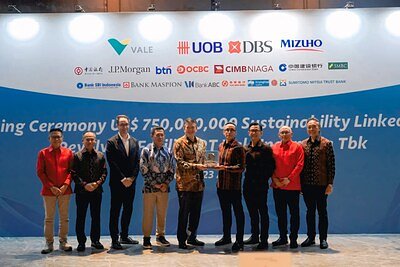
PT Vale's $750M Green Loan Redefines Sustainable Nickel Production
JAKARTA, Indonesia – April 29, 2026 – PT Vale Indonesia Tbk has secured a landmark US$750 million syndicated loan facility, a move that not only marks its successful debut in this market but also sends a powerful signal about the future of financing in the global mining industry. The deal, which was 1.7 times oversubscribed and backed by a consortium of 14 international banks, is explicitly tied to the company's environmental performance, firmly linking its financial strategy with its decarbonization agenda.
This Sustainability-Linked Loan (SLL) facility, which includes a US$250 million greenshoe option, is not just another corporate loan. It represents a pivotal moment for PT Vale and the broader metals sector, demonstrating intense investor appetite for credible, transparent, and impactful environmental, social, and governance (ESG) initiatives. The overwhelming support from the financial community underscores a deep confidence in PT Vale's credit profile, its strategic project pipeline, and its trajectory as a key supplier of low-carbon nickel for the global energy transition.
A New Blueprint for Green Mining Finance
The structure of the loan is designed to hold the company accountable. It is linked to two specific, measurable key performance indicators (KPIs): the reduction of Scope 1 and Scope 2 carbon emissions intensity and an increase in the consumption of renewable energy. Crucially, these KPIs received a "strong" rating from an independent Second Party Opinion provider, validating their ambition and alignment with the Paris Agreement's goal of limiting global warming to 1.5°C, as well as with Indonesia's own Nationally Determined Contributions.
This external verification is critical in a market increasingly wary of "greenwashing." It provides assurance to lenders and stakeholders that the targets are not just for show but represent a meaningful commitment to environmental stewardship.
Bernardus Irmanto, President Director and Chief Executive Officer of PT Vale, emphasized the deal's strategic importance. "This facility marks an important step in our journey to align our financing strategy with our decarbonisation agenda and long-term growth ambitions," he stated. "We remain committed to delivering high-quality nickel with a lower carbon footprint, while supporting Indonesia's downstreaming agenda and contributing meaningfully to the global energy transition."
Leading bankers involved in the transaction echoed this sentiment, highlighting the deal's role as a model for the region. "As Southeast Asia's nickel sector continues to evolve, the role of well-structured transition financing becomes increasingly critical," said Harapman Kasan, Wholesale Banking Director at UOB Indonesia. Ken Matsuo, President Director of PT Bank Mizuho Indonesia, noted that the strong oversubscription despite market volatility "underscore[s] confidence in PT Vale's business model."
Mike Zhang, Global Head of Metals & Mining at DBS Bank, added that the sector plays a "pivotal role" in the energy transition and must demonstrate credible progress. This loan provides a clear framework for just that, with financial incentives—in the form of lower interest rates—for meeting the sustainability targets.
Fueling Indonesia's Electric Vehicle Ambitions
The timing and nature of this loan are deeply intertwined with Indonesia's national strategy. As the world's largest producer of nickel, Indonesia is aggressively positioning itself to move beyond simply exporting raw ore. Through its "downstreaming" policy, the government has spurred massive investment in domestic processing to capture more value and become a central hub in the global electric vehicle (EV) battery supply chain.
PT Vale, with its long-standing operations powered predominantly by its own hydropower plants, is uniquely positioned to supply the "green nickel" that ethically-minded automakers and consumers are demanding. While much of the recent expansion in Indonesian nickel processing has been powered by coal, PT Vale's relatively low-carbon footprint provides a strategic advantage and a model for more sustainable development within the industry.
This SLL reinforces that advantage. By securing financing that rewards further decarbonization, the company solidifies its brand as a responsible producer. This helps not only PT Vale but also enhances the reputation of Indonesian nickel on the world stage, making it more attractive to premium buyers in the EV, energy storage, and electronics sectors. The deal aligns corporate incentives with national ambitions, supporting Indonesia's goal to build an end-to-end EV ecosystem, from mining and smelting to battery and vehicle manufacturing.
Beyond the Balance Sheet: Climate Goals and Community Gains
Perhaps the most innovative feature of the loan is what happens with the financial upside. PT Vale has committed to allocating the financial benefits derived from meeting its sustainability targets—and thus securing a lower interest rate—to its community development programs. This creates a direct, tangible link between the company's environmental performance and the well-being of the communities surrounding its operations.
For decades, PT Vale has run corporate social responsibility (CSR) initiatives focused on economic empowerment, local health services, and education in regions like Sorowako in South Sulawesi. These programs support local entrepreneurs, fund schools and scholarships, and invest in public health infrastructure.
The SLL structure adds a new dimension to this work. Success in reducing emissions will now translate directly into more potential funding for these vital social programs. This mechanism extends the impact of the ESG-linked financing far beyond the company's operational footprint, creating a virtuous cycle where environmental responsibility fuels social progress.
This commitment addresses a common criticism of large-scale industrial projects by ensuring that local populations share in the benefits of the company's sustainable transition. It reframes the corporate financing deal not as an abstract transaction, but as a catalyst for measurable improvements in both environmental health and community prosperity, setting a high bar for how resource companies can integrate their social and environmental responsibilities.