
- 90%: Europe's dependency on China for refined rare earths in 2024
- 70,000 tonnes: Projected annual demand for rare earth magnets for EVs by 2030
- 2,000 tonnes/year: Initial capacity of Neo's Narva magnet plant
Experts view Neo's Estonia plant as a critical step toward reducing Europe's reliance on China for rare earths, aligning with the EU's strategic goals for supply chain resilience and green technology independence.
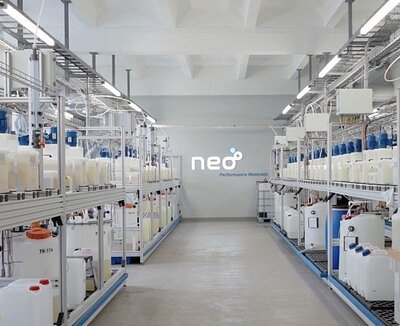
Neo's Estonia Plant Boosts Europe's Rare Earth Independence
TALLINN, Estonia – April 10, 2026 – In a significant step toward bolstering Europe's strategic autonomy, Neo Performance Materials has successfully commissioned its heavy rare earth separation production line at its Silmet facility in Estonia. The Canadian-owned company announced today that the facility is now producing separated terbium and dysprosium, two critical elements essential for the high-performance magnets that power the green economy.
The achievement marks a pivotal moment for the continent, which has been working to reduce its profound dependency on external suppliers, primarily China, for the building blocks of modern technology. By establishing a processing capability entirely within European borders, Neo is creating a vital link in a more secure and resilient supply chain for everything from electric vehicles to wind turbines.
A New Front in the Race for Critical Materials
For years, European policymakers and industry leaders have warned of the strategic vulnerability created by the continent's reliance on imported rare earth elements (REEs). In 2024, the European Union imported nearly three-quarters of its rare earths from China and Russia, with some analyses placing the dependency on China for refined rare earths at nearly 90%. This concentration of supply has left Europe's ambitious green and digital transitions susceptible to geopolitical shocks and supply chain disruptions.
Neo's new Estonian facility directly confronts this challenge. It is one of the first concrete results of a broader European strategy codified in the EU's Critical Raw Materials Act (CRM Act), which came into force in 2024. The Act sets ambitious targets for 2030: sourcing 10% of annual needs from domestic extraction, processing 40% within the EU, and recycling 25% from internal waste streams. Crucially, it aims to ensure no single non-EU country supplies more than 65% of any strategic raw material.
The Estonian plant, which processes mixed rare earth carbonate feedstock into high-purity heavy rare earth solutions, is a textbook example of the processing capacity the CRM Act was designed to foster. It represents a tangible move to re-shore a critical industrial capability that Europe largely offshored decades ago.
The Hidden Elements Powering the Green Transition
While obscure to the public, heavy rare earth elements (HREEs) like dysprosium and terbium are indispensable for the world's most advanced technologies. When added in small quantities to neodymium-iron-boron (NdFeB) magnets, they dramatically increase the magnet's ability to resist demagnetization at high temperatures. This property is essential for the high-efficiency, compact electric motors that power nearly 95% of all electric vehicles (EVs).
The demand for these materials is skyrocketing. Analysts project that the quantity of rare earth magnets needed for EVs alone could surge from 5,000 tonnes in 2019 to as much as 70,000 tonnes per year by 2030. Wind turbines, particularly direct-drive models favored for offshore wind farms, are also massive consumers of these high-performance magnets. Without a stable supply of dysprosium and terbium, the production of these cornerstone green technologies would be at risk.
By producing these elements in Estonia, Neo is not just selling minerals; it is enabling the future of European sustainable technology. The facility's output directly addresses a critical bottleneck in the value chain, ensuring that European car manufacturers and wind turbine producers have a secure source for the components they need to meet climate goals.
A Vertically Integrated Vision for Europe
The commissioning of the HREE separation line is the capstone on Neo's long-term strategy to build an end-to-end magnet supply chain within Europe. The separated terbium and dysprosium will serve as a secure feedstock for the company's other landmark facility in Estonia: a plant in Narva that began mass production of sintered NdFeB magnets in late 2025. This magnet plant, the first of its kind in Europe, has an initial capacity of 2,000 tonnes per year and is expected to ramp up commercial production throughout 2026.
This vertical integration provides Neo with a powerful competitive advantage. It de-risks its operations from the volatility of the global HREE market and allows it to offer customers a secure, traceable, and high-quality European supply chain, from separated element to finished magnet.
"The successful launch of our heavy rare earth separation in Estonia represents a critical step in Neo's strategy to build the most vertically integrated rare earth magnetics value chain in Europe," said Rahim Suleman, President and CEO of Neo. "This achievement enables Neo to provide secure, traceable, and high-quality heavy rare earth materials to our European permanent magnet facility, supporting our customers' most demanding applications."
While Neo now stands as a key player, it is part of a growing ecosystem of companies, including France's Caremag and Belgium's Solvay, working to build out Europe's rare earth capabilities. This nascent industry is positioning itself as a high-standard alternative, operating under the EU's stringent environmental regulations like the Industrial Emissions Directive and REACH. This commitment to environmental compliance is a key differentiator in an industry historically plagued by ecological concerns.
The company confirmed the production line is operating at its designed nameplate capacity, with current efforts focused on achieving stable product purity before transitioning to full, routine production. This methodical approach underscores the technical complexity of rare earth separation and the importance of ensuring quality before scaling output for its magnet facility and the wider European market. This strategic investment represents a crucial battle won, but the campaign for Europe's complete raw material sovereignty is far from over.
Topics & Related
Venture Capital
Cloud & Infrastructure
Automotive Manufacturing
ESG
Decarbonization
Net Zero
Circular Economy
Trade Wars & Tariffs
Geopolitical Risk
International Relations
Environmental Regulation
Private Placement
Cryptocurrency & Digital Assets
Revenue
EBITDA
Gross Margin
Related Company Pulse