
- 100-fold improvement in power efficiency targeted by NTT's IOWN initiative
- 125x transmission capacity and 200-fold reduction in latency compared to conventional networks
- $2 billion revenue target from AI agents by 2027 for NTT DATA
Experts view NTT's photonics-based approach as a promising solution to AI's energy crisis, with potential to revolutionize power efficiency and network performance through light-based technologies.
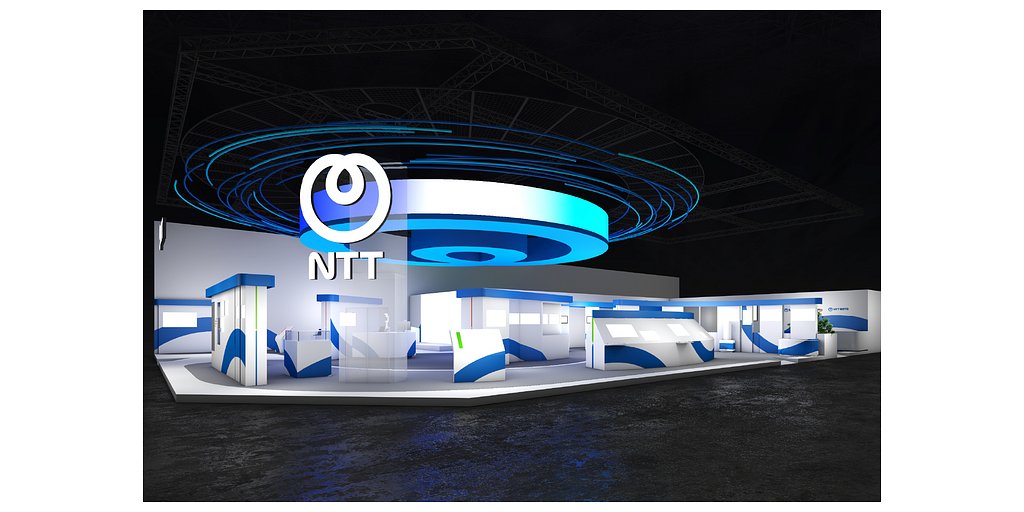
NTT's Photonics Gambit: Tackling AI's Energy Crisis at MWC 2026
BARCELONA, Spain – January 28, 2026 – In a significant strategic move, the NTT Group is set to make a unified return to the global stage at MWC Barcelona 2026, marking its first joint exhibition in seven years. Comprising the technological might of NTT, NTT DOCOMO, and NTT DATA, the Japanese telecommunications and IT giant will present a vision for a sustainable digital future, squarely aimed at solving one of the tech industry’s most pressing challenges: the colossal energy appetite of artificial intelligence.
Under the theme “Photonics Unlocks an Intelligent Power-Optimized Future,” the group will leverage the world's largest connectivity event to showcase its Innovative Optical and Wireless Network (IOWN) initiative. This is not merely a product showcase but a declaration of intent, following a comprehensive corporate identity (CI) renewal in July 2025 designed to consolidate its global brand and accelerate international expansion. The exhibition promises to unveil a suite of technologies poised to build the very foundation of the next-generation, low-power internet.
The Photonics Solution to AI's Power Problem
As AI models grow in complexity and data centers expand to support them, their energy consumption is skyrocketing, posing a significant environmental and economic challenge. The traditional silicon-based electronics governed by Moore's Law are approaching their physical limits in terms of speed and power efficiency. NTT's central argument is that the future of computation must be built on light.
The core of this vision is IOWN, a radical rethinking of network architecture that replaces traditional electronics with photonic, or light-based, components wherever possible. The goal is ambitious: to achieve a 100-fold improvement in power efficiency, 125 times the transmission capacity, and a 200-fold reduction in latency compared to conventional networks. These are not just theoretical targets. NTT has already made tangible progress, launching its first commercial All-Photonics Network (APN) service, IOWN 1.0, in Japan back in March 2023. This service demonstrated the potential for ultra-low, stable latency, a critical feature for real-time applications from remote surgery to industrial automation.
At MWC, the group will highlight the next evolution of this technology: photonics-electronics convergence devices. Spearheaded by the NTT Innovative Devices Corporation, established in mid-2023, this effort aims to shrink and integrate optical and electronic components onto a single chip. By bringing light-based processing closer to the processor, these devices can drastically reduce the energy wasted in data transfer, a major bottleneck in modern data centers. The keynote speech by NTT’s President and CEO, Akira Shimada, on March 4 is expected to emphasize the commercialization path for these transformative devices.
Further pushing the boundaries, NTT will also feature its work in optical quantum computing. In partnership with OptQC Corp., the company is on a path to develop a 1-million qubit optical quantum computer by 2030. Unlike many quantum systems that require extreme cold, photonic quantum computing can operate at room temperature, promising a more scalable and energy-efficient approach to solving problems far beyond the reach of today's supercomputers.
A Unified Global Strategy
The joint exhibition is the most visible manifestation of NTT Group’s renewed global strategy. The seven-year gap since its last combined appearance at MWC is significant, signaling a deliberate shift from a collection of powerful but separate entities to a single, integrated global force. This was formalized with the July 2025 CI renewal, which included simplifying the parent company's name from “Nippon Telegraph and Telephone” to just “NTT” to reflect its evolution beyond traditional telecom services.
This unified front is a strategic play to compete more effectively with global technology behemoths in the lucrative markets for AI, cloud services, and next-generation networks. By presenting a cohesive narrative that connects its foundational infrastructure (IOWN) with its advanced IT services (NTT DATA) and mobile innovations (NTT DOCOMO), the group aims to demonstrate an end-to-end capability that few competitors can match. This integration is supported by the IOWN Global Forum, an industry consortium with buy-in from major vendors like Nokia, Cisco, and Fujitsu, which lends credibility and fosters a broad ecosystem for adoption.
From Infrastructure to Intelligent Services
While the foundational photonics technology is revolutionary, NTT’s MWC showcase will be equally focused on the practical, AI-powered services this new infrastructure enables. The exhibition will be split into two core themes: building the “AI-Resilient Infrastructure with Photonics” and demonstrating the “AI-Powered Services and Solutions” that run on top of it.
NTT DATA will be a key player in this latter category, highlighting its Agentic AI solutions, such as the Smart AI Agent™ ecosystem. This platform moves beyond simple generative AI to create intelligent, autonomous agents capable of optimizing complex business workflows, from automatically resolving IT issues to guiding employee training. With a projected revenue target of $2 billion from this area by 2027, NTT DATA is betting heavily on AI agents to redefine enterprise productivity. These solutions are built on strategic partnerships with major cloud and AI players, including Microsoft, Google Cloud, and OpenAI.
Meanwhile, NTT DOCOMO will showcase the consumer and industrial applications of a low-latency world. A key demonstration will feature a platform for remote robot operation using “Physical AI” and Real Haptics® technology, which transmits the sense of touch over the network. The implications are profound, with use cases ranging from enabling surgeons to perform complex procedures from hundreds of miles away to new forms of remote work and industrial control. This is intrinsically linked to the development of 6G, where the ultra-reliable, low-latency performance of IOWN is seen as a prerequisite for creating a seamless environment where humans, AI, and robots can coexist and collaborate effectively. For individual consumers, DOCOMO will also present new personal AI agents and immersive entertainment experiences, illustrating how this technology will filter down into daily life.
As the doors open at Fira Gran Via in March, the industry will be watching closely. NTT's presentation at MWC Barcelona 2026 is more than an exhibition; it's a comprehensive roadmap for a future where the explosive growth of artificial intelligence can be sustained without overwhelming our energy resources. The group is making a bold claim that the path to an intelligent future is paved with light.