
- 30 new academic programs planned, with 10 launching this year in high-demand fields like AI, healthcare, and business.
- 95% of organizations expected to integrate generative AI by 2028** (per Gartner).
- 20 new short-term credential programs targeting the national skills gap, aligned with federal Workforce Pell provisions.
Experts would likely conclude that Northbridge University's rebranding and expansion reflect a strategic response to workforce demands, positioning it as a critical pipeline for talent in high-growth industries.
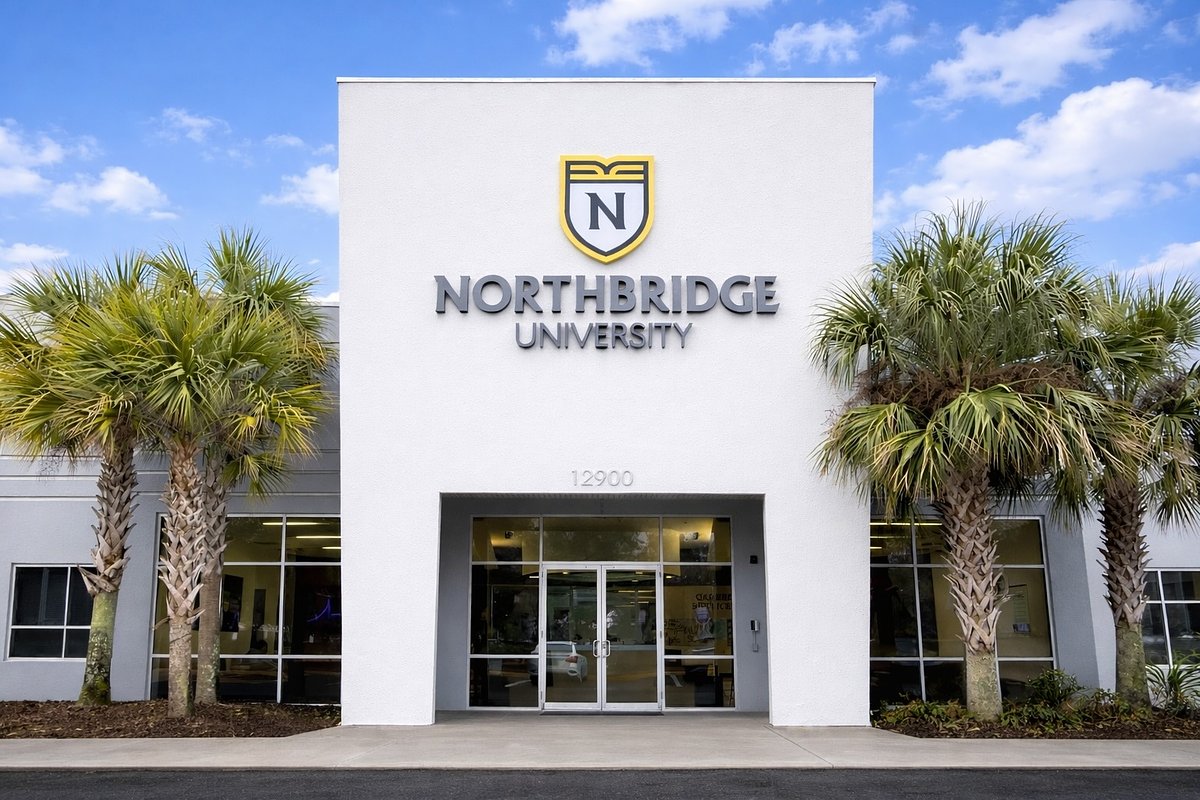
Northbridge University Debuts, Signals Shift in Career Education
ORLANDO, Fla. – February 06, 2026 – In a move signaling a significant transformation in the career-focused education sector, NUC University – Florida Technical College has officially rebranded as Northbridge University. The new identity, unveiled this week, marks the culmination of a strategic evolution from a technical college into a comprehensive university system with a national reach, reflecting its expanded academic offerings and long-term vision.
The transition is more than a name change; it represents a deliberate effort to align the institution's public identity with its substantial growth. Founded in 1982, the university has moved far beyond its origins, and the new brand is designed to encapsulate its current scale and future ambitions in serving students across the United States and Puerto Rico.
An Evolution Driven by Workforce Demands
Northbridge University's rebranding is a direct response to the rapidly changing landscape of the American workforce. The institution's leadership frames the change as a natural progression that mirrors its growth in both size and academic sophistication.
"NUC University – Florida Technical College is a strong, respected institution that has grown significantly since its founding in 1982 in both scale and academic reach," said Michael Bannett, CEO of Northbridge University. "The transition to Northbridge University reflects that evolution—aligning the institution's identity with the breadth of its academic offerings, its multi-state presence across the United States and Puerto Rico, and its role as a trusted partner in advancing student success and workforce-aligned outcomes."
This evolution includes the planned launch of over 30 new academic programs, with 10 set to begin this year. The new offerings are strategically concentrated in fields experiencing high labor-market demand. This focus on technology, healthcare, business, and construction-related trades is deeply rooted in market data. For instance, the university's push into artificial intelligence aligns with industry forecasts from firms like Gartner, which predicts that by 2028, a staggering 95% of organizations will have integrated generative AI into their daily operations. Similarly, reports from Deloitte and the World Economic Forum highlight AI, big data, and cybersecurity as some of the fastest-growing and most transformative skill sets required for the future of work.
By expanding into these high-growth disciplines, Northbridge is positioning itself not just as an educational institution, but as a critical pipeline for the talent that modern industries desperately need.
Building a National University System
The scale of Northbridge University is a key component of its new identity. The institution now operates a multi-state network that includes 19 locations in Puerto Rico, 8 campuses in Florida, and 3 in Oregon. This physical footprint is augmented by a robust national online presence that serves students in over 40 states, placing it in direct competition with other major career-focused universities like Strayer and Grand Canyon University.
This expansion was not accidental. According to Gonçal Bonmatí, the university's Chief Strategy Officer, the rebrand is the result of a highly intentional process.
"This moment and this new identity are the result of a clear, intentional vision," Bonmatí stated. "They reflect a rigorous strategic process designed to support long-term growth, align the institution for the future, and build on its history as it advances as a unified university with an expanding national footprint."
The model of a hybrid university—combining physical campuses for localized, hands-on training with the flexibility of online learning—is crucial to its strategy. This allows Northbridge to cater to a diverse student body, from recent high school graduates to working adults seeking to upskill, while maintaining a consistent brand and quality standard across its network.
Directly Targeting the National Skills Gap
Perhaps the most impactful element of Northbridge's new strategy is its direct assault on the national skills gap. Beyond its expanded degree programs, the university is developing 20 new short-term credential programs. These are specifically designed to provide accelerated pathways to employment in high-demand sectors like construction, business, technology, and healthcare.
Crucially, these programs are being structured to align with the newly approved federal Workforce Pell provisions. This initiative expands Pell Grant eligibility to cover high-quality, short-term training programs, making rapid reskilling far more accessible and affordable for students. By keying into this federal funding mechanism, Northbridge can offer a powerful solution to both individuals seeking quick entry into a new career and employers facing critical workforce shortages.
This focus on practical, immediate career impact is at the core of the new identity, according to the institution's president, Dr. Michael Burkett.
"Northbridge University is not a departure from who we have been; it is a clear articulation of who we have become," said Dr. Burkett. "The unified identity more accurately reflects the scope of our academic offerings and reinforces the university's long-term strategic direction."
A New Identity on a Solid Foundation
While the Northbridge University name is new, it is built upon a long history and a solid academic foundation. The institution's journey began with the founding of Florida Technical College in 1982. A key milestone occurred in 2020 when FTC merged with its sister institution, National University College (NUC), expanding its resources and academic scope significantly.
Throughout its history and this transition, the university has maintained its regional accreditation with the Middle States Commission on Higher Education (MSCHE), a critical marker of institutional quality recognized by the U.S. Department of Education. All existing accreditations, degrees, and credits for current and former students remain fully intact and unaffected by the name change.
The new name and visual identity were formally introduced on February 4th at a launch event at the Orlando Science Center, attended by university leadership and community partners. The full transition to the Northbridge University identity will be implemented through a phased national rollout, ensuring a smooth and deliberate operational shift as it embarks on this new chapter.