
- 25% annual growth rate in Europe for Nongshim over the last five years, outpacing the 12% market growth.
- Targeting $300 million in European sales by 2030, up from current figures.
- 150-square-meter pavilion at 'Taste of London' festival, attracting over 50,000 attendees.
Experts would likely conclude that Nongshim’s strategic blend of cultural marketing and experiential commerce is a calculated, high-potential play to dominate the European instant noodle market by leveraging the global Hallyu wave.
Nongshim’s London Gambit: Selling Culture to Conquer European Commerce
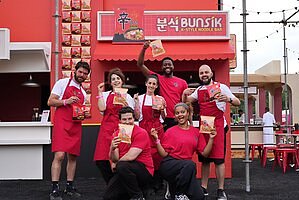
LONDON – June 19, 2026 – A spicy, savory aroma wafts through Regent’s Park this week, but it’s more than just the smell of lunch. It’s the scent of a meticulously planned commercial offensive. Nongshim, the South Korean food giant, has erected a 150-square-meter pavilion at the ‘Taste of London’ festival, serving up its iconic Shin Ramyun. Yet, to see this as merely a food sampling event is to miss the plot entirely. This is a high-stakes play in experiential commerce, a calculated move to translate cultural cachet into market dominance as the company aggressively targets a quadrupling of its European sales by 2030.
The "K-Food" Wave as a Commercial Tsunami
Nongshim’s strategy is not happening in a vacuum. It is anchored firmly in the global phenomenon of Hallyu, the "Korean Wave" of pop culture that has washed over Western markets. The global appetite for K-pop, K-dramas, and K-beauty has created a powerful halo effect, priming consumers for the flavors and experiences of Korean cuisine. The company is not just a beneficiary of this trend; it is actively weaponizing it.
Research shows that the European instant noodle market, valued at around $2 billion in 2023, is growing at a brisk 12% annually. Nongshim, however, has been outpacing the market, boasting a 25% annual growth rate in Europe over the last five years. This success is directly tied to the rising cultural currency of Korea. When viewers see their favorite K-drama stars slurping a bowl of ramyeon, it transforms a simple meal into an aspirational cultural artifact. Nongshim understands this better than anyone. Its presence at a high-profile event like ‘Taste of London,’ which attracts over 50,000 food-savvy attendees, is less about introducing a product and more about reinforcing its status as an authentic icon of a globally coveted culture. This is a strategic pivot from simply placing a product on a shelf to embedding it within a compelling cultural narrative.
Experiential Commerce: Beyond the Noodle Bowl
The pavilion itself is a case study in modern brand strategy. Positioned strategically opposite the festival's 'Cook School,' it guarantees high footfall from an engaged, food-literate audience. Inside, the space is not a sterile corporate booth but a carefully curated experience. The ‘Experience Zone,’ with its mini-games challenging visitors to identify ingredients, transforms passive consumers into active participants. This gamification fosters a deeper, more memorable connection to the brand than any 30-second advertisement could achieve.
The real masterstroke, however, is the ‘Tasting Zone.’ Here, Nongshim has recreated a ‘Pojangmacha,’ the traditional tented street-food stall ubiquitous on the streets of Seoul. This is not just about providing tables and chairs; it’s about offering cultural immersion. For a Londoner who may have only seen such a setting on Netflix, the opportunity to experience it firsthand—complete with the steam and chatter—is a powerful draw. This multi-sensory engagement is the core of effective experiential marketing. It creates the "Instagrammable moments" that provide invaluable organic reach while forging an emotional connection that builds lasting brand loyalty. As one marketing analyst noted, food-based experiences can achieve significantly longer "dwell times," giving brands like Nongshim a crucial window to communicate their story.
"We are excited to introduce South Korea's representative ramyun noodle culture to global consumers at this major United Kingdom culinary event," said Seung Won Shin, Nongshim’s Global Marketing Specialist. This statement, while seemingly standard corporate fare, underscores the strategic intent: Nongshim is selling not just noodles, but "ramyun noodle culture." Shin added, "Nongshim will continue to deploy various experiential marketing campaigns to interact directly with international consumers and expand our brand awareness across the European market."
De-Risking Palates: The Strategic Launch of 'Shin Ramyun Toomba'
Central to the tasting experience is the introduction of a new product: ‘Shin Ramyun Toomba.’ This is a crucial element of the company’s product diversification strategy. While the original Shin Ramyun is beloved for its fiery spice, that same quality can be a barrier to entry for some Western palates. ‘Toomba,’ with its balanced combination of creamy texture and moderated spice, is a brilliant act of product de-risking.
It serves as a gateway product, designed to appeal to a broader demographic that enjoys the complexity of Korean flavors but may be hesitant about intense heat. Early feedback from the festival, described as "highly positive," suggests the strategy is working. The product offers a compelling alternative to other popular creamy-spicy noodles, hitting a sweet spot of flavor and accessibility. By launching it in a direct-to-consumer festival environment, Nongshim is also able to gather invaluable real-time market data, observing reactions and gauging demand without the risk of a full-scale retail rollout. This agile, feedback-driven approach is essential for navigating the complexities of international market expansion.
Building a European Beachhead
The 'Taste of London' activation, while impressive, is a single tactical maneuver in a much larger strategic campaign. Nongshim has its sights set on a $300 million European business by 2030. To achieve this ambitious goal, the company has been laying critical groundwork. In March 2025, it established Nongshim Europe B.V. in Amsterdam, a logistical hub designed to streamline distribution across the continent via the Port of Rotterdam.
This move signals a shift from opportunistic exporting to a structured, long-term market presence. The company is aggressively pushing for expanded placement in Europe’s largest retail chains, including Tesco in the UK, Rewe in Germany, and Carrefour in France. The high-visibility marketing campaigns, from last year’s Piccadilly Circus takeover to this week's festival pavilion, are designed to create consumer pull-through, demonstrating demand to these powerful retail gatekeepers. By combining a sophisticated cultural marketing strategy with a robust logistical and retail backbone, Nongshim is not just entering the European market; it is methodically building a defensible, long-term commercial empire. The spicy noodles being served in Regent's Park are just the first taste of a much bigger ambition.