
- 270-degree format: The film is being shot natively for SCREENX, integrating panoramic visuals into production rather than adding them in post-production.
- 360 SCREENX installations: The technology has a global footprint, potentially influencing future film productions.
- Strategic partnership: CJ 4DPLEX and Sony Pictures are collaborating to redefine blockbuster filmmaking with this immersive format.
Experts would likely conclude that this initiative represents a significant evolution in film production, blending technological innovation with narrative storytelling to enhance audience immersion.
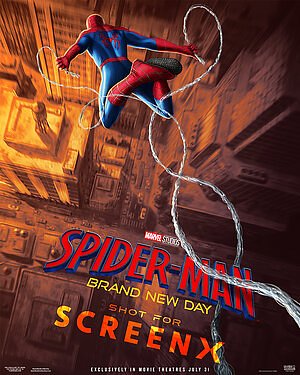
Spider-Man's New Canvas: How 'Shot for SCREENX' Redefines Film Production
BURBANK, Calif. – June 18, 2026 – The announcement from CJ 4DPLEX and Sony Pictures was, on its surface, another entry in the long-running campaign to keep audiences in theaters. The upcoming "Spider-Man: Brand New Day" will be presented in the panoramic SCREENX format. But buried beneath the standard marketing language was a phrase that signals a potentially seismic shift in blockbuster filmmaking: "Shot for SCREENX."
This isn't the usual post-production conversion, where visual effects artists digitally extend a finished film onto the theater's side walls. This is a ground-up integration of an immersive format into the very DNA of a film's production. By collaborating with director Destin Daniel Cretton from the earliest stages, the Korean-based technology firm is moving its 270-degree format from an exhibition afterthought to a primary creative tool. This initiative represents a calculated gamble that the future of cinema isn't just about better pixels or louder sound, but about fundamentally changing the frame of the story itself. It's a move that warrants a closer look, moving past the hype to analyze the execution.
From Post-Production Fix to Production-First Design
For years, premium formats like SCREENX have enhanced films by adding peripheral imagery created after principal photography. This post-conversion process, while often effective, can sometimes feel like an add-on—impressive, but not always integral. The "Shot for SCREENX" initiative fundamentally inverts this model.
"CJ 4DPLEX and their team came to the set of Spider-Man: Brand New Day to shoot footage that you will experience specifically for SCREENX auditoriums," director Destin Daniel Cretton said in the announcement. This simple statement belies a complex operational overhaul. Instead of relying solely on digital extensions, the production employed specialized camera rigs or multi-camera arrays on set. This allows for the organic capture of the expansive cityscape as Spider-Man swings through it, or the peripheral chaos of a villain's attack, ensuring the side-wall footage shares the same lens, lighting, and "feel" as the main action.
According to sources familiar with the technology, this process requires proprietary on-set visualization tools. Directors and cinematographers can now see a real-time approximation of the 270-degree final product while on set, allowing them to compose shots for three screens simultaneously. This is a paradigm shift from the single-frame discipline that has defined cinematography for over a century. The challenge is no longer just what’s in the box, but how the environment surrounding the box enhances the narrative. It demands a new choreography of action and a deeper consideration of set design, as every corner of the set is now potentially in-frame.
"Our goal is to create a more encompassing experience that brings audiences closer to the story, the action, and the world of Spider-Man," stated Jun Bang, CEO of CJ 4DPLEX. Achieving this goal means overcoming significant technical hurdles. Maintaining visual continuity and consistent lighting across three separate projections is a monumental task, especially in fast-paced action sequences. The data-wrangling and post-production workflow for visual effects rendered across a 270-degree canvas are exponentially more complex and costly. This is not a simple upgrade; it is a full-stack reinvention of the blockbuster production pipeline.
Expanding the Director's Canvas
The "Shot for SCREENX" model presents filmmakers with a tantalizing, if daunting, new set of creative tools. For a director like Cretton, known for blending character-driven drama with kinetic action, the panoramic canvas offers a chance to deepen immersion without sacrificing narrative focus. The central screen remains the anchor for the primary story—Peter Parker's isolation in a world that has forgotten him—while the side panels can be used to amplify his experience.
Imagine a scene where Peter walks through a crowded Times Square. On the main screen, we see his face, etched with loneliness. On the side walls, the life he can no longer be a part of rushes past him in a vibrant, overwhelming blur. The format becomes a direct extension of the character's emotional state. In an action sequence, the audience isn’t just watching Spider-Man dodge an attack; they are in the middle of the street with him, with threats potentially emerging from their peripheral vision.
However, this expanded canvas introduces new artistic challenges. The primary risk is distraction. If the side-panel content is too "busy" or competes for attention with the main narrative, it can pull the audience out of the film instead of drawing them in. Filmmakers must master a new visual language, learning how to subtly guide the viewer's eye and use the peripheral space for atmosphere and environmental context rather than crucial plot points. One veteran cinematographer noted that it requires "a complete rewiring of how you approach composition and pacing." It's a high-wire act of balancing spectacle with narrative clarity.
"By working closely with Sony Pictures and Destin Daniel Cretton...we are able to expand the film's visual canvas while preserving the director's creative vision," said CJ 4DPLEX CEO Jun Bang. This collaboration is the key. By integrating the technology at the script and pre-production stage, the 270-degree experience becomes a deliberate storytelling choice, baked into the film's structure rather than applied like a finishing coat of paint.
A Strategic Play in the Premium Format Wars
This initiative is more than a creative experiment; it's a shrewd strategic maneuver in the fiercely competitive premium large format (PLF) market. For years, the battle for premium ticket dollars has been dominated by two titans: IMAX, with its massive, high-resolution screens and proprietary aspect ratios, and Dolby Cinema, which offers a boutique experience focused on superior contrast and object-based sound. "Shot for SCREENX" is CJ 4DPLEX's bid to carve out a uniquely defensible niche.
Unlike IMAX, which offers a bigger single window into the world, SCREENX breaks the window frame entirely. Unlike Dolby Cinema, which perfects the audiovisual quality within that window, SCREENX changes the shape of the room. By championing a format that requires native production, CJ 4DPLEX is creating a product that cannot be easily replicated. A film "Shot for SCREENX" offers a fundamentally different experience than an up-scaled IMAX version or a high-contrast Dolby presentation. It’s a move from competing on specs to competing on experience architecture.
For Sony Pictures, the partnership is a calculated investment in the theatrical window. In an age of high-end home theaters and shrinking theatrical exclusivity, giving audiences a reason to leave their homes is paramount. "Spider-Man represents the kind of event franchise that demonstrates the power of premium theatrical formats," noted Don Savant, a top executive at CJ 4DPLEX Americas. A natively shot 270-degree experience is a powerful marketing hook and a tangible differentiator that streaming platforms simply cannot offer. This justifies the premium ticket price and helps turn a movie release into a must-see cultural event.
The success of this initiative could have a ripple effect across the exhibition industry. With over 360 SCREENX installations globally, CJ 4DPLEX has already established a significant footprint. If "Spider-Man: Brand New Day" proves to be a box office juggernaut driven by the appeal of this new format, it will put immense pressure on other studios to consider similar native-shot productions and incentivize more theater owners to invest in the necessary hardware upgrades.
The Audience at the Center
Ultimately, the success of "Shot for SCREENX" will be determined not in boardrooms or on-set, but in the darkened auditoriums. The entire endeavor is predicated on the belief that audiences crave a deeper, more visceral level of immersion. For a character like Spider-Man, whose appeal is so tied to the kinetic thrill of movement and the vibrant energy of New York City, the format seems like a natural fit.
The promise is an experience that transcends passive viewing. When executed correctly, the 270-degree format can place the moviegoer directly at the center of the story, making the web-slinging feel more vertiginous and the battles more encompassing. This heightened sensory engagement can forge a stronger connection to the character's journey and the world they inhabit, creating a more memorable and impactful cinematic event. It's the ultimate "you had to be there" argument for the theatrical experience.
The launch with a globally recognized franchise like Spider-Man is a deliberate choice to showcase the technology on the largest possible stage. The film's narrative, centered on Peter Parker's isolation and a new, unseen threat, provides fertile ground for the format to enhance themes of paranoia and environmental awareness. The audience can feel the city moving on without Peter, and they can scan the periphery for a villain that "no one can even see." If the execution matches the ambition, CJ 4DPLEX and Sony may have just set a new standard for what it means to go to the movies.